


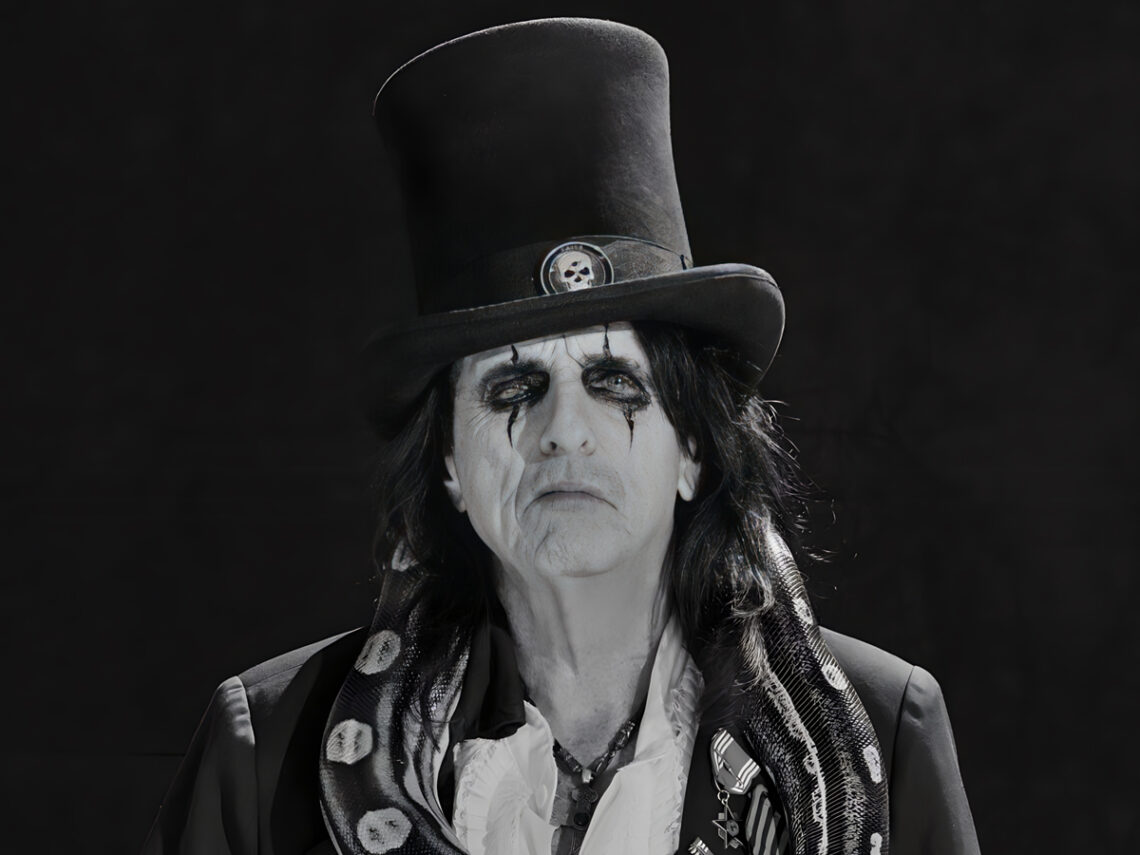
“People were escaping”: Alice Cooper on how people turn to art in hard times

Deep down in the appeal of every rock star to have ever strutted across a stage is an escapist fantasy. Most of the appeal is the music, of course, but who hasn’t sought to live vicariously through their favourite musicians?
Imagining themselves as a worshipped hero of rock ‘n’ roll instead of what they are in daylight? There have been several rock stars who would know exactly how powerful that fantasy can be, but Alice Cooper turned it into an art form.
Sure, people looked at David Bowie like he was a space alien walking among us; Björk and Janelle Monáe carried themselves with the same swagger. There’s a difference between dressing up in outlandish clothing and literally decapitating yourself on stage with a guillotine every night. In the annals of mainstream rock history, it’s only Kiss that comes close to the sheer, greasepaint and stage blood-soaked lunacy of Alice Cooper. Even then, though, Cooper has one over Gene Simmons and co by virtue of the tunes being good too.
Taking as much inspiration from movies like Barbarella and What Ever Happened To Baby Jane as musicians like The Beatles and Screaming Lord Sutch, Alice Cooper formed (yes, Alice Cooper is the name of the band as well) as we know them in 1968. As the singer and frontman, Vince Furnier was charged with embodying the band’s look and attitude, and did so to the point where he changed his name to the band’s name in 1974. Talk about committing to the bit.
Unfortunately, their gory, shocking stage act fit into the hippie 1960s like gloves on a snake, and while the band were aiming for mainstream success, they were a cult act for the first few years of their existence. That is, until the 1960s gave way to the 1970s, and everything changed. Partially due to releasing their first genuine hit ‘I’m Eighteen’ in 1970, but also because the times, as a wise man once said, were a’changin’.
How did changing times help Alice Cooper?
The 1970s were almost a direct response to the 1960s’ air of weed-scented positivity. The end of the decade had seen some serious pushback to the progressive societal direction seen earlier, and the 1970s doubled down on that air of civil unrest. The Vietnam War was raging, the women’s lib movement was picking up steam, the Stonewall riots had occurred a year earlier and escalating attempts to stem these social movements were causing violence and bloodshed everywhere one looked.
Is it any wonder that in this powder keg of a time, the aggressive, dark and dangerous music of Alice Cooper spoke to people more now than it had done three years earlier? As the decade went on, Cooper and his band became one of the most infamous names in music. Hits like ‘School’s Out‘, ‘Elected’ and ‘Hello Hooray’ certify them as a major player in the glory days of hard rock. As you can imagine from a man as savvy as Cooper, the effect those societal changes had on his band’s status didn’t go unnoticed.
In an interview with Hit Parader in 1976, Cooper eloquently discussed how tough times make people yearn for escape. He said, “If you look through history, the entertainment business always thrived during economic problems. During the depression, actors made ten times more than anybody else. Because people were escaping, you’ll find that right now. We are in economic problems here in America, and people are watching TV, looking for escape.”
He goes on to say, “People in the entertainment field are thriving off economic problems, and the worse it gets, the more popular movies get, and the more TV, and the more popular looking up to an idol gets.”
One can imagine that the whole Alice Cooper character was built to be an idol for people to look up to in their strange way, and there’s a good reason why said character has almost exactly the same appeal in 2025 as he did nearly 50 years earlier.
