


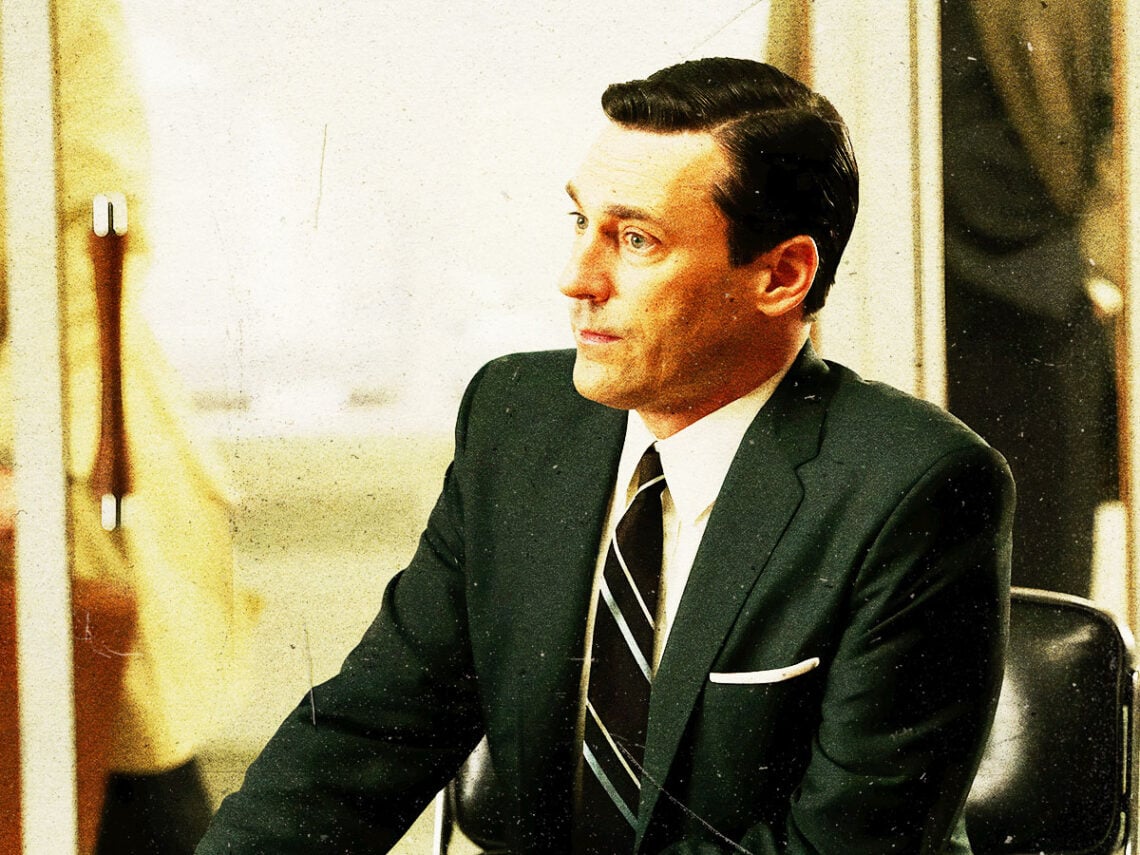
How Alfred Hitchcock influenced the style of ‘Mad Men’

The effects of Alfred Hitchcock’s work continue to permeate the world of film, with the Londoner one of the most influential figures in the development of the form. A key force in 20th-century cinema and the thriller genre, Hitchcock not only penned the blueprint for a very definitive realm of movies, but he also captured the era in which he operated in more detail than his peers. This latter point is why Mad Men is so heavily steeped in his stylistic essence.
Resoundingly hailed as one of the most vital shows of all time, Matthew Weiner’s Mad Men, which tells the story of New York advertising executives in the 1960s, is not only revered for its characters and their arcs – not to mention subtlety – but how it captured the essence of the decade in which it is set. While there are several anachronisms and excusable goofs across the seven seasons, the understanding and respect Weiner demonstrated in his rendering of the enormous cultural developments of the 1960s stand the drama out in the pantheon of genuinely vital television.
With Mad Men a carefully considered study of the decade through the specific lens of detestable male executives, it’s no surprise that Weiner looked to Hitchcock’s work and style to help bring his vision to life. The series is steeped in popular culture, and the auteur was one of the era’s most essential figures. Weiner has even openly explained the visual link to Hitchcock on several occasions.
From the outset, it was clear how indebted Mad Men was to the world of Hitchcock. Augmented by the smutty strings of RJD2’s ‘A Beautiful Mine’, the animated title sequence created by Imaginary Forces pays direct homage to graphic designer Saul Bass’ skyscraper-featuring opening for Hitchcock’s 1959 thriller North by Northwest. Furthermore, the falling silhouette of the main character, Don Draper, comes from the movie poster of 1958’s Vertigo.
According to Weiner, he didn’t actually watch Vertigo until the break between the first and second seasons. This would feed not only into the atmospheric lighting found in the second instalment, such as the moment Draper meets Bobbie Barrett on set or the frontal shots of him driving his rain-beaten car, but also the way he forms a bond with the real Draper’s widow. The character Madeleine Elster, played by Kim Novak, also impacted the show, with January Jones’ Betty Draper often aesthetically resembling her or Hitchcock’s other blonde female leads.
Perhaps more importantly, the generally dream-like, almost narcotic feel of the Hitchcock movie courses throughout the rest of Mad Men, with Weiner stating that the thriller was akin to viewing somebody else’s dream. There are many similarities between the cinematography of the late Robert Burks and the general style of Weiner’s show.
North by Northwest also has other links to Mad Men. Whether this be the pilot touching on the transition from the 1950s to the ensuing decade or the general aesthetic likenesses – despite Weiner explaining that he wanted his show to be more realistic than the 1959 Cary Grant classic – they are easy to hit upon. The most apparent parallel, however, is that Grant’s protagonist, Roger Thornhill, is a suave advertising executive, just like Draper.
That’s not the only resemblance between the two leading men, either. When on the train, Draper is recognised for his real identity Dick Whitman by an old friend. In the show, it is revealed in a flashback that Whitman had taken the identity of his Lieutenant Donald Draper, who died due to an accidental explosion he caused during the Korean War. This inverts the experience of Thornhill North by Northwest, in which he is mistakenly identified as George Kaplan, whom he later plays as part of his ploy to get to the bottom of the mystery.
Brilliantly, in ‘The Milk and Honey Route’ from season seven, when Draper is waiting for a bus on a beaten country track, it aesthetically references the tense scene preceding the aeroplane chase in North by Northwest.
