


How Alfred Hitchcock became the first person to publicly expose the CIA

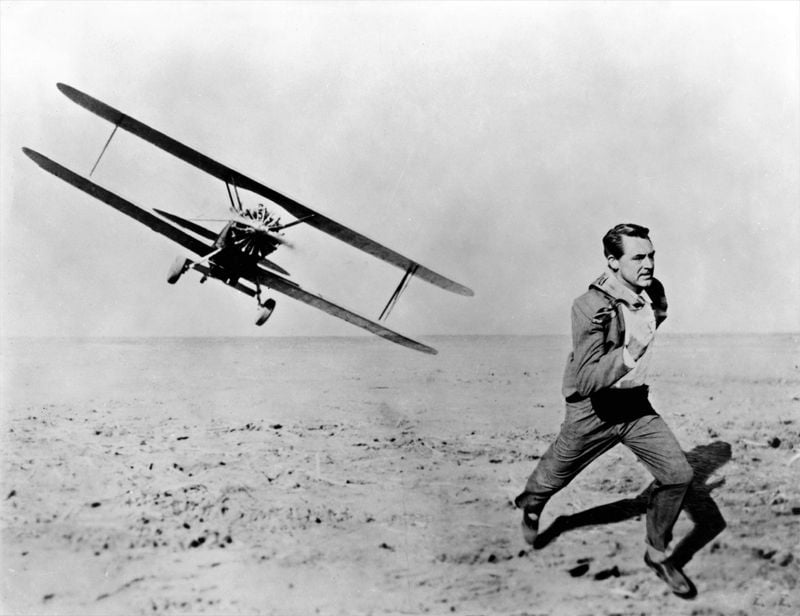
Alfred Hitchcock was truly a man of firsts. He invented the dolly zoom in the classic thriller Vertigo, he pioneered the one-shot façade with the smoothly unfurling drama of Rope, and with North by Northwest, he became the first major figure to publicly expose the existence of the CIA. This rotund man of mystery shared more firsts with the world than a new mother on Instagram.
So, no doubt the first question on everyone’s lips is why a British film director would be privy to top-secret governmental information? Well, as it happens, cultural involvement was one of the CIA’s major prerogatives. Established in 1947, at the start of the Cold War, propaganda was an essential tool on this new battlefront. What better engine to push your narrative than the world’s entertainment centre: Hollywood.
In the field of art, The Congress for Cultural Freedom was an anti-communist advocacy group formed in 1950. This group promoted American ideals. It has been confirmed that this collective funded artists like Jackson Pollock and manipulated the elevation of his promotion. It was also, in turn, a funded off-shoot of the CIA. Its practices in film were comparable—the CIA would lend information to filmmakers in order to ensure that American espionage was depicted in a favourable light.
They are confirmed to have assisted and funded the production of 60 films and television shows in this regard. To begin with, its initial aim was to hide its existence from entertainment. It wanted to be covert or at least mythical and urged all onscreen depictions to be removed from screenplays. This all changed in 1959 when Alfred Hitchcock first displayed a shot of their now iconic crest in North by Northwest and broke their code of secrecy by mentioning them by name.
So, how did this all come about? Well, as mentioned, the CIA already had a hand in Hollywood. A year before Hitchcock’s thriller was released, the agency had an unprecedented hand in the scripting of The Quiet American. They manipulated the script away from filmmaker Joseph L. Mankiewicz’s faithful adaptation of Graham Greene’s novel towards something more favourable for American espionage action in Indochina. Greene was, naturally, very angry that his anti-war message had been erased from the film with the Vietnam conflict impending and he publicly disavowed the picture as a “propaganda film for America.”
This created a public backlash that rippled particularly strongly through Hollywood. Here you had one of the film industry’s leading talents being creatively manhandled. This weakened their previous loose stronghold on movie production. As academic writer Simon Willmetts explains, before this incident, the CIA had skirted the silver screen through a “combination of patriotism, stringent libel laws, the restrictions of the semi-documentary format, and Hollywood’s in-house industry censor the Production Code Administration encouraged filmmakers to respect the CIA’s proclaimed ‘passion for anonymity’.”
That passion for anonymity was reasoned, in part, because if you technically didn’t exist then you had nothing to answer to. However, now Greene was posing questions and soon journalists were prying. Their research was throwing up interesting findings. As John Russell Taylor writes regarding the inception of North by Northwest in his Hitchcock biography: “For the central idea, Hitchcock remembered something an American journalist had told him about spies creating a fake agent as a decoy. Perhaps their hero could be mistaken for this fictitious agent and end up on the run. They bought the idea from the journalist for $10,000.”
At the same time, libel laws and freedom of speech was changing in America. Ironically, this also involved Hollywood. Thomas Wolfe dubbed Confidential, “the most scandalous scandal magazine in the history of the world”. The publication sought to reveal secrets about Hollywood stars. They rebelled against the mag and several of the highest profile libel cases in history unfurled thereafter. While this would force the magazine out of print, the battle might have been lost but the war was just beginning. The magazine highlighted the ‘free information’ problem that lay ahead. Rules would have to be changed to reflect the new open climate of the press.
This came at the worst time for the CIA whose actions were more questionable than ever. And all of this coincided in Hollywood, where the agency was an open secret, turning on them and Hitchcock throwing up a secret nod to the soon-to-be public organisation.
