


‘The Holdovers’ movie review: Alexander Payne’s gorgeous late Christmas present

“If you truly want to understand the present, or yourself, you must begin in the past,” is the kind of line you might attribute to Celine Song’s wistful drama Past Lives when actually it originates from a different ‘Best Picture’ nominee, Alexander Payne’s The Holdovers. Indeed, this year’s crop of Oscar hopefuls seem to share a fond interest in how untangling the knots of our past can help us thrive in the present, with Payne’s gorgeous exploration of just this making it an outside shot for the Academy’s top prize.
Perhaps the greatest Christmas film ever to be released in January, Payne’s movie is set in the ornate halls, classrooms and dormitory rooms of 1970s Barton Academy, a New England boarding school, over the festive holidays. While the large majority of the students excitedly flee the school upon their final day, an exclusive group of ‘holdovers’ stay behind, unwanted for various reasons by their parents.
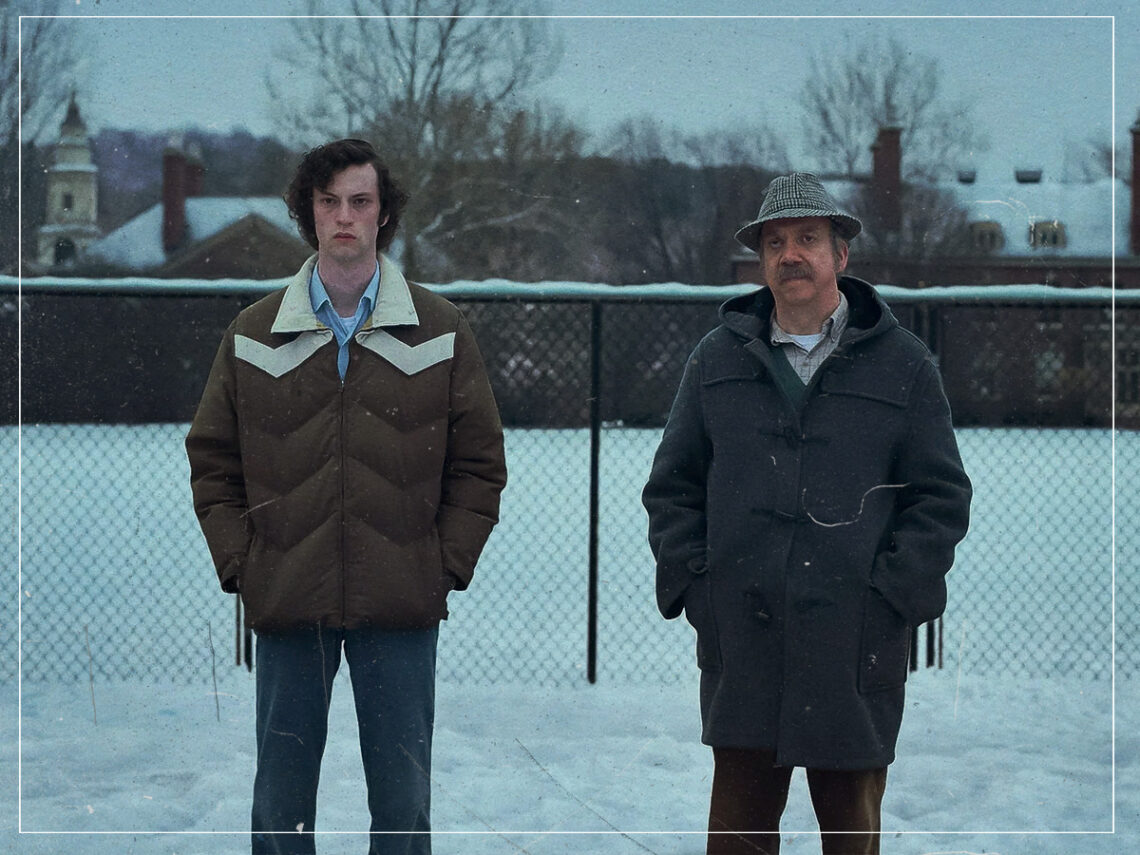
Classics professor Paul Hunham (Paul Giamatti) is the volatile teacher put in charge of such pupils, begrudgingly accepting his fate to look after such students as Angus Tully (Dominic Sessa), a boisterous pupil who cares little about petty misdemeanours. Together with school chef Mary Lamb (Da’Vine Joy Randolph), the trio forms an unlikely group of abandoned individuals left behind in the season of festive frivolity.
What results is one of Payne’s greatest cinematic offerings, a compassionate ode to human connection during a time of the year when the tender sores of familial relationships are brought to the surface. Adolescent angst in the face of his mother’s cold indifference stunts Tully’s growth, while Lamb is shrinking in the wake of the loss of her child, and Hunham’s depression maintains him in a state of discontent, yet the imperfect trio form a flawless symbiotic relationship.
As Hunham’s heart is slowly teased out by David Hemingson’s lyrical script, Giamatti increasingly grows in confidence. He pilots the film as an individual so richly layered with authenticity and humour that his every prophetic utterance seems to move the soul. Together with Sessa, who demonstrates a remarkable hold of the script in his feature debut as Tully, the pair form the core of the story, with the former attempting to become his student’s sagacious father figure, gifting him a copy of Marcus Aurelius’ Meditations for Christmas.
Captured with a subtle gold luminosity, Payne makes The Holdovers feel like a modern-day parable of sorts that does away with grandiose messaging about the Christmas period, instead distilling the opportunity for human reconnection that the season brings. Such is certainly helped by its grainy visual style, cleverly recreating the feel of 1970s film stock despite being shot digitally, making it feel plucked from the history of 20th-century filmmaking.
Yet, where The Holdovers so effortlessly succeeds is in its sheer simplicity, focusing all its efforts on the relationship between its three lead characters, who guide the film on a gentle exploration of the cycle of reconciliation that life demands. A plea for human connection during a seasonal period that often forces us to look inward as much as it tries to make us consider those around us, The Holdovers is an intimate love story in more ways than one.
