


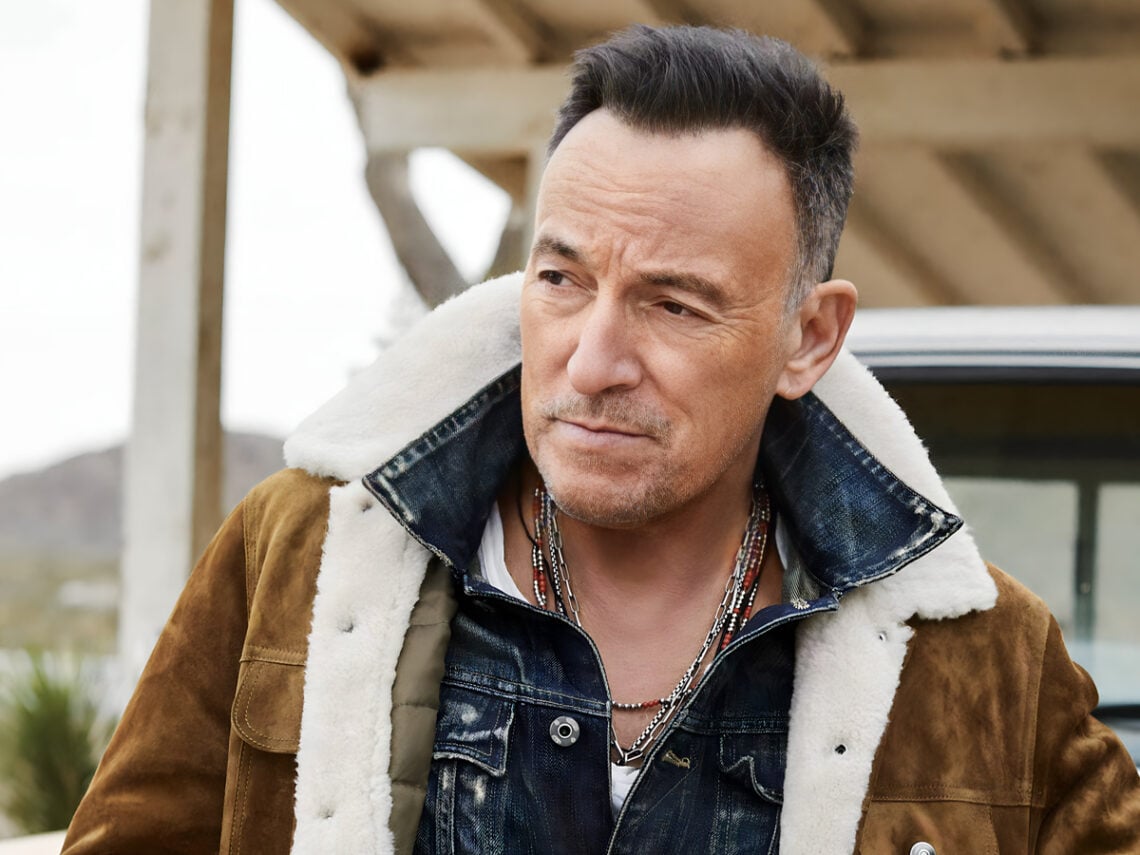
The albums Bruce Springsteen thought the public hated: “It didn’t work”

Like many artists who have established a devoted following throughout their careers, Bruce Springsteen wouldn’t remain where he is today without the legions of fans who remain committed to buying his records no matter what the quality of the output is like. Having been releasing records since the early 1970s, The Boss has never really taken much of a break or slowed down his output, which has kept him firmly in the spotlight since his breakthrough, with the longest gap between records being 7 years between 1995 and 2002.
While there is arguably a golden period for the singer-songwriter that runs from the mid-1970s through the majority of the ‘80s, plenty of fans and critics would argue that some of his more recent material can stand up to the classics. Efforts within the last decade include Western Stars and Letter to You, and while very few will rate them quite as highly as the likes of Born to Run and Darkness on the Edge of Town, it’s proof that Springsteen hasn’t lost his touch over the course of a decade that spans six decades.
However, there was a period in Springsteen’s career during which he was never particularly happy with his output, and he believed his fans might disown him for the dramatic change of direction in his songwriting approach. An illustrious run can’t always last forever, and following 1987’s Tunnel of Love, the New Jersey native found it hard to follow up with something of the same calibre as the album and everything that had preceded it. Springsteen was at a creative crossroads, and something needed to be done to remedy that.
He would acknowledge this unfortunate downturn in his output during his Rock and Roll Hall of Fame acceptance speech in 1999. However, if you require any proof of this only being a blip in his career, take the fact that he was inducted into a prestigious and elite group of musicians not long after having released some of his worst work. During the speech, he revealed information on the two albums that haunt him and the bizarre reason he has his father to thank for that being the only dip in quality.
“My dad, he passed away this year,” Springsteen told the audience, trying his best to remain composed. “But I’ve got to thank him because what would I have conceivably written about without him?” As a huge source of inspiration for his songwriting, Springsteen was clearly choked up telling the crowd about the loss of his father but continued to tell them about how their relationship shaped his work.
“You’ve got to imagine, if everything had gone great between us, it would have been a disaster. I would have just written happy songs – I tried that in the early ‘90s and it didn’t work, the public didn’t like it.” With his two albums released on the same day in 1992, Human Touch and Lucky Town, he experienced negative reception for the first time for adopting a more pop angle and having abandoned the E Street Band in order to assemble a different cast of musicians.
Springsteen’s comments about his father and what he had to say about his musical output didn’t stretch much further than the fact that “his favourite songs were the ones about him,” but he did acknowledge that his parents were a huge driving force and inspiration behind his lyrical themes. “My parents’ experience forged my own,” he said from behind the podium. “They shaped my politics, and they alerted me to what is at stake when you’re born in the USA. I miss you, dad.”
