


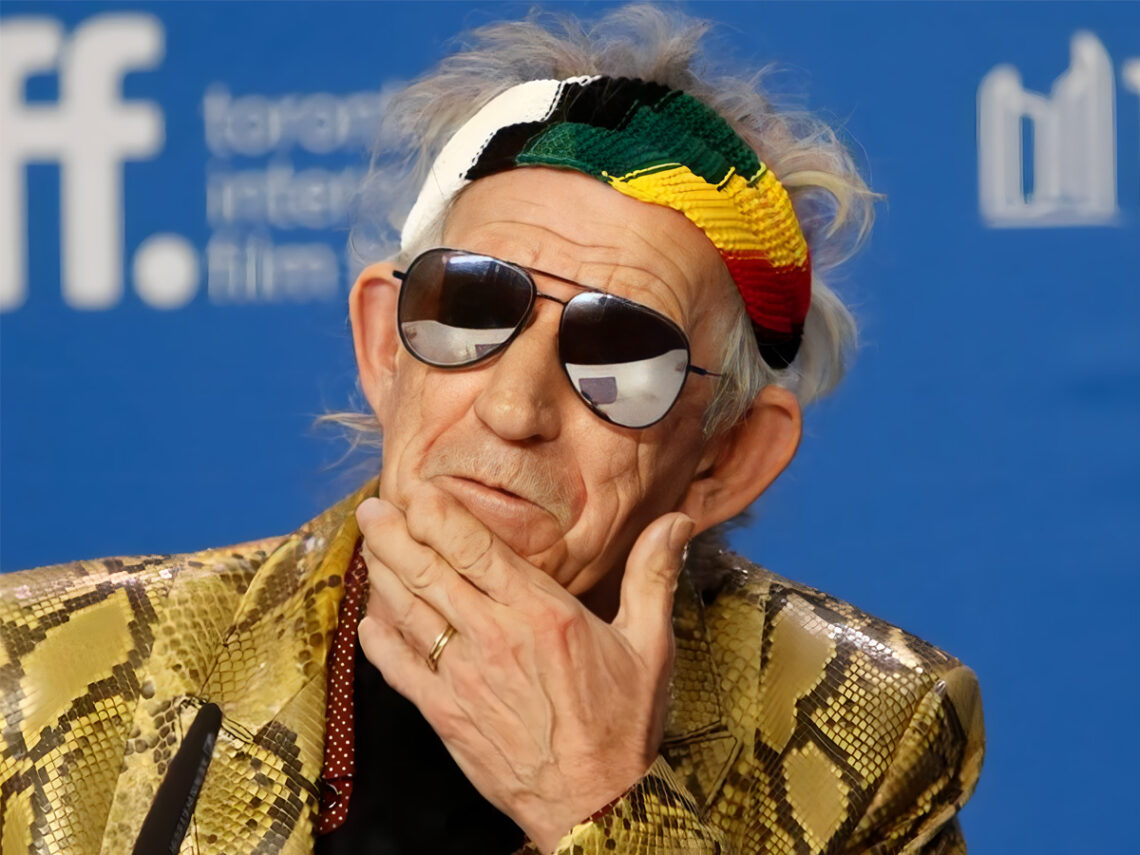
“Quirky leaps”: the album that liberated Keith Richards’ songwriting

As with many other great bands, The Rolling Stones were forged on an excellent songwriting partnership. Under the musical guidance of Keith Richards and the lyricism of Mick Jagger on all but a handful of their original songs, they rose to become not only one of the great exports of the British invasion of the United States in the 1960s but cemented their place as being one of the finest rock groups ever with their continued exceptional work in the decades after, and the band continue to work with the duo at their core to this day.
The turning point in this creative union came with the band’s 1966 album Aftermath, where Jagger and Richards began to see the increasing importance of writing their own material, having largely bulked up their albums until that point with covers of classic and obscure rhythm and blues artists from the US. Using this inspiration from the American artists that they held in such high esteem, the duo became more adept as songwriters, releasing album after acclaimed album.
However, no matter how strong their songwriting became as a pair, their relationship had its ups and downs, and Richards and Jagger were known for falling out with each other on a regular basis by the mid-1970s. Things got especially heated in the ‘80s, where Richards felt as though his contributions to the band were being suppressed, and despite his best efforts to overcome battles with addiction, Jagger was becoming increasingly controlling due to his distrust of his bandmate for his erratic past.
By 1988, Richards decided to venture out on his own to put together a solo record, something that Jagger had already done by this point. In an effort to express the creative freedom he felt he wasn’t getting in The Stones at that moment in time, he assembled a band to work on Talk is Cheap. Richards was finally working on his own terms and did not have to concede to the demands of someone else or tailor his style to a different vocalist.
In an interview with Mojo in 1997, Richards explained how it felt to finally take the leap into working as a solo artist, and by this point, he had also released a second album, Main Offender, in 1992. “My job up to that point had been writing songs for Mick to sing,” Richards told the magazine. “I’d been confining songwriting to that point of view. So I guess really what Talk Is Cheap did for me was that suddenly I could take them in my direction.”
The songs, even by Richards’ own admission, weren’t so remarkably different from what he had previously contributed to The Rolling Stones. “Most of the songs Mick could have sung,” the guitarist conceded, “But they wouldn’t have taken such funny, quirky leaps because I just sing differently and I hear different melodies.”
To this day, Richards has only released three solo albums, with his most recent record, Crosseyed Heart, having been released in 2015. In the same space of time between his first solo album and the present day, The Stones have released six albums together as a group, with Richards and Jagger taking control of songwriting duties for the majority of their output, proving they’ve been able to put aside their differences many times. A short break apart is clearly all either of them needed to get their enthusiasm back.
