


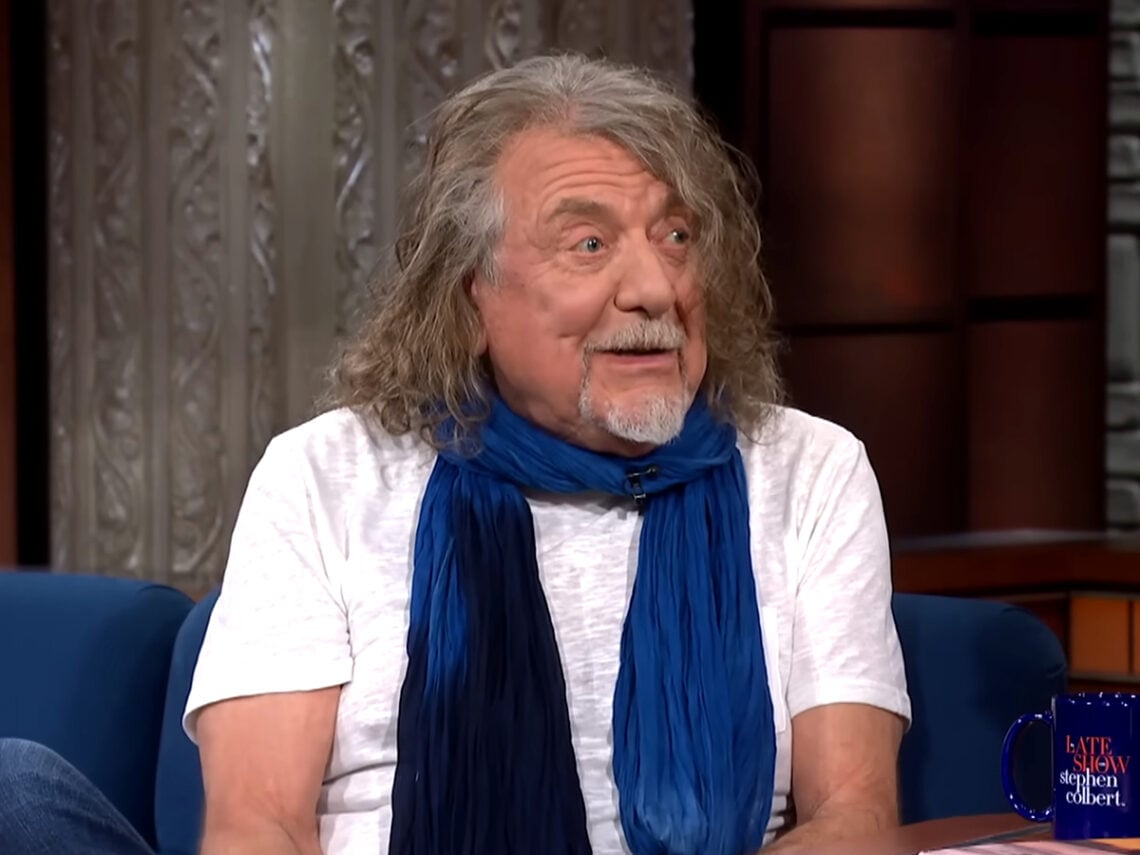
The one album Robert Plant never could have made: “Such a reboot for me”

When Robert Plant looked around the stage, during the pomp of his career in the 1970s, he must have at times felt like the luckiest man in the world.
Don’t get me wrong, Plant was carving out a legacy for himself that had him widely viewed as one of the greatest frontmen in the world. But, there’s no denying that he found himself at the front of perhaps the most powerful lineup of musicians rock had ever seen.
In John Bonham, he had the human equivalent of rolling thunder, powered by the bass lines of John Paul Jones. To his other side stood arguably the greatest rock and roll guitarist of all time, providing mind-bending licks that helped construct some of the most captivating songs in history. Knowing that within him existed an acute performative talent, he must have counted his blessings that musical fate had managed to pair his voice with these merry men of iconic rock stars.
Naturally, there was some time to adjust when Led Zeppelin came to an abrupt end at the beginning of the 1980s. And really, for Page, it wasn’t until decades later in the new millennium that he felt that renewed sense of purpose akin to his Zeppelin days. Sure, it wasn’t him fulfilling the role of crowd-stomping frontman, but that wasn’t what he wanted either.
In that period of post-Zeppelin reflection, he began to understand himself as the more rounded musician he was and in collaboration with Alison Krauss, he found a project that could satiate that appetite. Moreover, it gave him a chance to truly pay homage to the bluegrass roots that inspired so much of his music adolescence, transporting him to a musical reality that, as a mere music-loving child, he could only dream of.
“What chance would anybody have from my background, musically, from the whole trip of squeezing my way out of the ’60s, to end up making Raising Sand?” he asked. “I could never have imagined knocking on the door there in Nashville one Sunday morning, and Alison opening the door and saying, ‘Tea?’ And with the great shape of T Bone Burnett in the background – just a profile of this physical and creative giant.”
In Krauss, he had a willing partner with whom he could share vocal harmonies or who would provide the safety of a melody that brought the best out of his older, wiser vocal takes. Albeit a frightening concept for Plant, stepping firmly into this new bluegrass world was a revitalising move for his career.
He explained, “It was a leap out of my comfort zone, and I went down there with nothing to lose. Doing Raising Sand was definitely such a reboot for me, such a Big Bang of marvel.”
It’s perhaps what allowed Plant to rejoin with Page and Paul Jones in that very year, to perform a string of one-off reunion shows with Led Zeppelin. Because with Krauss, he found a new artistic voice, one that wasn’t trying to replicate the days of old, and in turn, gave space for rockstar Plant to return without hesitation during the reunion shows of that year.
