


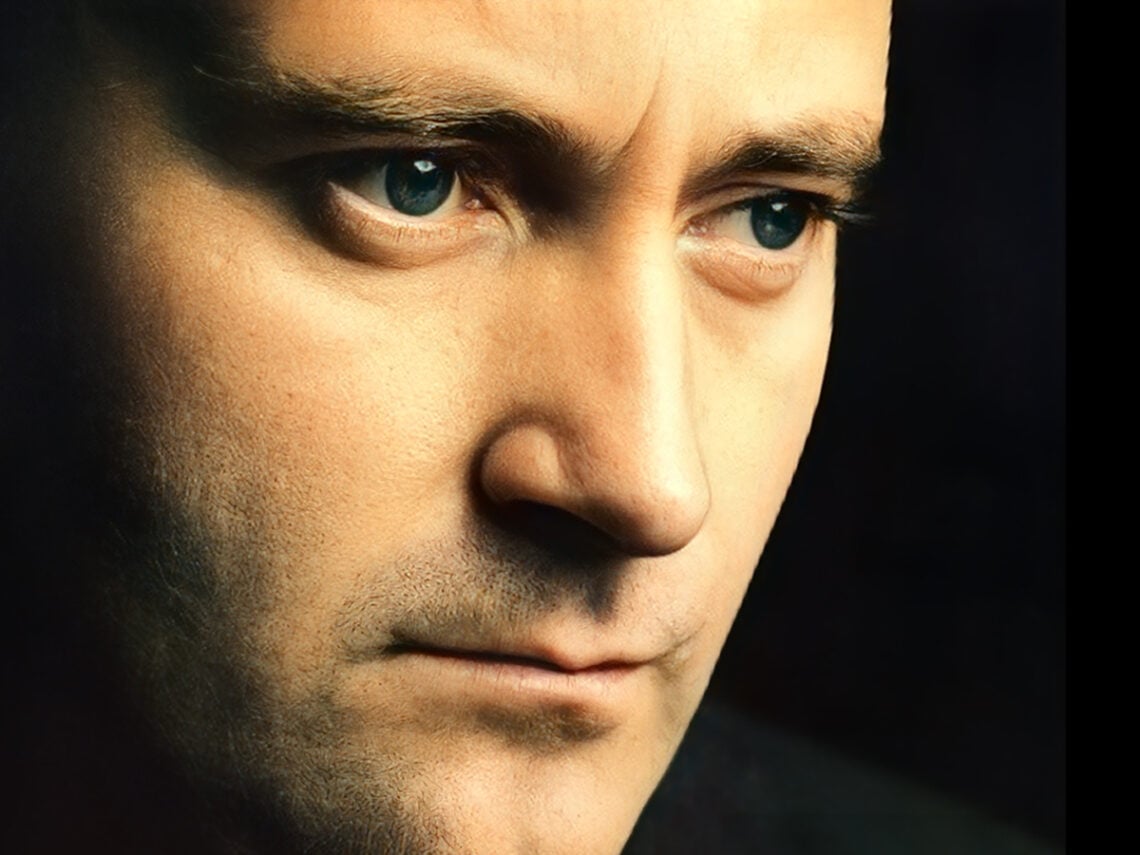
“Go back”: the album Phil Collins thought his fans didn’t understand

The only drawback of being a global megastar is that when you hit the jackpot, you basically just have to stay in your lane and run with it. To that end, it’s nearly impossible to rebrand yourself; just ask the man himself, Phil Collins. While it must be said that he’s probably a fairly satisfied customer in the sense of being one of the best-selling artists of all time, he did find it difficult at points to break the mould and unveil the musician he really wanted to be.
Away from Genesis, Collins was obviously a hit-making powerhouse. Early 1989’s albums Hello, I Must Be Going! And No Jacket Required was chock full of chart-topping floor fillers, which was all well and good, but keeping up the jaunty pretence was wearing more than a little thin for the drummer-turned-singer. It was time to take a swing towards the dark side.
Well, maybe not quite as sinister as that. The result, however, was the album Both Sides from 1993, which genre-wise was more soft rock than synthetic pop. Collins himself roundly considered it his favourite record of his own but got the impression that fans maybe weren’t of the same view.
He reflected in an interview in 2021 that: “Both Sides fell through the cracks a bit – I mean, it still sold 11 million copies. But I was very aware that everyone wanted me to go back to doing ‘You Can’t Hurry Love’ and ‘Sussudio’, and here I was being serious and dark.” The moody ruminations of ballads like ‘Everyday’ can’t exactly be considered the sonic twin to the zany energy of ‘Sussudio’. He’s right on that part, but in many ways, the depths of Both Sides did precisely what it says on the tin – displayed the multi-faceted talents of Collins lost to the bubble pop juggernaut and showed his musical genius far beneath the surface.
Despite that, inevitably, comparison creeps in to steal the thunder. “People were saying: ‘You’ve lost your sense of humour, Phil’,” he explained. “People didn’t know what to make of it.” Unfortunately, that was indeed reflected in its initial reception: lukewarm at best, and though still hitting the UK top spot, the album didn’t live up to the heady heights of its predecessors.
As much as we don’t like to think of artists being purely in it for the commercial assets, Collins admits that it’s only a natural disappointment. “You can’t help it. You can’t help but judge it by what position it gets to,” he confessed. But with all the wisdom of hindsight, this was a mere blip in the road. Over time, Both Sides did actually begin to redeem itself in terms of its critical appeal, so he wasn’t unjustified in calling it his favourite album after all. These things were sent to really test what he was made of.
Phil Collins, as a man of many mastered talents, has the range under his belt to get away with taking a gamble – Both Sides was just that, and it was a risk he was clearly more than happy to go out on the line for. Fans may have been a bit blindsided, but in his own way, the musical mammoth taught them that the most fun can be found in expecting the unexpected.
