


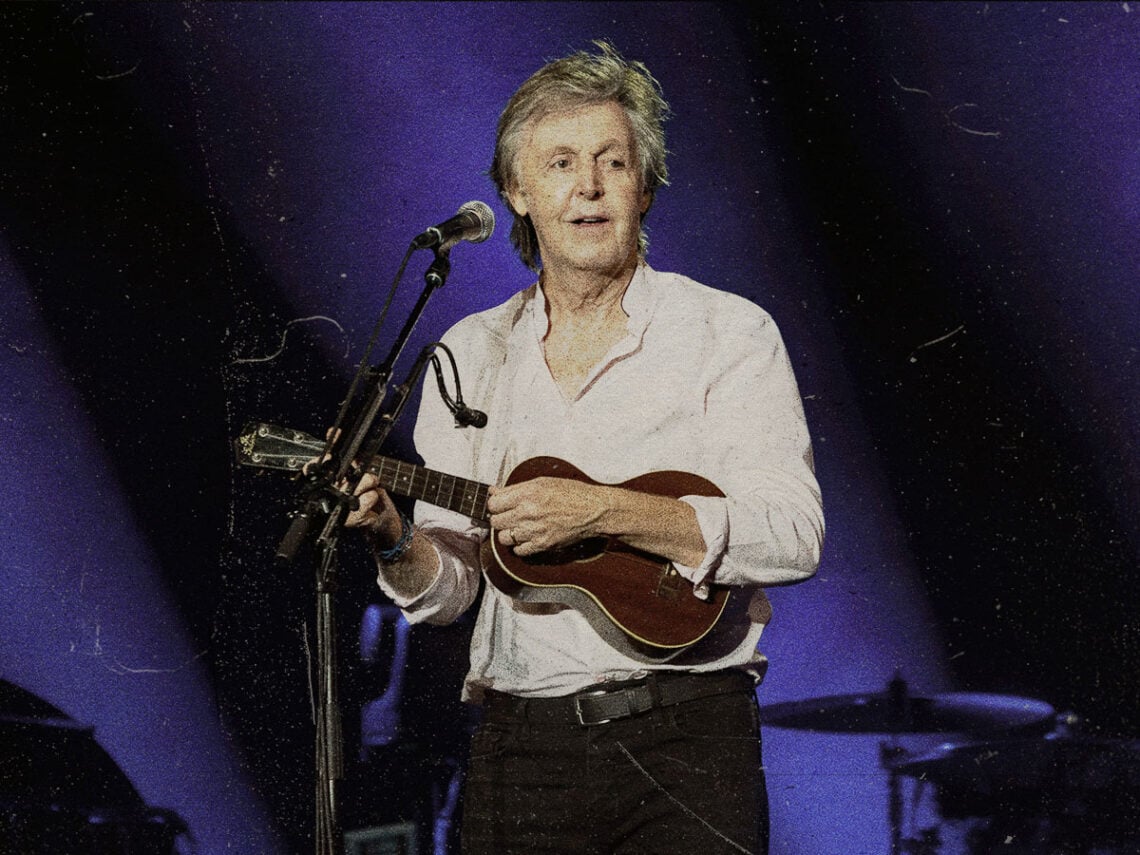
The album Paul McCartney wanted to make since ‘Sgt Pepper’: “We gave ourselves alter egos”

No one in The Beatles necessarily wanted to match their old hits when moving on to their solo careers. It was clear that being in the biggest band in the world had taken its toll on them, and even if they weren’t willing to fade into obscurity, nothing that they did was going to be a rehash of their old sound or their attempt at recapturing the feeling of Abbey Road. However, Paul McCartney always had fond memories of his old band, and some of his best solo moments came from harnessing that creativity one more time.
Because, really, it would have been impossible for any member of the band to ignore their legacy. George Harrison at least had an awareness of his old mates on tracks like ‘All Those Years Ago’ and ‘When We Was Fab’, and while John Lennon seemed more jaded about the breakup as time went on, he always saw some of his greatest solo compositions as an updated version of his Beatles classics, equating ‘Woman’ to his Rubber Soul classic, ‘Girl’.
Once the band started making Sgt Pepper, though, all bets were off. Even if they had many people wondering if they had dried up after coming off tour, this was when they proved to everyone that they could be complex musical thinkers, going into the realm of baroque music with McCartney’s granny songs or bringing in Indian influences on ‘Within You Without You’.
But for as revered as the album is, a lot of people forget how weird it can be. The psychedelic side of their sound had been touched on Rubber Soul and Revolver, but every song on their magnum opus was another excuse to experiment, like the swirling loops in ‘Being For the Benefit of Mr Kite’, the strange ending of ‘Lovely Rita’, and even the farmyard sounds in ‘Good Morning Good Morning’.
“It gives you the feeling that anything is possible and stops you being too serious.”
Paul mccartney
And as much as Macca played a hand in making those sounds, it took him years before he had that creativity again. There would be many albums that saw him getting a little freaky, like Ram or McCartney II, but if he was going to make something strange, he figured that it was better not to put his name on it. When he started working with Youth as The Fireman, though, Electric Arguments became the kind of psychedelic record most fans may have forgotten McCartney was capable of.
Looking back on his non-canonical experiment, McCartney considered Electric Arguments to be a successor to what he had touched on back in the 1960s, saying, “The original idea of The Fireman was to feel completely free in a studio atmosphere, and this is something I’ve been interested in since Sgt Pepper, where we gave ourselves alter egos to achieve the same effect. It gives you the feeling that anything is possible and stops you being too serious.”
While the album gets nowhere near the same heights that The Beatles did, it’s easy to see why McCartney would feel that way. Nothing was off the table when making this album, and seeing him make pop marvels like ‘Sing the Changes’ out of the strangest ideas isn’t all that dissimilar from how he was structuring many of his songs on Pepper, like the strange lyrical twists in ‘Getting Better’.
Although McCartney has been focused more on his solo career as of late, The Fireman is still a fine addition to his collection of masterpieces. It might not have the kookiness of RAM or the sheer pop hits as Band on the Run, but for anyone mildly curious about what McCartney’s creative process is like, this feels like looking inside his mind.
