


“Loose and free”: The album Paul McCartney thought could have been much better

For the second half of the 1960s, Paul McCartney’s creative genius was sadly confined to the four walls of the studio. I say sadly tentatively, knowing that as someone born in the mid-1990s, I am the beneficiary of his studio exclusivity, but for my music-loving forefathers, the Beatles hysteria robbed fans of the chance to see the band play live.
So when McCartney was given the chance to spread his ‘wings’ with his post-Beatles project, a world in which the studio didn’t receive full attention beckoned for the songwriter. In 1971, the band released their first record, Wild Life, a half-baked execution of McCartney’s newfound liberation. As you’d expect with any McCartney project, there are standout musical moments on the record, but ultimately, you can hear one of his feet walking out the door and heading to the nearest stage he could find.
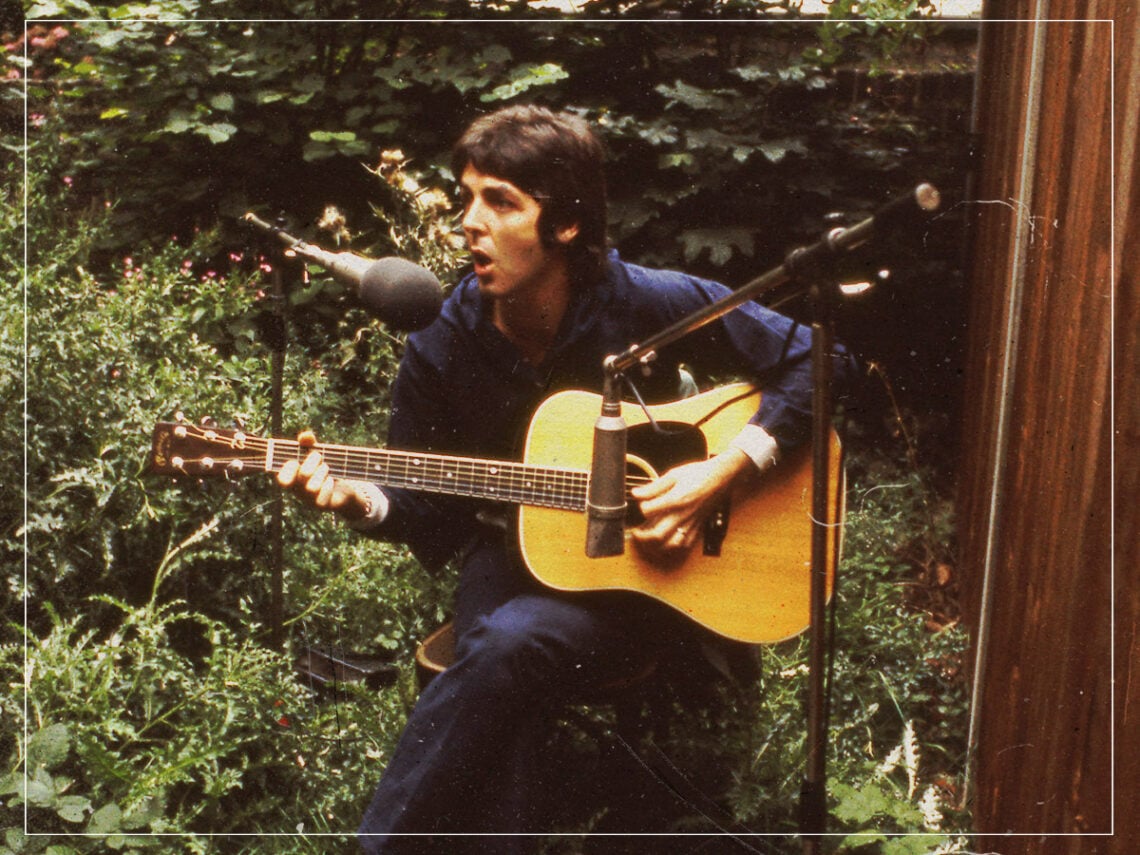
“We recorded that album very quickly, it was almost like a bootleg,” McCartney said. He continued, “Which may be a shame, and perhaps some of the songs aren’t as good as they might be. I wanted the whole album to be loose and free, so that everyone could get into it”.
Adding: “Things like ‘Mumbo’, which scream a bit and have only ‘mumbo’ as lyrics, may offend a few old ladies, but generally, it’s got something for everyone.”
McCartney was certainly no stranger to spontaneity come 1971. In the five years that led up to that point, he and John Lennon had fine-tuned their ability to throw sonic colours in the way and paint them into musical coherence. However, the result at that time was less naivety and more innovation. With Wings, Wild Life was a product of their infancy, and as such, the free-spirited and nonsensical approach to creativity is understandably read as something more raw entirely.
That being said, it’s still a refreshing musical take from the band, which was spearheaded by one of music’s fiercest creatives, newly released from what was becoming a burdened relationship with his partner. And so, without Lennon by his side, he could follow in the footsteps of greats who didn’t grow up in Liverpool.
“Dylan inspired Wild Life,” McCartney admitted. “Because we heard he had been in the studio and done an album in just a week. So we thought of doing it like that, putting down the spontaneous stuff and not being too careful. So it came out a bit like that.”
Perhaps the stark difference in their week-long recording processes would have been Dylan’s unwavering independence. A fierce lyricist and melody writer, he simply had to march at the beat of his own drum, whereas McCartney’s newfound musical project was in a slightly different state. Hyper-focused and riding the wave of creative immortality forged in the late Beatles years, McCartney was operating at a level where a week-long recording would have been light work. But with new musical relationships to understand and an entirely new sonic identity to form, a week offered no time for wildlife dwellers to separate the wheat from the chaff.
