


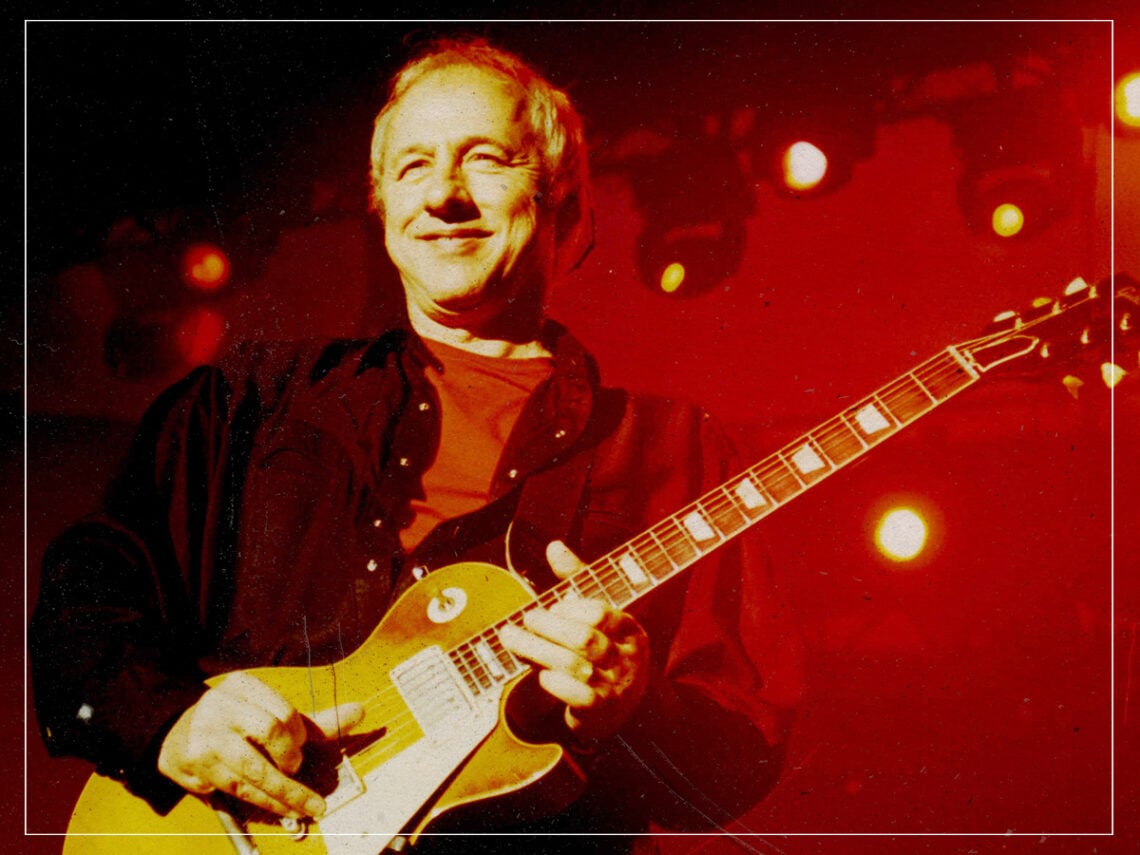
The album Mark Knopfler didn’t want to be paid for: “I was just happy to be asked”

Dire Straits guitarist Mark Knopfler has surpassed his wildest dreams throughout his expansive career, becoming a stadium-conquering icon in the process. To date, he’s sold over 120million records; therefore, money is no longer a significant cause of concern, and Knopfler hasn’t needed to sacrifice his principles to reach commercial goals.
While many artists who get a taste of international success become addicted to that feeling, Knopfler instead saw it as a free pass to make uncompromising art. Many projects he’s taken on could have potentially detrimentally impacted his career, but sometimes, an opportunity proves to be too irresistible.
Following Dire Straits’ monumental rise to success, many people expected Knopfler to stay focused on band commitments. However, when asked to work with Bob Dylan, Knopfler was prepared to put his objectives on hold to assist one of his ultimate musical heroes. Collaboration with an icon was the kind of dream ticket only a few artists are given the chance to cash in on.
In reality, things were far from the dream scenario. During the recording process, Dylan dictated everything. Producer Neil Dorfman said of the disaster team: “I imagine that he [Knopfler] felt a similar responsibility to the one that I felt: this is Bob Dylan; we’re going to make an amazing record, we have an incredible band, an incredible bunch of songs, and it’s up to us, we really, really have to make this happen,” he said. “And I could feel the air just sort of going out of Mark a little bit, when he realised that the traditional role of the producer was not going to be in play on this record. He was going to be looked to as an advisor, or maybe a mirror in some ways. But as far as driving the bus – that was not going to happen”.
Similarly, in 1990, Knopfler had spent over a decade at the top of the music business and decided to tick another name off his bucket list by collaborating with legendary guitarist Chet Atkins. Having already been burned, to some extent, by working with Dylan, it would have taken a sincere push from Knopfler to dive in once more. What’s more, these deep waters were a lot different to the comparative shallows he’d enjoyed with his band.
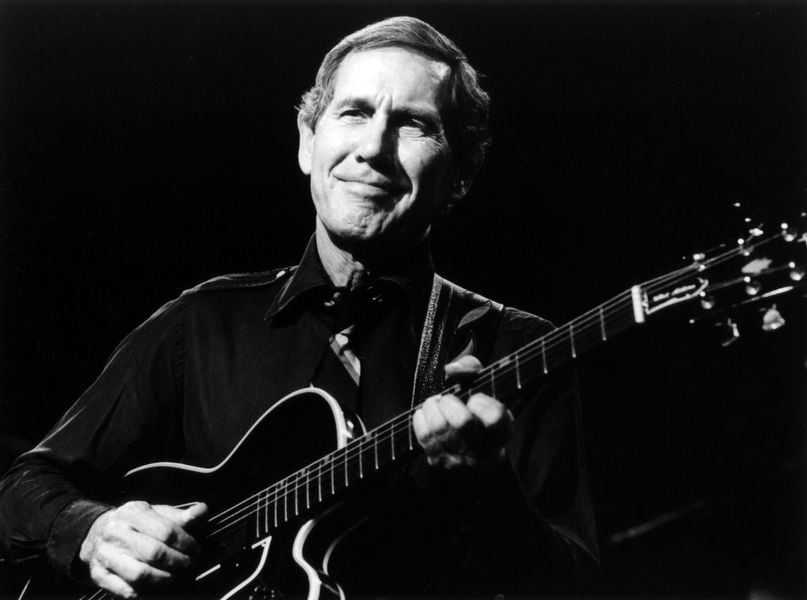
With Dire Straits, Knopfler was accustomed to working with almost unlimited budgets thanks to the riches of the music industry in the 1980s. Nevertheless, his project with Atkins was a stark contrast regarding financial support.
Knopfler was never interested in working with Atkins because of a possible payday and did everything he could to enhance the chances of Neck and Neck being a success. Additionally, as a student of the game, it also allowed him to improve his craft, which was a priceless experience.
Reflecting on the experience and why he worked with Chet during an interview with Guitar, Knopfler remarked: “Working with Chet and other fine musicians like him really helped my playing – you’re always learning when you play with good musicians. I like the idea of change – I don’t want to stay static. I like the way I play in my heart and I wouldn’t want to be anyone else, but I’m conscious that there’s a whole world of playing out there that I don’t do – it’s bottomless, really.”
Furthermore, he also revealed that he was prepared to walk away from the project without earning a penny for the endeavour. He explained: “When I started working with Chet Atkins on the Neck And Neck album, again, we were working on a limited budget – I refused payment for the album, but I think in the end, we split the royalty in half. When I first went over to work with Chet, he had a bunch of guitarists come in from all over the world – I think I was the only Englishman.”
Elaborating further on his selfless decision, Knopfler added: “I had made enough money from music and I knew Chet didn’t have the finances to pay huge great session fees. I was just happy to be asked and, in the end, we ended up doing a record together. Again, it was a home-studio thing recorded at Chet’s place and we only spent a couple of days in a ‘proper’ studio.”
Ultimately, Knopfler eventually received a pay cheque from Neck and Neck, but that was never his objective from the collaboration. The guitarist studied Atkins up close and examined what made him such a treasured musician before it was too late.
