


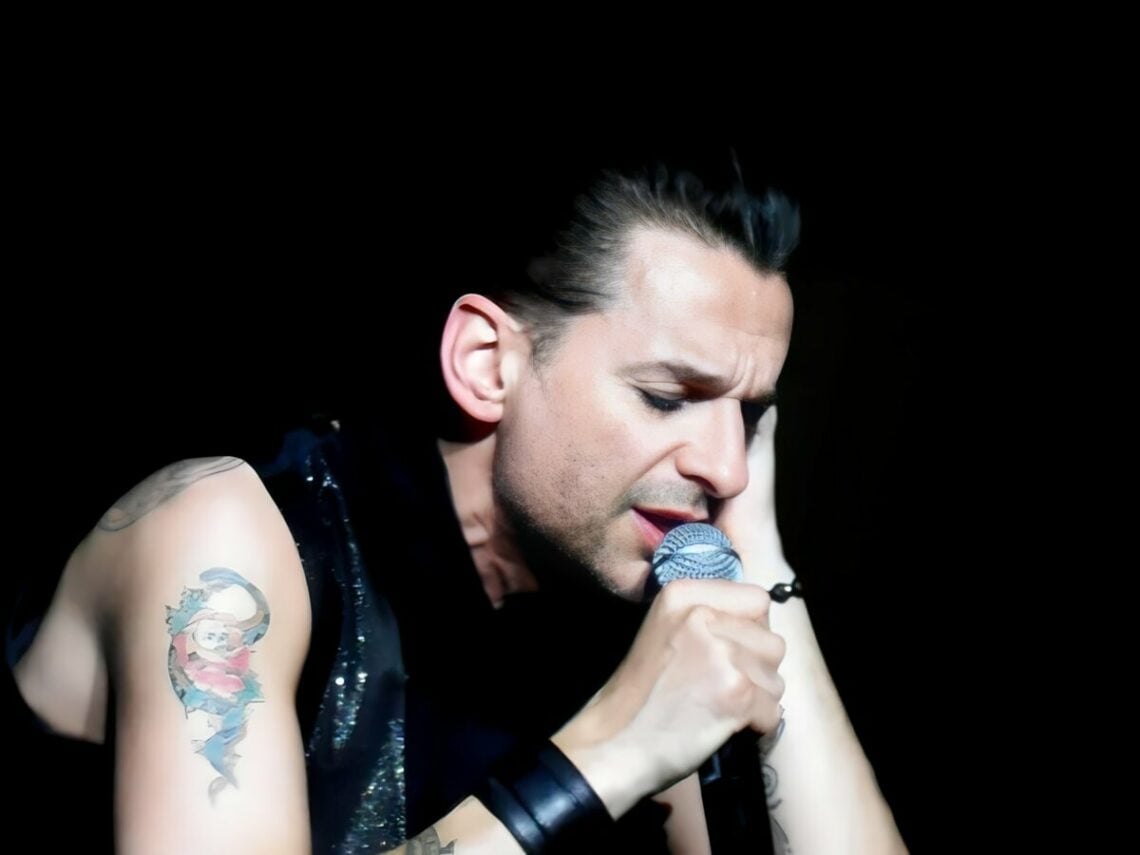
The album that changed Dave Gahan’s life: “It made me feel like I belonged to something”

When you make a band, you do it with the aim of changing your own life, and then that of your fans. Dave Gahan was taught that from a very young age.
It was something that was pulled into focus most sharply in 1980 when he joined Depeche Mode, at a time when the burgeoning synth pop scene was awash with a flurry of the most striking muses, from Siouxsie and the Banshees, Iggy Pop, the Talking Heads, and even Prince. All of these were influences, but there could only be one master.
In Gahan’s eyes, that path towards his idol was clear, because no one else did it like David Bowie. He even was scouted to join Depeche Mode after Vince Clarke heard him singing a version of ‘Heroes’, and so it was more than obvious that the Starman was his guiding light long before stardom ever fully entered into his mind.
It should come as no surprise, then, that one of Bowie’s true masterpieces was the ultimate eureka moment in showing a young Gahan that anything was possible, that his chances in life were limitless, and there was space to reach for the stars beyond his city life. Of course, Bowie was the vehicle, but one man was the beacon: and that was Ziggy Stardust.
“There’s many records that have been pivotal for me,” Gahan said in a 2012 interview. “If I were to name one, it would be Ziggy Stardust. It changed my life. The same thing happened when punk came along and I heard The Clash for the first time. I was 16 or 17 years old. It made me feel like I belonged to something. Music has always done and continues to do that for me.”
When Ziggy Stardust first landed to Earth in 1972, it was the moment in which the world began to spin on a new orbit as this alien persona breathed a whole new spectral life into the possibilities of rock and roll. That was bound to be intoxicating for anyone who heard it, but for a yearning frontman like Gahan, there was no denying its significance.
The threads of Bowie were everywhere in the coat of armour he weaved when becoming a star, and still remain today. “I go to a very visual place when I’m singing,” Gahan said. “It’s very cinematic and I get this feeling of space. I love when music does that. I listened a lot to David Bowie a lot when I was a teenager. The place that he seemed to be singing from is the place that I wanted to go to. I didn’t know if that place really existed, but I believed it did.”
Put simply, the whole notion of one’s wildest imaginings even having the possibility of becoming true cut to the core of everything Bowie set out to be as an artist. It was to take every living thing in the world – man, woman, or animal – and take it away from its ordinary surroundings into a dreamscape where anything could be turned into a reality.
Without that elixir, it’s absolutely certain that Gahan would have never pursued the path he did, let alone making it a success in his own right. But that was the mark of what Bowie could do for anyone, making this abstract, spectral thing of rock and roll just that little bit more real, one song at a time.
