


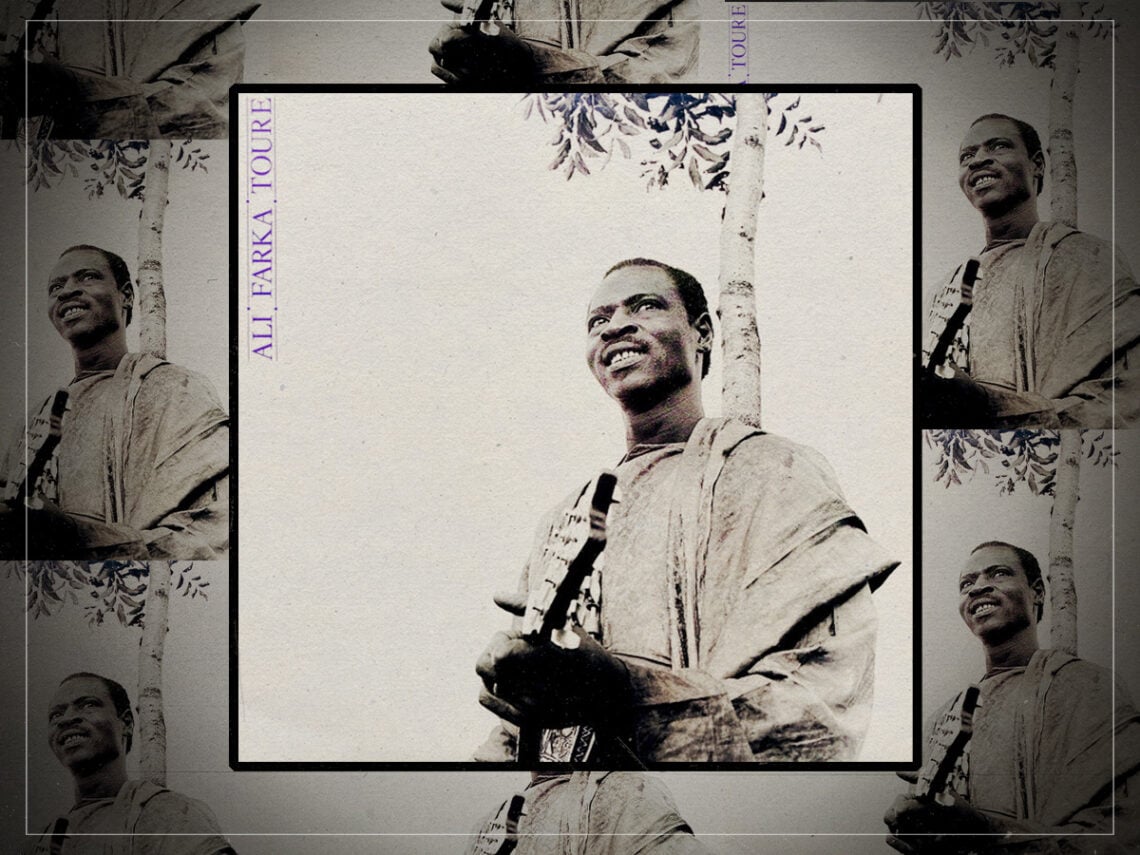
‘Ali Farka Touré’: The 1988 album that brought desert blues to the world

The desert blues may be a genre that is firmly rooted in one particular part of the world, but it doesn’t mean that its impact is any less essential.
Put simply, it’s a sound that places the Saharan regions of north and west Africa firmly on the map of the global culture-consuming appeal, particularly in a space that is all too easily Westernised and channelled through only very finite tunnels. It is vital to give a voice to the Tuareg people when they need it and to show just what their musical talents have to offer.
Of course, it’s not as if the genre bolted from obscurity and became an instant overnight success. It took years of hard work, overcoming colonial rule, poverty, droughts, and hardship, for desert blues to even gain a foothold, and at that, it still can all too commonly be overlooked in terms of its significance.
But the stars of the modern day, from Mdou Moctar to Tinariwen, would undeniably not be enjoying the success they have if the founders of the desert blues hadn’t laid the solid foundations of a groundwork first, and while that effort could be traced as far back as the turn of the 20th century, it never witnessed the fruits of its labour until much further on.
To find it, you’d have to travel as far as 1988 and come across Ali Farka Touré, the Malian musician whose self-titled album from that year represented a turning point for the genre – it signalled a breakthrough, bringing the highs and lows of the desert blues to the rest of the world in a way that they had never heard before.
What is the wider impact of the desert blues scene?
There was no denying that the impact of Touré on the desert blues scene was the key to transforming it into something transcendental. In particular, it was the discovery of his music on British shores by the late Radio 1 DJ Andy Kershaw that was the start of a snowball effect, where the genre took its sound to the world.
Of course, he was far from the only one to reap the benefits of that higher status. Take the godfather of the genre, Abdallah Oumbadougou, who was instrumental in his influence on the canon and its effects worldwide. It’s certainly a tight-knit musical community, but not one so insular that it prevents a sense of accessibility.

As a further example of that, look no further than Fatou Seidi Ghali, the first ever woman to become a prominent guitarist within the desert blues field. In a backdrop which can often be so much tougher for women to climb the tree, her achievements have been particularly remarkable in the scene, and that doesn’t deserve to be overlooked.
Desert blues is, of course, far from a completed picture. It’s a genre that will hopefully only continue to move and grow with the times, and rise increasingly just as it has done over the course of the past four decades. But through it all, Touré can proudly hold the title of making the most impact. Without him, perhaps not much else would have been possible.
