


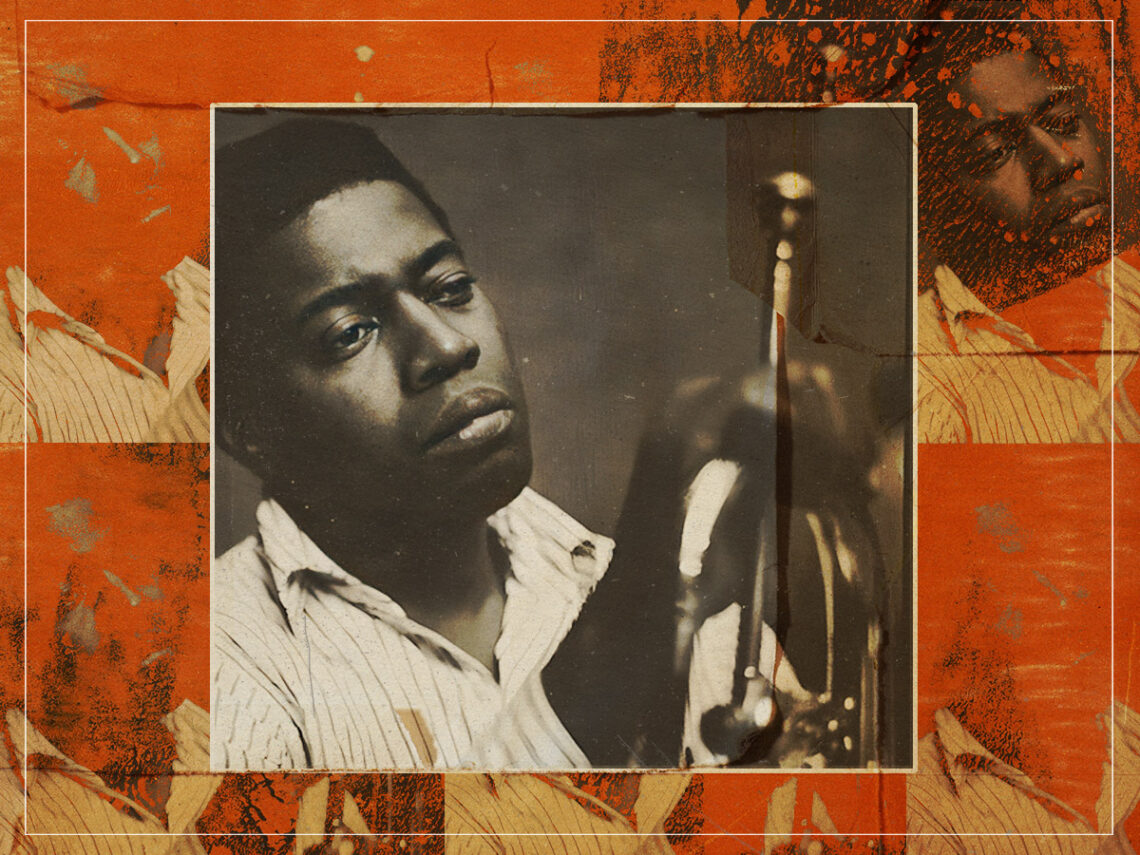
Alan Shorter: The revolutionary who played the bin, and the experimental concert series of 1965

“Are you aware of the music known as jazz?” Asks Howard Moon in an episode of The Mighty Boosh. “Are you aware of jazz music? The movement of jazz?” He asks. “What do you keep going on about jazz for?” Replies Vince Noir, “No one listens to jazz, science teachers and the mentally ill, that’s all jazz is for.”
What is supposed to be a funny exchange between two characters in a comedy draws an interesting line in the jazz genre that separates two huge parts of the art form. This is the division between regular jazz and the free jazz / experimental movement, popularised in the ‘60s. Free jazz was a controversial form of music as it embraced obliterating standard forms, moving away from regular tone, structure and melody and instead creating completely deconstructed pieces that were hard to follow and jarring to listen to.
Free Jazz was largely a political movement. Many people weren’t fans of the political and social climate, so they made music that they saw as a reflection of their attitude towards the world at that moment. Essentially, by creating inaccessible and frustrating sounds, they were giving listeners sonic insight into their everyday struggles. Of course, that wasn’t the rationale for every unconventional jazz artist.
For instance, Sun Ra believed he was connected to intergalactic frequencies and was sent to Earth by The Creator to make music that changed the world. This meant it wasn’t enough to play in tune; he and his band had to stretch beyond the realms of keys, tempos, and harmonies to tap into something not of Earthly origin.
One of his trumpeters, Ahmed Abdullah, recalls a conversation Sun Ra had with him during his first band practice. “You got to be ready when you play with this band. Sometimes the harmony might have to be real odd and strange and totally different from the melody. It might have to be, if that’s the message,” he said, “If the harmony is what it is according to what they teach in schools and things, then it wouldn’t be any other message than what they’ve been hearing all along.”
Sun Ra continued, “But when the harmonies move in a direction that they seemingly are not supposed to move in and still fit, you got another message from another realm from somebody else, and Superior Beings would definitely speak in other harmonic ways because they’re talking to something different.” He said, “You have to have chord against chord, melody against melody, and rhythm against rhythm. When you have that, you’re experiencing something else.”
New York was famous for its jazz scene, and as more experimental forms of the genre started creeping in, venues dedicated themselves specifically to that kind of sound. It was met with controversy, as some jazz purists described the sound as noise and against the principles of jazz, but other people connected with the music and found it as a way to express themselves.
One of the musicians was Alan Shorter, an experimental artist who could play the trumpet and flugelhorn but didn’t limit himself to just these instruments. The summer of 1965 was a golden age for experimental musicians in New York, as the Museum of Modern Art hosted a concert series throughout the hot months that ushered in the talents of several great musicians, Shorter being one of them.
Those participating were people who hadn’t been dubbed leaders of the movement, instead, gigs were reserved for far-out performers who got people to look at music from a different perspective. Sun Ra’s trumpeter, Abdullah, was in attendance at this concert series and described some of his favourite artists from the months of music.
“I did see a few great gigs that were pretty way out. One concert was with a group called the New York Art Quartet, which featured the great drummer Milford Graves and the alto saxophonist John Tchicai,” he said, “Milford was an original with a totally personal approach to drumming. He had even created his own drum set and didn’t play on a traditional drum stool but used a common chair instead.”
One of his favourite performers of the whole series was Alan Shorter. Abandoning his trumpet, the instrumentalist took to the stage with nothing but air in his lungs and a bin on a table. “Another concert was Alan Shorter,” recalled Abdullah, “Who played some really amazing music. He had a garbage can set up on a table with both ends opened. Man, the notes he blew through that can were sweet!”
Going back to The Mighty Boosh, when Vince asks, “What do you keep going on about jazz for?” Howard responds, “Because it’s the most important art form of the 20th century.” This, indeed, could be argued. Jazz musicians encouraged improvisation in their music, which was then used in genres like the Blues and Rhythm and Blues, which led to rock. The more experimental side of the genre paved the way for people to make socially conscious music. While some of the methods might seem unconventional, they led to some of the most important developments in sound. As Howard Moon says to those who might turn their nose up at the chaotic nature of such music, “You hate jazz? You fear jazz.”
