


The Alan Clarke film that inspired Gus Van Sant’s Palme d’Or winner ‘Elephant’

From Ken Loach to Andrea Arnold, nobody does social realism quite like the Brits. The grey drizzle of old blighty has provided a wealth of melancholic stories, which a plethora of prominent directors have entrenched themselves within. Within the realm of British social realism, Alan Clarke is among the most underrated directors. With a career spanning 20 years, Clarke is responsible for a wealth of fantastically hard-hitting pieces that have certainly stood the test of time. Among them is his 1989 short film Elephant.
Elephant came along at an interesting period within Clarke’s filmography. It was his first project following Rita, Sue and Bob Too, his most popular work up to that point. Going from creating uncompromising, often brutal works like Scum and Made In Britain to the comedic exploration of Bradford in Rita, Sue and Bob Too was a fairly outlandish move, though certainly a welcome one. With Elephant, Clarke reaffirmed his commitment to frank and forthright realism, showing the reality of life during the Troubles in Ireland.
The short was noted for its incredible use of minimalism, featuring very few instances of dialogue. Drawing upon actual events and police reports from the time, Elephant was filmed entirely in grainy 16mm, reflecting the cold and unforgiving nature of life during the Troubles. Clarke’s work was also daring for its lack of any concrete plot, depicting 18 murders in a style reminiscent of documentary rather than fictionalised cinema.
By 1989, it was more or less expected that everything Clarke produced would attract equal amounts of acclaim and controversy. Elephant was certainly no exception, with its brutal representation of the Troubles proving too shocking for mainstream audiences in Britain, who were largely ignorant to the horrors going on in the north of Ireland at the hands of the British Army. The film was a complete departure from the character and warmth of Rita, Sue and Bob Too, becoming perhaps Clarke’s bleakest offering.
Unfortunately, Elephant does not enjoy the same legacy as some of Clarke’s other offerings, the likes of The Firm or Scum, for example. The short is certainly not the defining film surrounding the Troubles, but it still forms an incredibly important part of Clarke’s career and raises awareness of the reality of life in the north of Ireland. Fellow director David Leland attested to its impact, saying, “I remember lying in bed, watching it, thinking, ‘Stop, Alan, you can’t keep doing this.’ And the cumulative effect is that you say, ‘It’s got to stop. The killing has got to stop.’”
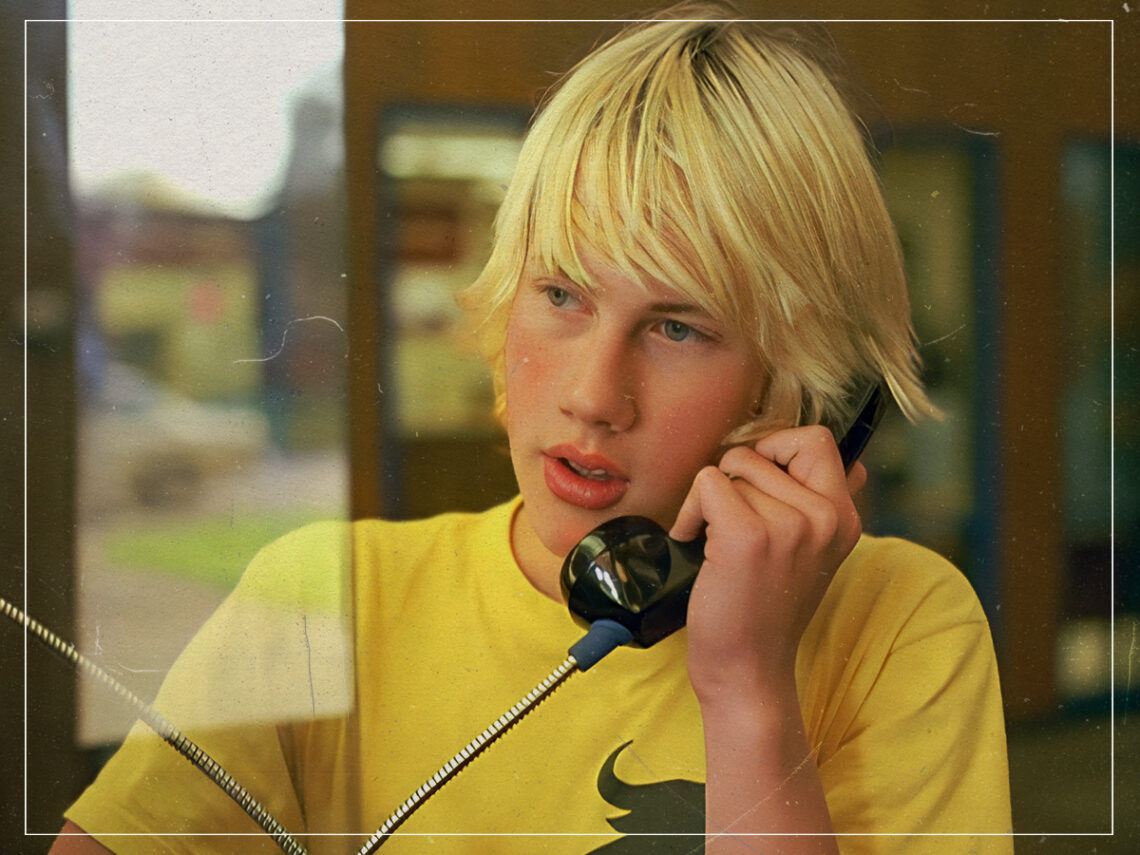
The legacy of Elephant can be felt within Gus Van Sant’s Palme d’Or-winning drama of the same name. Van Sant’s Elephant is centred around the Columbine High School massacre, which saw two students kill 13 of their classmates and teachers. The director was inspired by the cold, documentary-like feeling of Clarke’s work, particularly drawn to its minimalistic style and use of tracking shots.
Elephant was the second in Van Sant’s so-called ‘death trilogy’, following Gerry and preceding Last Days. In addition to Clarke’s short film exploring sectarian violence, Van Sant was also reportedly influenced by the 1975 film Jeanne Dielman, 23 quai du Commerce, 1080 Bruxelles by Chantal Akerman – an undeniable masterpiece of social realism.
