


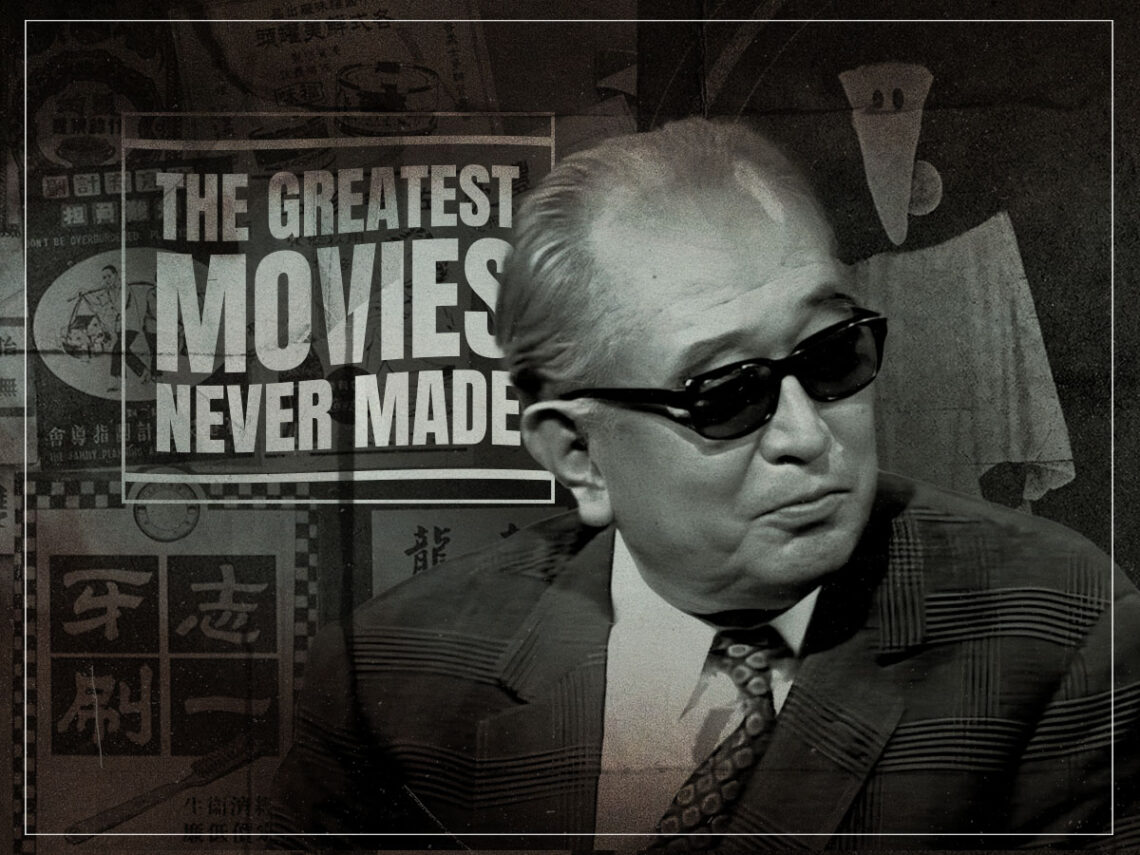
The greatest movies never made: Akira Kurosawa’s ‘The Mask of the Black Death’

The list of filmmakers who’ve tackled the works of William Shakespeare is hefty enough to fill the phone book, but the names to have done ‘The Bard’ better than Akira Kurosawa could fit comfortably on the slim side of a matchbook.
Throne of Blood, The Bad Sleep Well, and Ran took the broad strokes of Macbeth, Hamlet, and King Lear and refitted them as stories rooted deeply in the culture, iconography, and social sentiments of Kurosawa’s native Japan, with all three enduring as masterpieces crafted by one of the greatest to ever step behind the camera.
In fact, it wouldn’t be a stretch to say that no auteur in the history of cinema has mastered the literary adaptation to the same level as Kurosawa, who turned it into the habit of a lifetime. Whether he was putting his own spin on Maxim Gorky’s The Lower Depths, tackling Fyodor Dostoevsky in The Idiot, or looking to Shūgorō Yamamoto with Dodes’ka-den, Red Beard, Sanjuro, the pairing of Kurosawa and the printed page was never anything less than phenomenal.
That doesn’t even include two-parter Sanshiro Sugata, The Men Who Tread on the Tiger’s Tail, The Quiet Duel, Rashomon, and High and Low, either, never mind the litany of original works that established him as one of, if not the single most influential director who ever lived. In short, Kurosawa and literature were a match made in heaven, which makes it sting even more, knowing he never got around to Edgar Allan Poe.
Having toyed with the idea since the mid-1970s, the final screenplay Kurosawa penned before his death in 1998 was a feature-length adaptation of Poe’s short story The Masque of the Red Death. Based on how he injected Shakespeare’s work with his own sensibilities, embracing and elevating them into their own rarefied air, there’s no doubt he could have done the exact same with the master of the macabre.
The gothic fable revolves around Prince Prospero, who attempts to avoid the titular plague by barricading himself within his abbey. Hosting a masquerade ball in seven different rooms of his lavish abode, a mysterious figure clad in a crimson mask weaves their way through each area, leaving death and despair in their wake.
Altering the title to The Mask of the Black Death, Kurosawa’s version is more timely now than it ever was in a post-pandemic world. Moving the action slightly further forward to the turn of the 20th century and relocating the setting to Russia, the filmmaker expanded the scant five pages of the source material into a 120-page script.
Widening the scope and scale of Poe’s writing, Kurosawa cast his eyes far beyond the confines of Prospero’s abbey, focusing equal amounts of attention on the resilience and travails of the population struggling to survive in the face of a deadly contagion that’s sweeping the nation, all while the rich and noble are throwing grand parties in their own self-absorbed bubble.
Juxtaposing the opulent confines of the abbey with the dark, gloomy, and haunting world that lies outside those four walls, Kurosawa’s The Mask of the Black Death illustrated how the worst thing a society can do when faced with a shared threat is look inward and focus on self-preservation. It spoke directly to his humanist side, using Poe as another jumping-off point to state his career-long belief that the best way to handle any oncoming peril is together.
A director who specialised in masterful literary adaptations using one of horror’s formative figures as the springboard towards a rich and resonant exploration of how humanity has a recurringly dangerous habit of turning on itself during the darkest moments stood every chance of adding the latest masterwork to a filmography that was overflowing with them, but it wasn’t to be.
