


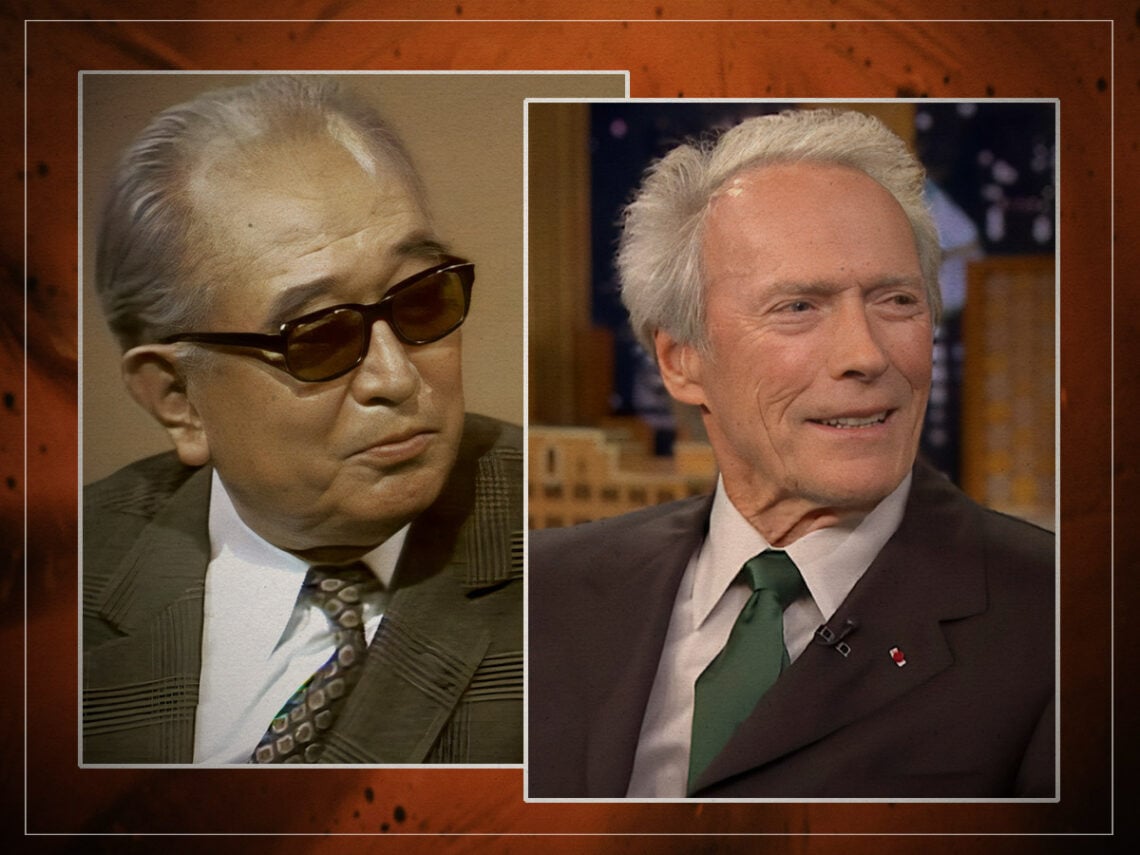
The Akira Kurosawa movie Clint Eastwood hated with a passion: “I thought that was terrible”

Cinema might look strikingly different if Akira Kurosawa had never graced audiences with various iconic works of art, like Rashomon and Seven Samurai. He emerged in the 1940s, before finding the greatest success in the following decade with his meticulous attention to detail, considered cinematography, and epic productions. As a result, Kurosawa established himself as a master of Japanese cinema, inspiring many filmmakers in his wake.
Whether he was adapting classic authors like William Shakespeare and Fyodor Dostoevsky or coming up with his own original ideas, Kurosawa’s films were never short of impressive. He is widely considered one of the greatest filmmakers of all time, and many great directors have cited him as a vital point of reference, from Ingmar Bergman to Steven Spielberg.
Kurosawa’s samurai films took inspiration from John Ford’s classic westerns, but when Clint Eastwood emerged in the 1960s as the new face of the American western, his take on the genre strongly bore the influence of the Japanese auteur. It’s unsurprising that Eastwood found himself drawn to Kurosawa’s films; they drew many parallels to these classic American westerns, and Seven Samurai was even remade in America by John Sturges as The Magnificent Seven, released in 1960.
That’s not the only Kurosawa film that inspired a classic American version. Eastwood appeared in A Fistful of Dollars in 1964, the first of Sergio Leone’s iconic Dollars trilogy, which gave the actor his big break into Hollywood with a leading role. The movie was directly influenced by Kurosawa’s Yojimbo, released three years earlier, which the actor discussed in the book Conversations with Clint.
“I thought the early stuff—Red Beard, which wasn’t too early, going back through the years to Seven Samurai and Yojimbo, which we remade as A Fistful of Dollars, or made a version of—were really great visual things,” he commented. “He had the great combination of being able to do a visual picture and have his characters come to life. You wanted to know them. Where a lot of times you get one or the other: you get somebody who’s very good with the character thing and not with the visual, or very good with the visual and spectacle part, but you can’t ever get into the people.”
However, despite his love for the filmmaker, there was one Kurosawa film he just couldn’t get on with. “I loved Kurosawa’s work. I didn’t like Dersu Uzala—I thought that was terrible, except it had a nice wind sequence in it,” Eastwood revealed. The 1975 film won ‘Best Foreign Language Film’ at the Academy Awards, but Eastwood simply wasn’t impressed. It remains Kurosawa’s only non-Japanese film, with the director instead opting for Russian.
He based the movie on the memoir of the same name by Vladimir Arsenyev, with Yury Solomin playing the writer, while Maxim Munzuk played the titular character. Set in the Siberian forests, the movie is a tale of friendship and humanity, and it surprised some critics upon its release due to its Russian setting. However, it has since been widely heralded, although it seems that Eastwood is an outlier, preferring the cinematic master’s earlier work.

Never Miss A Tale
The Far Out Clint Eastwood Newsletter
All the latest stories about Clint Eastwood from the independent voice of culture.
Straight to your inbox.