


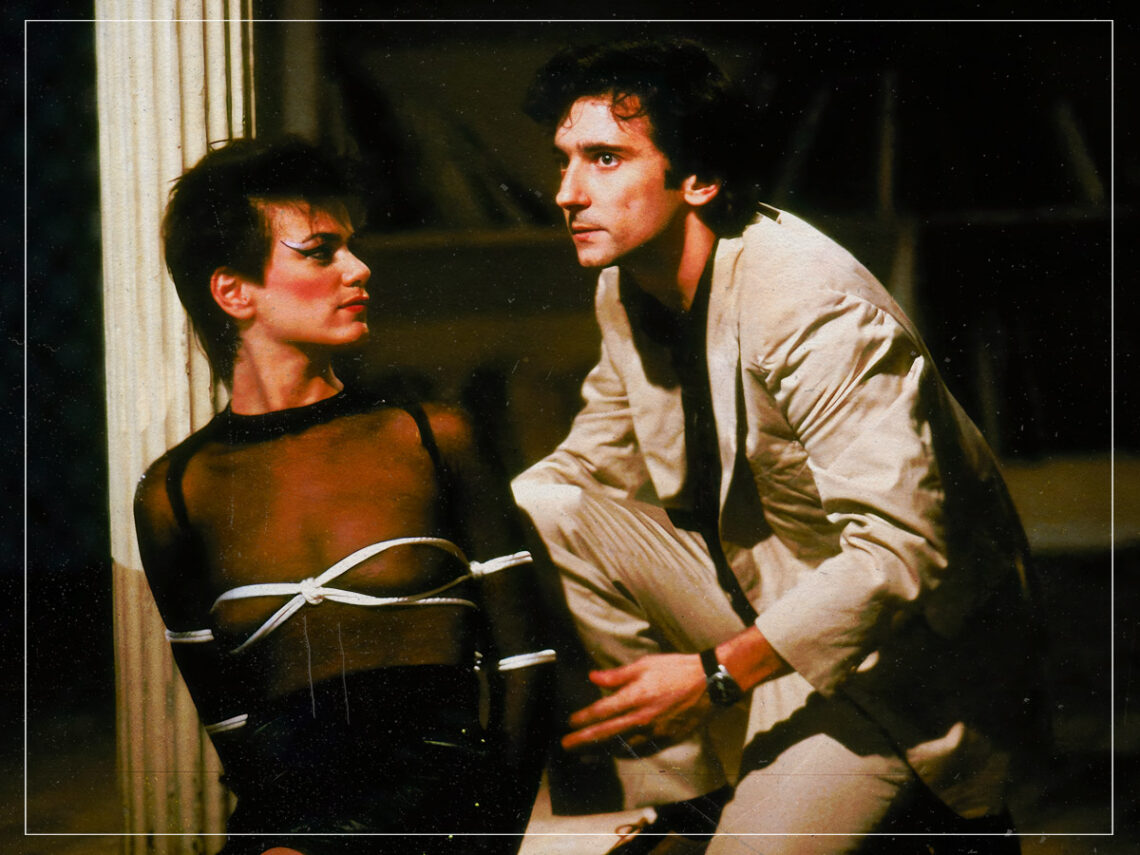
‘After Hours’: Martin Scorsese’s Kafkaesque underrated surreal nightmare

When thinking of the best cinematic offerings that the legendary Martin Scorsese has provided throughout his stunning career as one of American film’s biggest icons, the mind immediately goes to the likes of Mean Streets, Taxi Driver, Raging Bull and Goodfellas, all of which are respectively deserving at their shot at the title of Scorsese’s most impressive.
Of course, there are other movies with a shout-out, like Gangs of New York or The Wolf of Wall Street, but what’s even more interesting to consider is Scorsese’s most “underrated” film. In that subcategory of the filmmaker’s back catalogue, pictures such as The King of Comedy, The Age of Innocence, and even Silence shine.
However, the true answer to the question of Scorsese’s most underrated work is his 1985 black comedy After Hours, starring Griffin Dunne, Rosanna Arquette, Verna Bloom, Tommy Chong, Linda Fiorentino, Catherine O’Hara and a swathe of other stars who come together to deliver Scorsese’s most frequently overlooked pieces of cinema.
Dunne plays Paul Hackett, a polite office word processor who heads out into the SoHo district of Manhattan for a late-night date, only to find himself drawn into a surreal nightmare of an evening. What begins as a hopeful journey towards romance ends up as an increasingly frustrating and misfortunate (yet hilarious) sequence of occurrences that practically defy belief.
What’s great about After Hours is the fact that it seems to serve as something of a thematic and stylistic departure from Scorsese’s previous movies. Scorsese had been upset by the way Paramount Pictures had abandoned his The Last Temptation of Christ, which was still in production, so he set about becoming involved in smaller projects like After Hours.
Scorsese’s previous work had largely been defined by intense character studies and gritty crime dramas that explored the nature of reality. However, with After Hours, the director turned his artistic attention to a surreal, almost Kafkaesque black comedy, through which he married dark humour and an unsettling tone that still proved his brilliance behind the camera.
In addition, After Hours still managed to capture the New York City that Scorsese had examined in so many of his other movies. However, the SoHo district of Manhattan is shown to be more flamboyant and yet more surreal than the other parts of New York, like Brooklyn, where Scorsese had often set his darker dramas. As such, Scorsese himself was able to explore a new side to New York, painting his catalogue of movies with a new brush and colour palette.
Aside from the differences, Scorsese also showcased in After Hours the kind of filmmaking facets that had drawn such acclaim in the first place. Tension is still paramount in Scorsese’s 1985 movie, and each of Paul’s mishaps is captured under masterful editing and camerawork, with the lines of dialogue being delivered in a frantic, anxiety-inducing manner just as any black comedy worth its salt ought to.
In addition, through his tragicomic exploration of the nightlife of Soho, the everyman Paul garners sympathy while he dives into a world of sheer misfortune and alienation. Thematically, Scorsese managed to examine the nature of fate and the unknown while perhaps casting the odd aspersion on the New York bohemian art scene and highlighting its ridiculousness.
Sure, we will always be drawn to the likes of Taxi Driver, Mean Streets, Raging Bull and Goodfellas when the idea of Martin Scorsese’s best movie is brought up. However, when it comes to his most underrated, it’s hard not to pay respects to his dark and surreal comic journey through New York City’s SoHo, a hilarious yet eerie experience befitting of a master director.
