


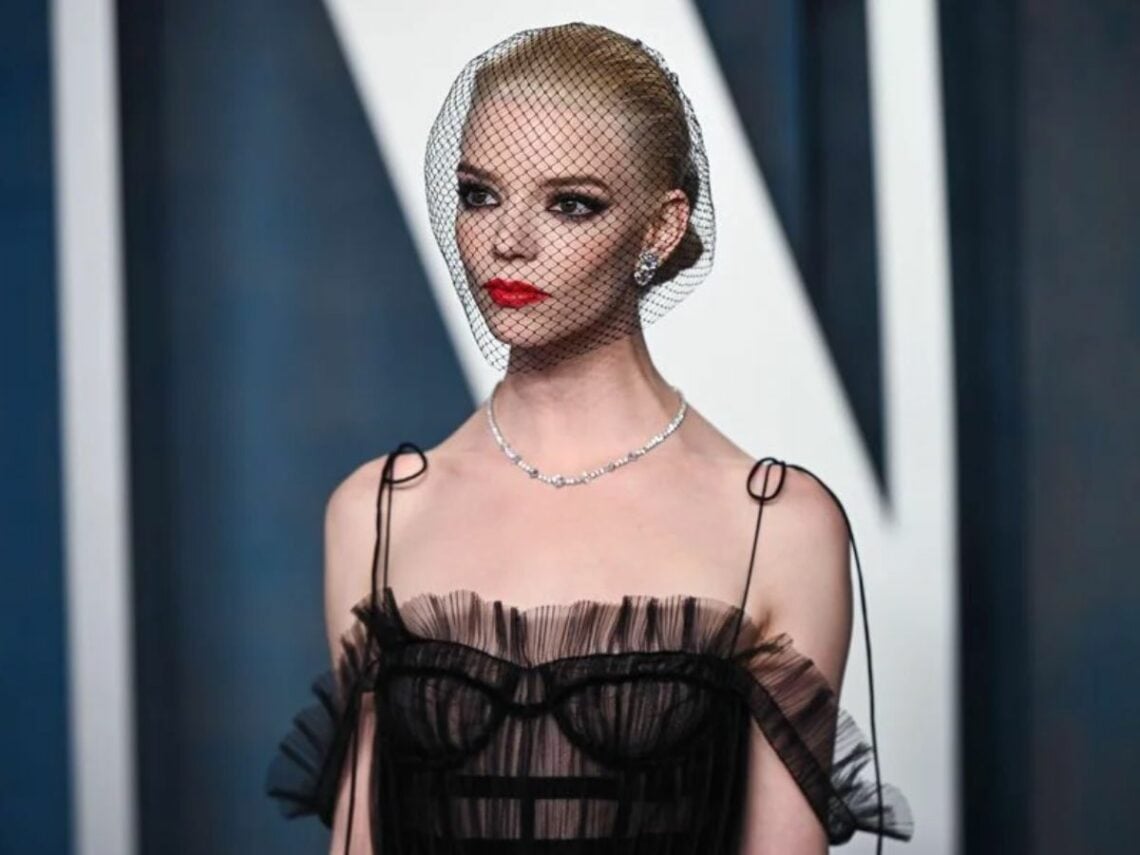
The acting advice that changed Anya Taylor-Joy’s career: “That’s my whole philosophy”

In just ten years, Anya Taylor-Joy has risen from minor television roles to becoming one of the most prolific actors of her generation. Most recently, she famously stepped into the role of Furiosa—originally portrayed by Charlize Theron—in Furiosa: A Mad Max Saga. While the film didn’t match the success of its predecessor, Mad Max: Fury Road, and faced challenges at the box office, Taylor-Joy’s performance was widely praised, further cementing her status as a standout talent.
Prior to this, Taylor-Joy rose to prominence after her leading role in the television series The Queen’s Gambit and has gone from success to success in The Northman, The Menu, Emma and Last Night in Soho. In addition, she currently has two films in the pipeline. So, regardless of your thoughts on her talents as an actor, it’s safe to say she’s been hard at work.
Many credit Robert Eggers’ The Witch as bringing Taylor-Joy to the big screen and to prominence. While it was no doubt her breakthrough role, there is one often-forgotten performance around the same time that she credits as being integral to her work as an actor. A year after The Witch, Taylor-Joy starred as the female lead in M Night Shyamalan’s Split, a subtle sequel to his previous hit Unbreakable.
The film follows James McAvoy as a man with dissociative identity disorder who kidnaps three teenage girls and falsely imprisons them. Taylor-Joy had the major task of playing Casey, one of the kidnapped girls, and it’s a piece of advice from Shyamalan that Taylor-Joy claims changed her career.
According to The Hollywood Reporter, Taylor-Joy received a note from Shyamalan in one particularly emotional scene as Casey Cooke. The actor credits this note as changing her outlook on acting forever, “My entire approach to acting has changed since that moment. That’s my whole philosophy, really.”
So, what was this piece of advice from the iconic director? It was for her to cry the character’s tears instead of her own. Clearly, this philosophy has worked given Taylor-Joy’s success since. In many ways, Taylor-Joy’s success has coincided with the resurgence of Shyamalan, whose career had been steadily in decline since a few misfires in the noughties.
After three serious misfires with The Village, The Happening and Lady in the Water – in which he decided to cast himself as the man with the power to save the world – Shyamalan nearly put the nail in the coffin of his career. In need of a change from his plot-twist-heavy formula, Shyamalan upped the budget with The Last Airbender and After Hours, only for them to fail miserably.
However, after scaling right down again, Shyamalan decided to self-fund his projects and was pretty successful with The Visit. Then came Split, which became the highest-grossing film of 2017. Finally, Shyamalan was at the top of his game again, and Taylor-Joy was right there with him. So, in many ways, the two are indebted to each other. While Taylor-Joy might not have been the driving force behind the success of Split – that was undoubtedly McAvoy – she did take much from what Shyamalan taught her, and it did not lead her astray.
