


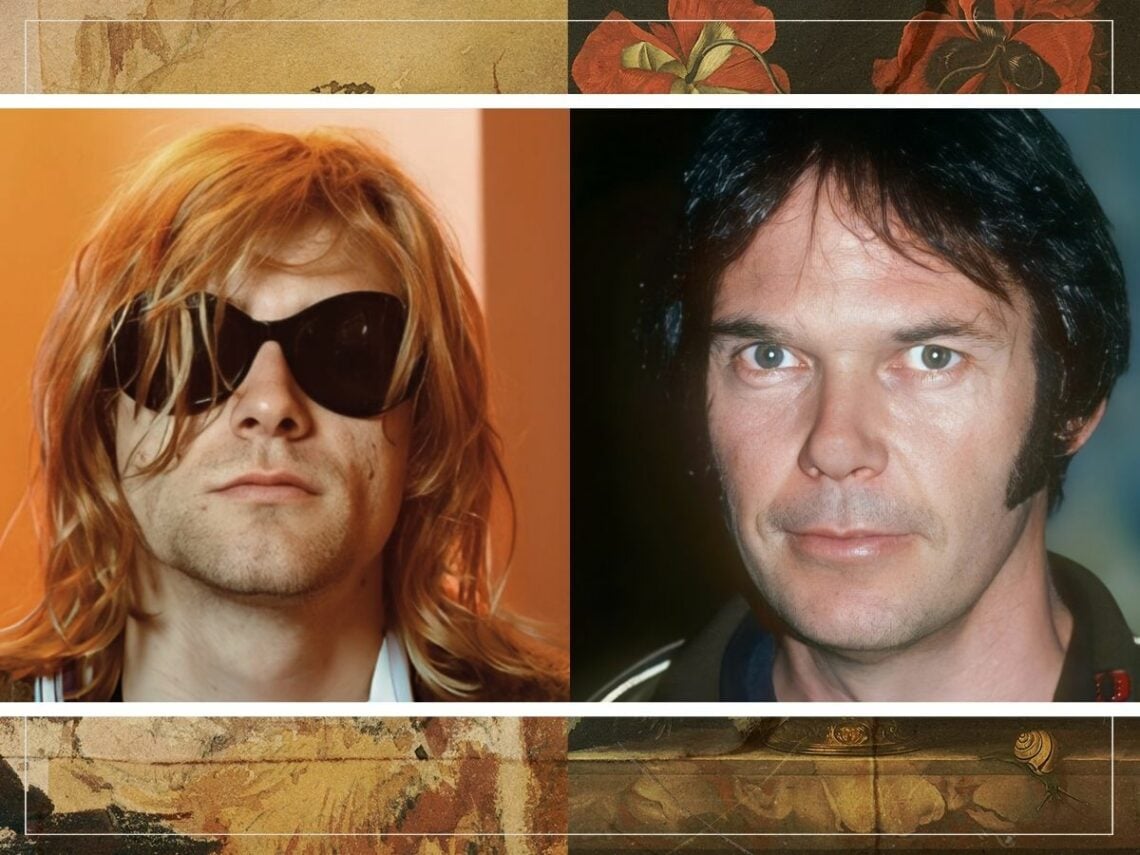
The advice Neil Young wanted to pass on to Kurt Cobain: “Just cancel the gigs”

Neil Young occupies a strange position in that he is one of the only musicians of his era to have survived punk and the late 1970s and continued to have a successful career. As other classic rock acts quickly became outdated thanks to the 1976 emergence of Sex Pistols, The Clash, and others, Young didn’t, with his gritty, proto-alternative rock and bleak lyricism coveted by those subscribing to the punk ethos. Towards the backend of the ensuing decade, he would become known as ‘The Godfather of Grunge’, with the likes of Kurt Cobain, Sonic Youth, and other alt pioneers paying heavy sonic deference to him.
While Young’s innovative use of dissonance, drop tunings and lyrics would lay the foundations for alternative rock and other related forms such as indie, holding this status hasn’t only been a positive experience for the Canadian maestro. The former Buffalo Springfield guitarist has led an oscillating life as one of the world’s most influential artists and experienced friends dying and high-profile relationships falling apart, but the April 1994 suicide of Nirvana frontman Cobain has always been a point of immense discomfort.
Cobain is one of the artists who emerged from the punk area with an artistic spirit related to Young’s. However, their music and lives were inextricably connected when Cobain referenced ‘My My, Hey Hey (Out of the Blue)’ in his suicide note by using the line, “It’s better to burn out than to fade away” before the final valediction. Not only did it change the dimension of the words overnight, making it an utterance typifying tragic cultural heroes for the parasocial elements of the public, but Cobain’s use of it took its toll on the songwriter.
In the years since, Young has openly spoken about the depression that Cobain’s choice to end his life at the young age of 27 had on him. In his 2012 autobiography, Waging Heavy Peace, the countercultural hero explicitly revealed just how deeply the news of the grunge pioneer’s death scarred him: “When he died and left that note, it struck a deep chord inside of me. It fucked with me.”
Deepening the blow, Young had been trying to contact Cobain before his death to offer him advice. Not only had he heard some of the things he was doing to himself towards the end of his life, but as Young had been at the highest echelon of the music industry for decades, he had seen the end of this heartbreaking story far too many times for one life. He continued: “I, coincidentally, had been trying to reach him. I wanted to talk to him. Tell him only to play when he felt like it.”
Explaining what he was going to say in the Pearl Jam documentary, Twenty, Young revealed: “I was gonna say, ‘Listen, you don’t have to do anything anyone fucking tells you to do. Just cancel the gigs.’ I had a whole thing that I was going to tell him, but I never got the chance”.
Unfortunately, Cobain kept slipping through the cracks, and he never managed to speak to him. It begs questions about what might have happened if he had done it, and this is another issue that has played on Young’s mind since then. Given its consequence, the tragedy fed into his 1994 album, Sleeps with Angels, with the title track inspired by the death of Cobain.
