


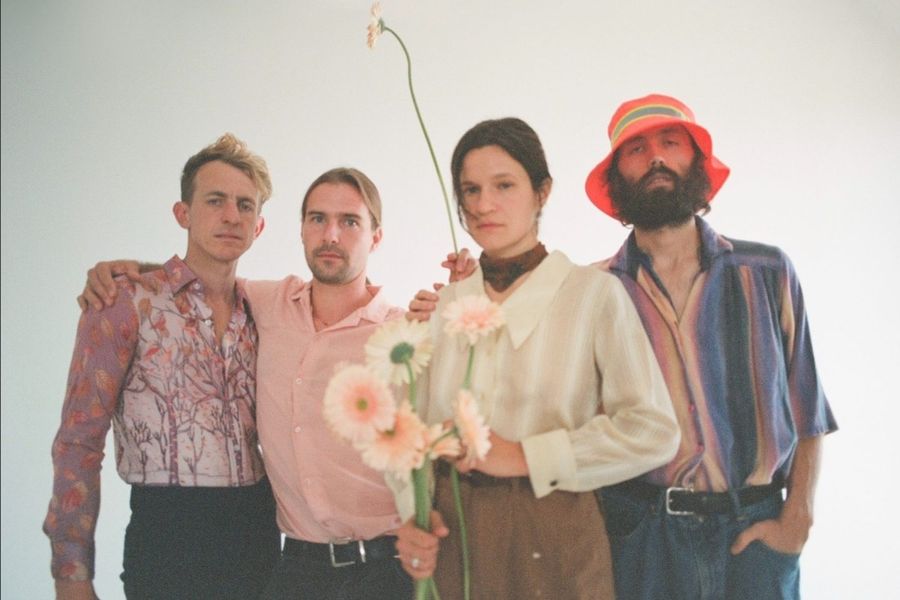
Adrianne Lenker explains the folklore that inspires Big Thief’s songwriting

Big Thief are the world’s musical therapists. Their art is a sonic comfort blanket that stirs a sense of peace in all us sinners just trying to take ‘er easy. However, lingering in this anodyne aura is a shadowy sense of mythic folklore that serves to bolster their sound with hint of darkness and mystery. And it is in there for good reason.
You see, to continue that therapy analogy a little further, gaining comfort with your disposition is not about glossing over the dark by always leaving a light on, but rather accepting that gloom is part of the palette of life and you can overcome it when it comes your way. Within their songwriting, Big Thief touch upon this by almost making a cartoonish metaphor that places their work in a timeless field.
Speaking of the folkloric references that litter their catalogue, Adrianne Lenker explains: “Well those [references] specifically represent embodiments of dark demon-like things. The things that inspire or trigger fear. The use of those dark, intense images come from needing words to embody the thing that I don’t want to be afraid of.”
She told Stereogum that writing about mythic creature “makes those things seem very tangible and small next to all of the other energy that is happening and moving around it, moving around them. That even like a vampire who sinks her teeth into your neck and sucks your blood until you die, even that is something that you can give a kiss on the cheek and it’s alright. You can exist and I am not afraid.”
It is a quirky way of looking at myth that sets their work apart. But it is also part of the self-aware make-up that is central to the current new-folk revival. As Fleet Foxes’ Robin Pecknold said of the artwork for their self-titled debut that helped to inspire Big Thief and the movement at large: “When you first see that painting it’s very bucolic, but when you look closer there’s all this really strange stuff going on, like dudes defecating coins into the river and people on fire, people carving a live sheep, this weird dude who looks like a tree root sitting around with a dog.”
Telling Drowned in Sound: “There’s all this really weird stuff going on. I liked that the first impression is that it’s just pretty, but then you realize that the scene is this weird chaos. I like that you can’t really take it for what it is, that your first impression of it is wrong.”
Big Thief’s hidden weirdness creates this same sense of depth. Their songwriting offers you something to delve into, which is just as well seeing that so many of us use them to ease us into cagier days time and time again and the odd vampire only makes their sonic spiritualism all the more interesting and ironically reflective of reality. As Lenker concludes: “[It’s better to] dispel fears and dispel even the the craziest demons with an unconditional love, or unconditional acceptance, rather. I have no idea what it feels like to not be afraid of anything, but I can imagine it would be very liberating.”
