


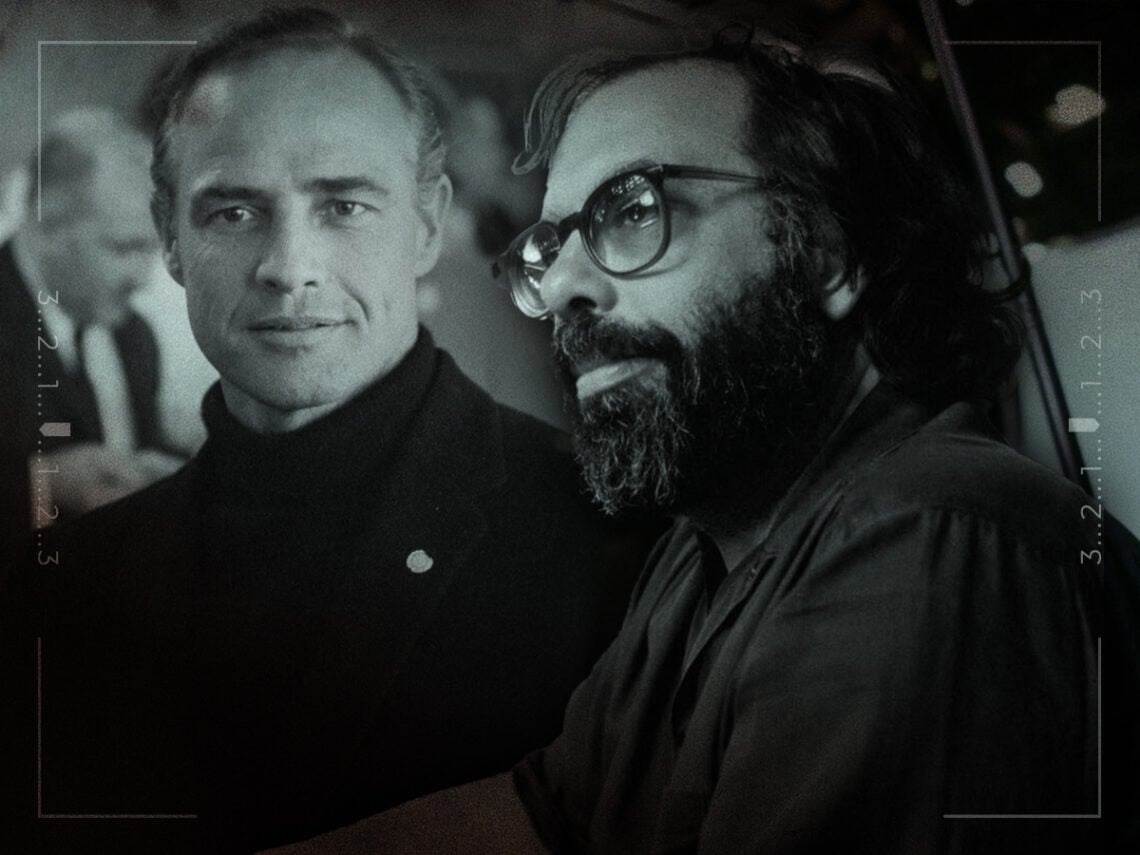
The one actor Marlon Brando and Francis Ford Coppola agree is the greatest of all time

Whenever an actor is asked who they think is the greatest in the history of the profession, the name that comes up the most often is Marlon Brando, who didn’t take too kindly to reaching such deified status.
When he was asked for his feelings on repeatedly being called the best to ever grace the silver screen, he waved it off and instead suggested that his dog, Tim, was a more deserving recipient. That was typical Brando, who single-handedly changed the art form forever and grew to despise the fact that he had.
Even though he became increasingly erratic and eccentric, he wasn’t an idiot, so he was well aware that he had revolutionised acting and inspired every generation that followed in his wake. Brando once told Montgomery Clift that he was inferior in every way, but that wasn’t who he called the cream of the performative crop.
Instead, that distinction went to Paul Muni, who was almost the proto-Brando. He was a method actor before the method had even been popularised, intensely preparing for every role and often using makeup, prosthetics, and a variety of accents to immerse himself even deeper into the characters he played.
The two-time Academy Award-winning Godfather icon called Muni’s work in 1946’s A Flag Is Born “the best acting I ever saw in my life,” and when asked about the greatest actor he’d ever seen, he responded by naming Muni’s central turn in a Broadway production of Inherit the Wind, calling him “my first hero.”
Francis Ford Coppola, who helped save Brando from cinematic irrelevance by breathing new life into his stagnant career in his seminal gangster epic, was in full agreement. A five-time Oscar winner and one of the most important directors of the modern era, who helmed several of the finest features ever made, said that “Paul Muni is the greatest actor of modern times.”
If anything, The Godfather was the point where Muni’s lasting legacy reached its apex. Coppola thought he was the best of the best, he fought to hire Brando against the studio’s wishes, and the movie helped propel Al Pacino to household name status, another disciple of the original Scarface star, who admitted that the blueprint for his Tony Montana was simple: “All I wanted to do was imitate Paul Muni!”
What makes Muni’s impact on acting even more impressive is that he was hardly prolific. In a 30-year career, he appeared in fewer than two dozen pictures, and still managed to earn five Oscar nominations for ‘Best Actor’, winning the 1936 biopic, The Story of Louis Pasteur. If two titans like Brando and Coppola think he’s the be-all and end-all for thespians, it carries plenty of weight.
You could even make the argument that his contributions to the craft inspired Peter Sellers, Eddie Murphy, and Mike Myers, too, with Muni frequently designing and applying his own makeup in the films he worked on, which reached its peak when he played the entire septet of title characters in 1929’s lost film, Seven Faces.
