


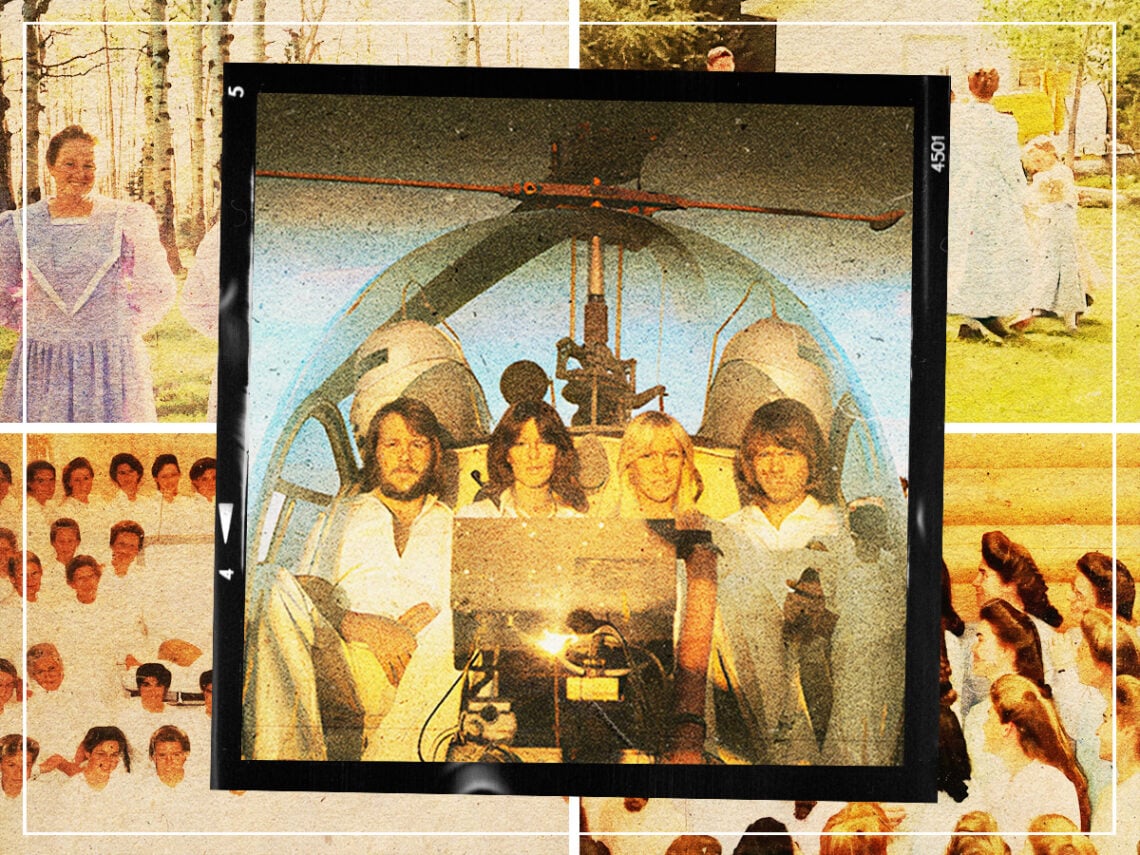
The iconic ABBA song that helped a woman escape from the world’s most infamous cult

Netflix recently released Keep Sweet: Prey and Obey, a four-part docuseries about the Fundamentalist Church of Jesus Christ of Latter-Day Saints (FLDS) and the crimes of its leader Warren Jeffs. The FLDS is a religious sect of the fundamentalist Mormon denominations whose members practice polygamy. Within the FLDS, the structures of power maintain the status quo through troubling forms of oppression such as gender conformity and, in the case of Warren Jeffs, child abuse.
The series derives its title from the motto “Keep Sweet, Pray, and Obey”, originally coined by former president Rulon Jeffs. This encapsulates the societal expectations imposed on women within the church, relating in particular to the role they play in marriage.
Within the harrowing narrative of Keep Sweet, the show paints a chilling portrait of one man’s devastating impact on numerous lives. However, viewers have observed that the show’s inclusion of music serves as an additional layer of unease.
One song that stands out is ABBA’s ‘The Winner Takes It All’. It features when one of the cult’s ex-members, Ruby Jessop, discusses a crush she had on fellow cult member Joe and her desire to follow her heart despite the church’s teachings.
“My brother had this secret Walkman, and I had an ABBA CD,” she says, “So I took it. Every day after school, I hiked this hill to the very top and walked over to where I was in front of Joe’s house, and I sat there for hours listening to ‘naughty’ music, thinking about me and Joe.”
Interestingly, while he claims the song is “90% fiction”, ABBA member Björn Ulvaeus wrote the song loosely about his divorce from fellow band member Agnetha Fältskog. Weird, then, you might think, that she not only takes on lead vocals but has actually deemed the song her “biggest favourite” from ABBA’s back catalogue.
Whilst not necessarily pertaining to a divorce in the marriage sense, there definitely still exists a nod towards a separation of sorts in Jessop’s case. It’s the kind where she has a taste of something bigger, something better, and longs to follow that curiosity. Being closed off, literally and figuratively, from the outside world and discovering something as profoundly poignant as ‘The Winner Takes It All’ won’t immediately help you to escape, but it will certainly make you think. Sitting atop a hill, fantasising about escape, ‘The Winner Takes It All’ provides the perfect soundtrack for Jessop’s introspection.
Later, she succeeds in breaking free from the FLDS, but not before previous attempts to do so. The first time she runs away, she’s lured back by Jeffs, who uses Joe as bait: he proposes that she can go forth and marry him if she returns. Of course, the promise was nothing more than a farce because when she returns, Joe is nowhere to be seen.
But the famous ABBA song marks the beginning of her desire for freedom. Following Jessop’s eventual escape from the cult, the Attorney General of Arizona launched an investigation into the church’s treatment of women. In addition, the local police force also came under scrutiny for their lack of tangible action against the cult’s condemnable practices.
Intrinsically, the song nods toward breaking free from what’s expected – or normal – for you. When writing the song, Ulvaeus said he did something he never does: drink while writing. In 2010, he told The London Times that he had a bottle of brandy with him as he pieced the song together. “By the time I wrote ‘The gods may throw their dice’, the bottle was empty,” he said.
The FLDS community isn’t without music. A number of the FLDS haunting hymns are played throughout the documentary, but they’re all (understandably) about being a part of the church. It’s difficult to fathom the profound experience of encountering mainstream music for the first time as an adult, but the emotional resonance of such a discovery must have been unparalleled.
