


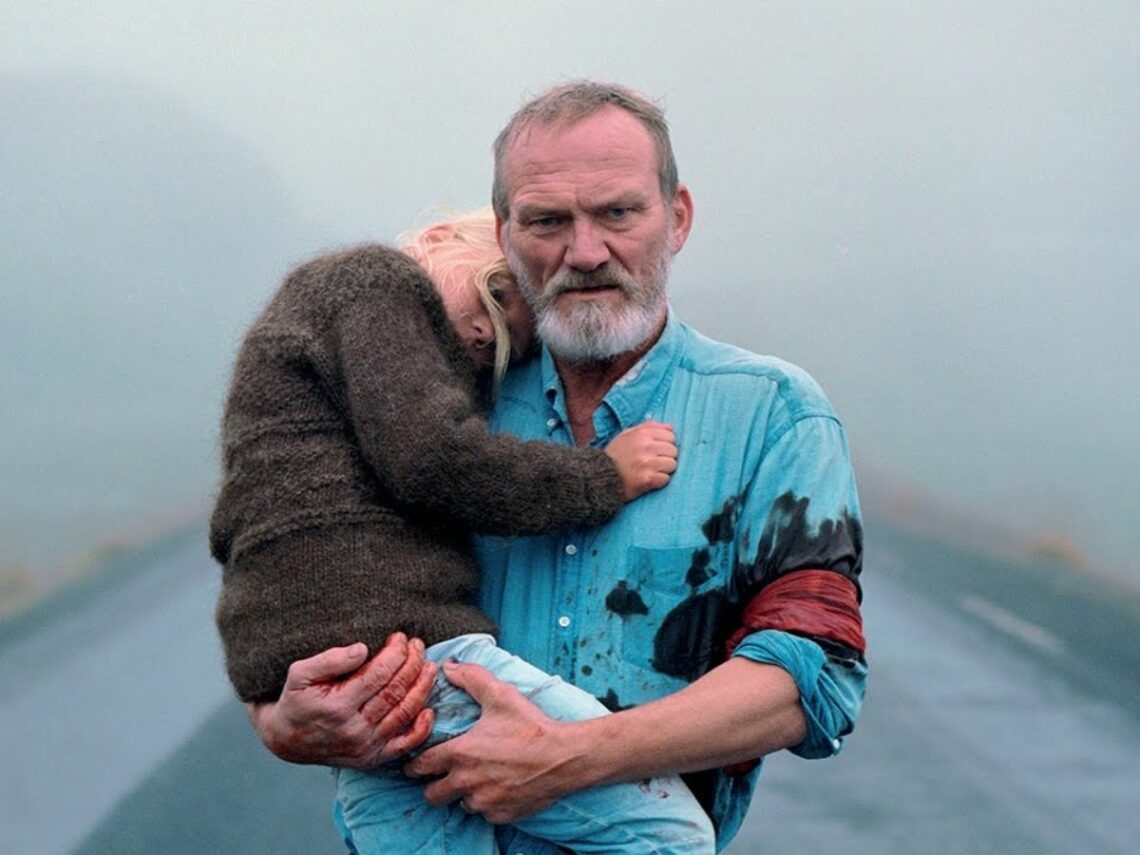
‘A White, White Day’: the greatest movie you’ve never seen

There are some films you watch that immediately make you wonder how on earth you hadn’t seen it earlier, unearthing a hidden gem that you fall in love with and happily linger on your mind for a long time afterwards. Given that there are so many films to watch in any given lifetime, it’s virtually impossible to tick everything off your watch list, no matter how hard you might try and how disturbing it is to imagine that you will die before seeing so many great films.
However, perhaps all we can do is try to prevent people from just a smudge of this regret and inform our friends whenever watching something genuinely fantastic that demands to be seen, with many criminally underrated stories that should be given every ounce of our attention, despite sometimes slipping under the radar. In this particular case, one such film comes from the Icelandic director Hlynur Pálmason, creating a story about one man’s inability to deal with grief and what happens when this combines with regret and anger.
A White, White Day follows a man called Ingimundur who is struggling to deal with the death of his wife, becoming fixated on the idea that a man in their local village had an affair with her before her death. Pálmason shoots it in an incredibly restrained way, creating this feeling of stillness that you quickly realise is one of stagnancy, rot and pain.
Ingimundur is dealing with grief in the most conflicting of ways: caring for his granddaughter and building a house for his family while also pursuing a quiet quest of revenge and denial, hurting those around him who encourage him to deal with his pain or challenge his memories of his wife. He’s both a very gentle and dangerous figure, with an emotional fragility and physical dominance that creates a dissonance in all his actions, humanising him and making him appear vulnerable in his worst moments, such as placing a cushion behind someone’s head after beating them up.
He only allows himself to feel once his self-destructive behaviour has reached its absolute height, with the sight of him screaming in a dark tunnel while covered in blood being one of the most arresting images from the entire film, capturing him at his lightest but also at his worst. The moment in the tunnel is both his catharsis and his breaking point, with Pálmason incorporating images of rocks to reiterate this idea of ‘rock bottom’ and the moment that frees him from his pain.
But these images also lend themselves to many other meanings, also conveying his tendency to harden himself to his feelings, but ultimately needs to sit with the pain, much like the rock he throws in the sea and watches as it sinks to the bottom. Or it could be a visual representation of the people that become our ‘rocks’ during hard times, with his relationship to his granddaughter giving him something to live for and tethering him to the world, no matter how much he struggles to keep going.
A White, White Day is a beautiful, moving and harsh film about what’s left after someone dies and the struggle to find a way out of the tunnel of grief, with Ingimundur’s experiences showing us that there is still more to live for and we can be free of our sadness.
