


A history of camp cinema

In 1964, Susan Sontag published her seminal essay, Notes on Camp, an attempt to define the term ‘camp’. She begins, “Camp is a certain mode of aestheticism. It is one way of seeing the world as an aesthetic phenomenon. That way, the way of camp is not in terms of beauty, but in terms of the degree of artifice, of stylization.” Sontag adds, “It is not a natural mode of sensibility, if there be any such. Indeed, the essence of Camp is its love of the unnatural: of artifice and exaggeration.”
Artificiality is one of the most important signifiers of campness, with Sontag adding, “Nothing in nature can be campy… Rural Camp is still manmade.” Essentially, Sontag is referring to various forms of media and items that possess an innate quality that can only be described as ‘Camp’. Things considered camp are often subversive in their interpretation of beauty and good taste. Thus, camp movies draw on exaggeration and excess, typically undermining cinematic qualities deemed high-brow and revelling in outrageousness, silliness and theatricality. Think The Rocky Horror Picture Show, Mars Attack, Barbarella, But I’m A Cheerleader, Romy and Michelle’s High School Reunion and Pink Flamingos.
There is a distinction that must be made between accidental and purposeful camp. Sontag refers to this as “naive and deliberate Camp,” adding, “Pure Camp is always naive. Camp which knows itself to be Camp (“camping”) is usually less satisfying.” The last part of her argument is debatable, as many intentionally camp movies, such as the work of John Waters, are highly satisfying watches. However, this distinction is important, as some of the best examples of the subgenre were not made to be intentionally campy. Examples of naive camp movies include Valley of the Dolls and Showgirls, with the latter being one of the most divisive movies in the camp canon.
The Paul Verhoeven-directed 1995 movie was a commercial and critic flop and is often dubbed as one of the worst films ever made. Now, over two decades since its release, many people have suggested that the value of Showgirls lies in its camp factor, regardless of how intentional it was. Although there are certainly moments in the film that appear purposefully over-the-top, Showgirls clearly wasn’t intended to be a camp classic. Rather, it possesses a degree of seriousness that falls flat, subsequently becoming camp. One of cinema’s camp champions, John Waters, explained in Film Quartley, “Showgirls is funny, stupid, dirty, and filled with cinematic clichés; in other words, perfect. Even better, the writer and director, no matter what they say today, don’t appear to be in on the joke.”
Waters’ movies, on the other hand, are designed to be excessive, shocking and completely camp. The director is more than aware of this, indulging in the sheer ridiculousness of his ideas and bringing them to life with the help of his Dreamlanders, such as Divine, Mink Stole and Edith Massey. According to Sontag, camp also has something to do with “going against the grain of one’s sex. What is most beautiful in virile men is something feminine; what is most beautiful in feminine women is something masculine.”
Thus, drag queens have an innate campiness to them, and Waters’ muse, Divine, was the ultimate example. Divine, real name Harris Glenn Milstead, emphasised the artificiality of gender through his drag persona, which was excessive and highly stylised. For Sontag, the exaggerated nature of “corny flamboyant femaleness” is inextricably camp; therefore, Divine’s conscious adoption of such made him an icon of camp cinema.
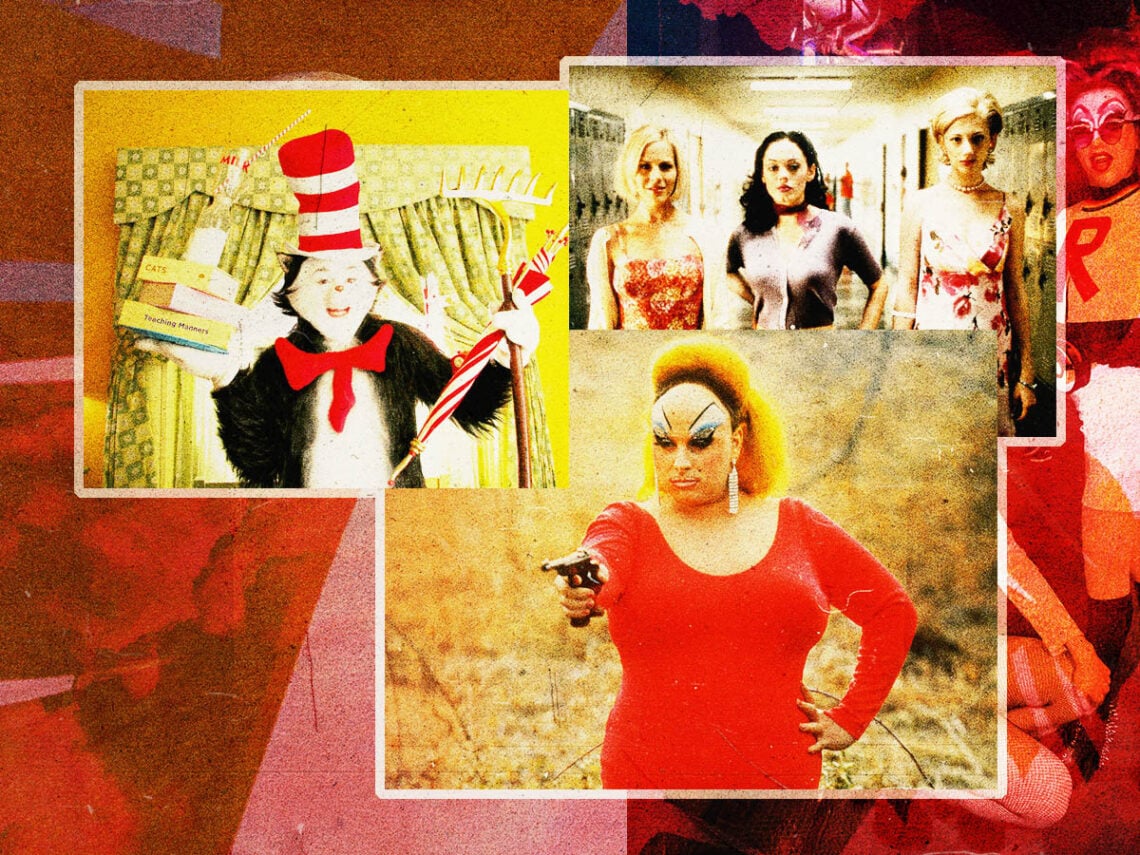
Waters’ movies, such as Pink Flamingos, Polyester and Female Trouble, rely on trashy aesthetics and overacting. Although many of the techniques that Waters employs in his films could be considered ‘bad’, his films are still (relatively) celebrated because they are self-aware. As Sontag states, “When something is bad (rather than Camp), it’s often because it is too mediocre in its ambition. The artist hasn’t attempted to do anything really outlandish.” But Waters always strives to be outlandish and never mediocre (Divine literally eats dogshit in Pink Flamingos), resulting in delicious slices of camp. Waters once rightfully stated in his book Shock Value, “To understand bad taste, one must have very good taste.”
The 1990s and 2000s gave rise to many camp classics, which were often shunned by critics as terrible films, even those designed to be deliberately camp. Yet, the cheesy dialogue, dramatic acting and absurd plots – all highlighting the artificiality of film as a medium – have aided their transformation into cult favourites. Children’s movies such as Scooby-Doo and The Cat in the Hat are undeniably, and intentionally, camp, yet that doesn’t stop people from labelling them as poorly-made movies. Why can’t these films just be enjoyed for their entertaining silliness and self-aware ridiculousness?
Moreover, many female-led films such as Jawbreaker, Sugar and Spice, Drop Dead Gorgeous, and D.E.B.S received mixed to negative reviews from critics and performed poorly at the box office. Yet, they have all since become camp classics, coveted by many female and queer audiences. Sontag argues that camp is designed to “dethrone the serious. […] It wants to enjoy.” It is no bad thing to revel in campy movies that are purposefully made to provide outrageous, shocking or silly entertainment, yet these films are still looked down on by many.
Evidently, the reasons many camp movies are not taken seriously are rooted in misogyny and homophobia. Yes, these films might not be the next Persona or 2001: A Space Odyssey, but they’re not trying to be. Campy, fun films subvert the mainstream and celebrate difference, thus aligning them with queer culture and femininity. The widespread shunning of such films as low-brow and unworthy of merit reflects Hollywood’s traditionalist core values and disregard for those that exist in the margins.
Camp films, intentional or accidental, deserve more love and respect. There is so much to love about the camp movie canon, and to shun these films as unworthy pieces of ‘trash’ is to deprive yourself of some fantastically enjoyable cinematic experiences.
