


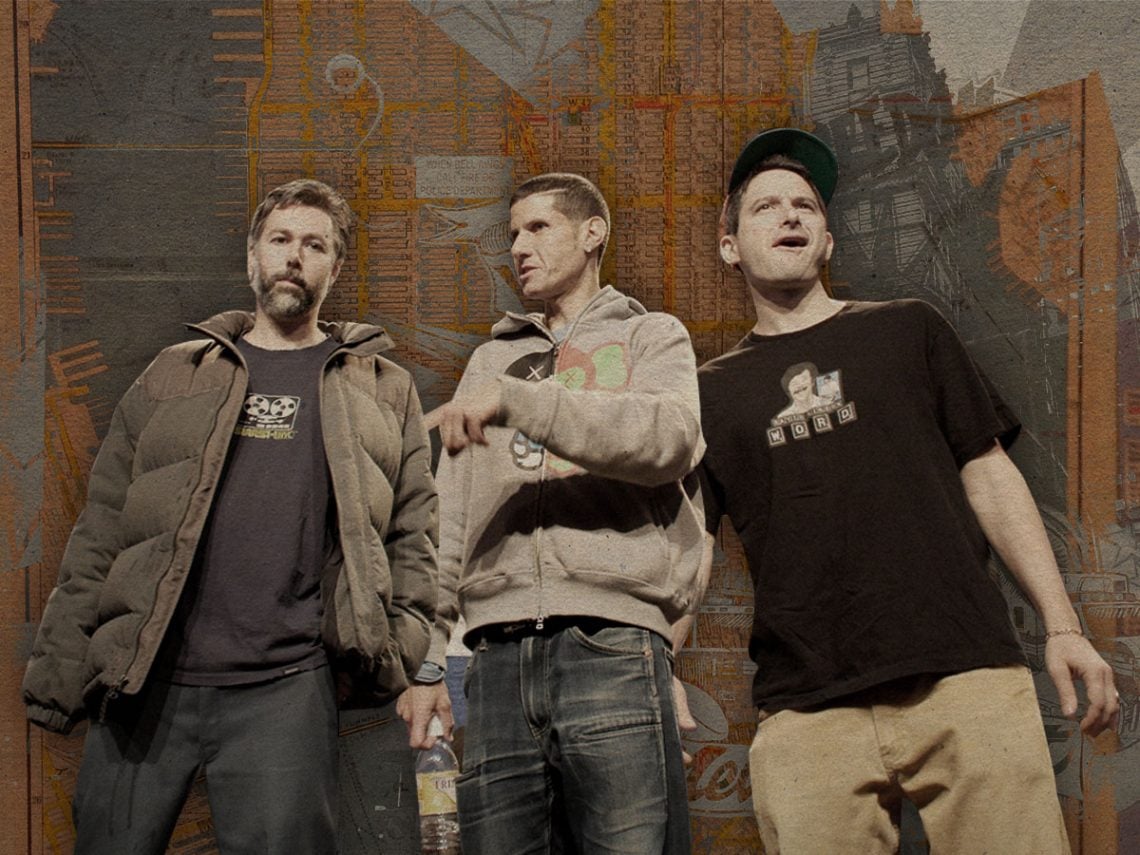
A brief history of the Beastie Boys’ Tibetan Freedom Concerts

The late Adam Yauch, aka MCA of the Beastie Boys, spent much of the 1990s reintroducing himself and his band to the world, gradually winning back many of the people who had previously dismissed the Beasties of the 1980s as witless dude-bros, willing to fight only for their right to party.
One of those individuals was Erin Potts, a young political activist who was quite surprised to encounter Yauch at an event in Kathmandu, Nepal, in 1992. “I didn’t appreciate The Beastie Boys’ music. I guess that’s the most diplomatic way to say it,” Potts told PRX’s The World in 2016, singling out their “party boy antics” and “misogynistic lyrics.”
When she found herself chatting to Yauch, however, Potts found him to be intelligent, respectful, and genuinely interested in the topic central to her own work at the time; the movement for Tibetan independence from Chinese rule.
Yauch, who was on the road to becoming a practising Buddhist himself, stayed in touch with Potts, eventually working with her to organise the Milarepa Fund in aid of Tibet’s cause. From there, the next step was using MCA’s platform as a way to generate wider attention and understanding of Tibet’s plight.
“I’m an activist, he’s a musician,” Potts said. “When you put the two together, what do you get? A benefit concert was pretty obvious as one of the things that we could do.”
In 1996, the first Tibetan Freedom Concert was held in San Francisco. The Beastie Boys headlined alongside some of the era’s biggest names, from the Red Hot Chili Peppers and Bjork to the Smashing Pumpkins and A Tribe Called Quest, plus a particularly standout performance from Rage Against the Machine.
Leading up to that first event, Yauch told the San Francisco Examiner that most of the participating artists originally responded because of the Beastie Boys’ cachet. “But once they started finding out about the human rights abuses going on [in Tibet], all the bands were excited about helping out,” he said. “The human rights stuff is basic. That hits anybody when you start learning about it.”
The first Tibetan Freedom Concert faced some criticism, as many of the fans in attendance grew restless during the political speeches, waiting for the next band to take the stage. Yauch stuck with it, though, believing that the message was breaking through and that people would start to educate themselves over time.
A second Tibetan Freedom Concert was held in New York in 1997, led by appearances from Foo Fighters, Noel Gallagher, Alanis Morissette, U2, and Radiohead. Erin Potts would later recall a perfect quote that Radiohead frontman Thom Yorke gave to reporters who were surprised he’d shown up to do press at the event. “There’s a lot of crap reasons to be a rock star,” Yorke said. “This is a good one.”
The event moved to Washington, D.C. in 1998, with the Beastie Boys joined again by Radiohead and the Chili Peppers, as well as REM, Pulp, Pearl Jam, and Sonic Youth. This marked the end of the run for the original Tibetan Freedom Concerts, although the Beasties and the Milarepa Fund organised similar Free Tibet concerts over the ensuing decade, including concurrent shows in Wisconsin, Amsterdam, and Sydney in 1999, and small events in Tokyo (2001), Taipei (2003), Vienna (2012), and Geneva (2012).
With so many other major human rights crises dominating headlines in recent years, the Tibetan cause has lost some of the mainstream attention it had in the West, but the efforts of the Milarepa Fund still made a difference, opening the eyes of a new generation to a story and a people that might otherwise have remained outside their awareness.
“I think the movement needed this burst of energy,” Erin Potts said in 2016, “of people coming into the movement, of the spotlight, and [raising] money. And then it needed to do the hard work that movements have to do.”
