


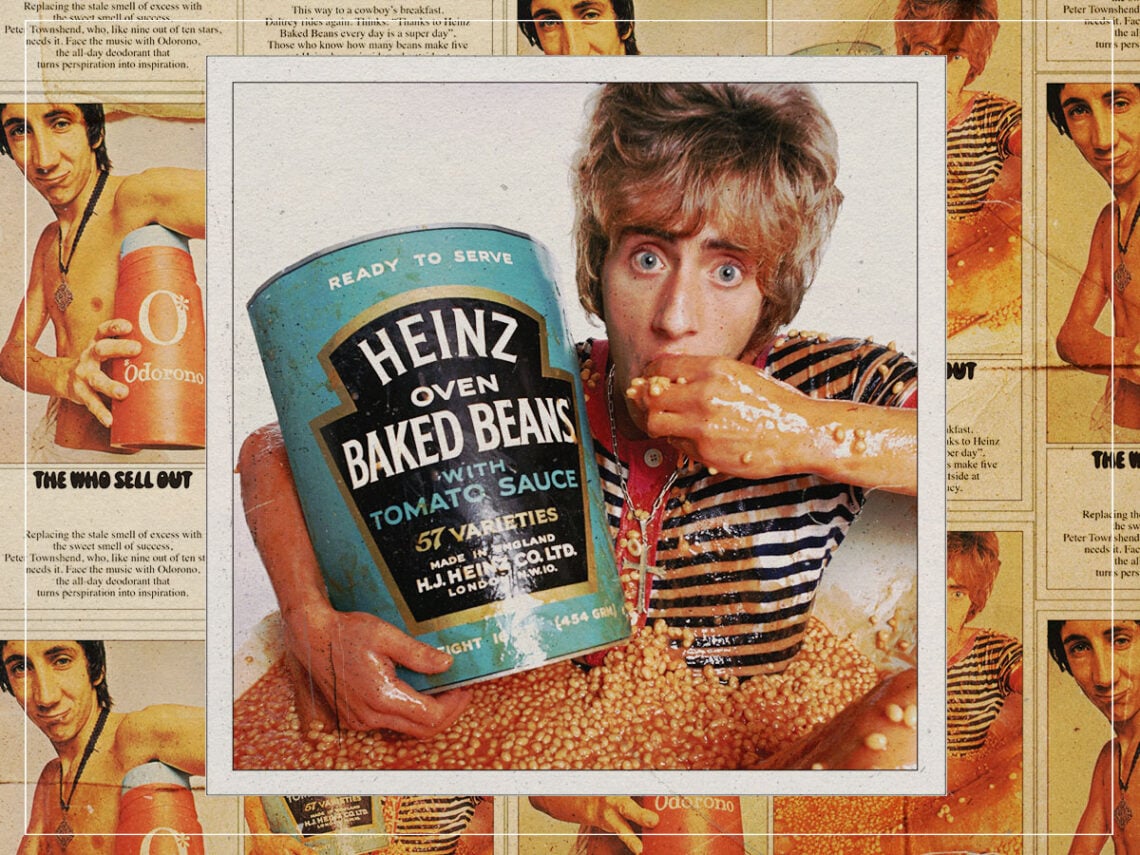
‘The Who Sell Out’: A criminally overlooked postmodern masterpiece

To refer to any aspect of The Who’s existence as ‘underrated’ is a little facetious. After all, the mod rockers were among the most successful and iconic rock and roll bands of the swinging sixties, penning countless chart hits that went on to have a lasting impact on the landscape of rock in the decades that followed. Even after their initial burst onto the mainstream, the prolific songwriting talents of Pete Townshend kept them going into the mature and profound works of Tommy and Quadrophenia. It does seem, however, that one of their records gets unfairly overlooked in the midst of this hype.
When The Who first established themselves on a mainstream stage back in 1964, their sound reflected the youthful rebellion of the period. My Generation, as an album, perfectly reflected the disenfranchisement of Britain’s post-war youth, as well as capturing the essence of modernist subcultures at the time. Inevitably, though, the band could not stay rooted to this sound forever; nobody wants to hear 30-year-olds singing about the struggles of being young and angry. Luckily, Townshend always maintained a strong artistic vision for the band.
After all, The Who was not just another English beat group looking to dominate the pop charts. Townshend had once been an art student, and with everything he did, he wanted his work to have a strong message and significance. It was this desire for artistic expression and experimentation that led the band down the path of creating rock operas like Quadrophenia, which are the cause of endless praise for the band.
Years prior to these rock operas, however, Townshend helped to create one of the most groundbreaking and criminally overlooked records of the 1960s, The Who Sell Out. Arriving in late 1967, The Who Sell Out is among the greatest examples of early concept records. Meant to evoke the feeling of a pirate radio broadcast, the record is peppered with satirical advertisements and ironic statements from the band.
This innovative, postmodern approach to the construction of an album had never been seen before. Tragically, though, its trailblazing quality meant that it was a little too ahead of its time for 1960s audiences. The record was not hugely successful upon its release, and even in the many decades since it tends to get overshadowed by other albums within The Who’s extensive discography.
Within the pop-centric musical landscape of the period, Sell Out did not really make sense. ‘I Can See For Miles’ was perhaps the only track on the album with any commercial or mainstream appeal, though that song itself was unsuspectingly complex in its construction. Ultimately, Townshend never intended for the album to dominate the pop charts; it was reaching for something much more profound than that.
Not only was Sell Out one of the earliest examples of an all-encompassing concept record, but it also marked the point at which trends in the world of pop art crossed over into music. Obviously, these themes would later be expanded upon by the many groups that made up the underground art scene in New York, but it is still worth noting the trailblazing impact that The Who had on both music and art with their third album. Unlike many of those art-centric bands, The Who presented these ideas in a way that was distinctly unpretentious, too, by embracing the satirical and parody angle of the record.
The discography of The Who is littered with so many gems that it is easy to understand how certain records might get lost in the mix. Sell Out, however, is well worth revisiting. Even today, there are not many other albums which immerse themselves in a concept as stringently and stylishly as Sell Out; it is a testament to the artistic vision that always inspired Pete Townshend.
