


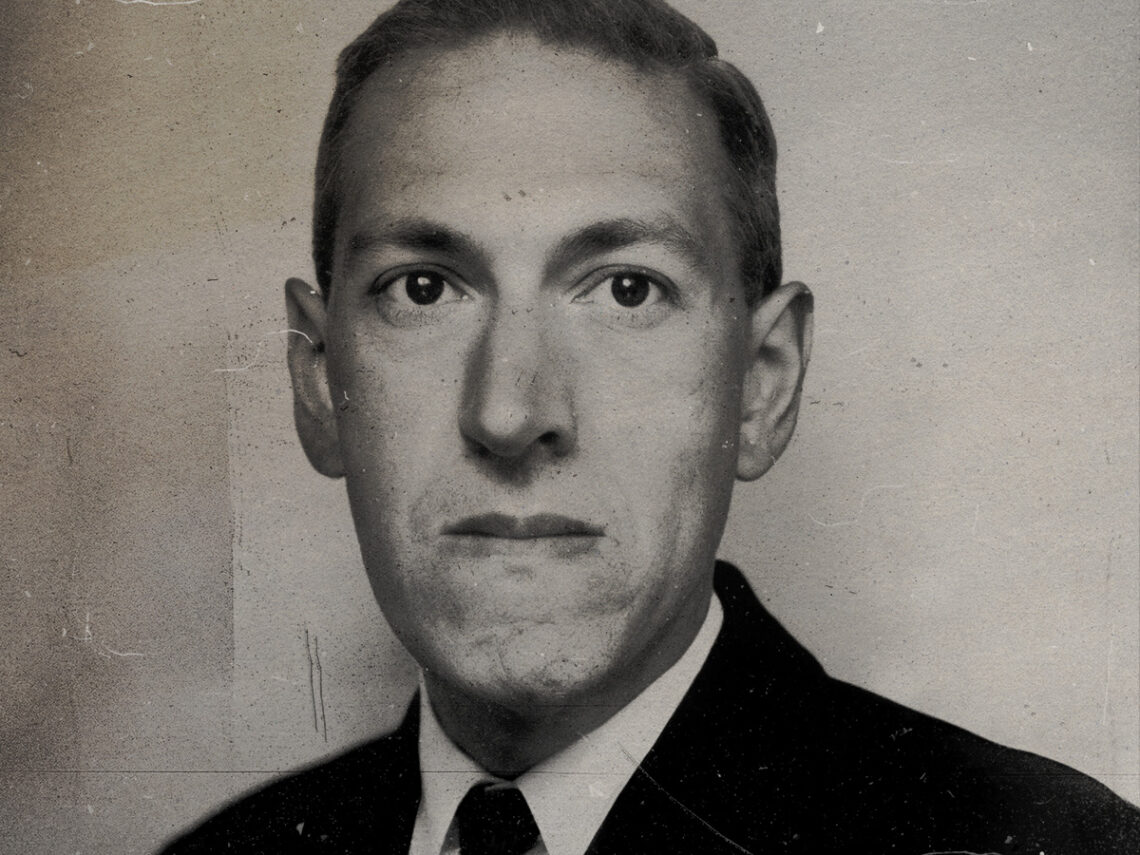
From Black Sabbath to Metallica: 7 songs inspired by H.P. Lovecraft

Only a handful of modern authors can claim to have affected popular culture as significantly as the American writer H.P. Lovecraft. Despite his well-documented white supremacism, his influence is found across various forms of art. Developing an expansive literary universe and creating legendary mythical creatures such as Cthulhu, Azathoth and Dagon, many contemporary authors have drawn heavily on his work, including the likes of Stephen King, Neil Gaiman and Alan Moore. Obsessed with the nightmarish depths that the Rhode Island native established, thanks to Lovecraft, fantasy, science-fiction and other forms of fiction have changed for the better.
Describing the physical appearance of an array of horrifying creatures and ethereal beings with mystifying prose, Lovecraft pushed the confines of a character to the nth degree. Quite often, readers find his most important characters difficult to fully comprehend, primarily thanks to their scope. Taking off where the likes of Edgar Allan Poe and Lord Dunsany left, with a hefty dose of cosmicism and Jungian psychoanalysis poured in, Lovecraft created a landscape like no other. Duly, his visceral work continues to inspire today, playing on humanity’s fears of the unknown.
Of course, it is not just in literature that Lovecraft has been wildly influential. Across music, his impact lives on. Even The Fall’s late creative figurehead Mark E. Smith was an adherent of his work. “I’ve been a fan of H.P. Lovecraft since I was about 17,” he told the BBC during a reading of The Colour Out Of Space in 2007. Elsewhere, those on the darker side of music, in forms such as metal and goth, have drawn upon Lovecraft’s creations to imbue their sounds with a greater sense of dread. He also significantly impacted the counterculture, with 1960s psych-rock outfit H.P. Lovecraft simply using his name as their own.
With that, we’ve taken it upon ourselves to list seven songs inspired by the master of weird fiction. Expect to see some familiar faces.
7 songs inspired by H.P. Lovecraft:
Black Sabbath – ‘Behind the Wall of Sleep’ (Black Sabbath, 1970)
Birmingham metal legends Black Sabbath would be the first to say they are majorly indebted to the world of fiction. Whilst they are most famously known for their obsession with the occult and authors on the subject, with Dennis Wheatley and Aleister Crowley being two of their main influences, the band also took a lot from H.P. Lovecraft.
The song ‘Behind the Wall of Sleep’ from their eponymous debut – their most gothic offering – directly references Lovecraft’s 1919 science fiction short story, Beyond the Wall of Sleep. In the tale, Joe Slater is a criminally insane murderer committed to a mental hospital who starts seeing profound, ethereal visions. After an intern builds a telepathic machine to get to the bottom of the images, it is discovered that a body of radiant energy is using his body as a conduit to transmit messages.
Metallica – ‘Call Of Ktulu’ (Ride the Lightning, 1984)
Thrash metal pioneers Metallica have a handful of songs referencing H.P. Lovecraft, including ‘Dream No More’ from 2016’s Hardwired… to Self-Destruct, which includes the explicit nod to the author: “Cthulhu, awaken”. In the song, frontman James Hetfield discusses the haunting “madness” the Cthulhu brings in both the waking and dream worlds.
However, for this list, our pick goes to ‘Call of Ktulu’, a track taken from their widely influential 1984 album Ride the Lightning. Whilst the song is an instrumental, featuring the band’s late bass-player extraordinaire Cliff Burton, the band took inspiration for the song from Lovecraft’s 1931 novella, The Shadow Over Innsmouth. The music effectively denotes the supernatural power of the great being.
Fields of the Nephilim – ‘Last Exit For the Lost’ (The Nephilim, 1988)
English gothic rockers Fields of the Nephilim are one of the most influential outfits in the genre, fusing goth, metal, psychedelic and elements of industrial to create as atmospheric a sound as anything else out there. They draw heavily on a range of literature for inspiration. Fans will be fully aware that their name is from the Bible, with the works of notorious occultist Aleister Crowley also influencing their early work.
As is the case with most acts on this list, Lovecraft has also made his way into the Stevenage band’s work at points, with the closing track of 1988’s The Nephilim ‘Last Exit for the Lost’, the best and most famous of these. In the piece, frontman Carl McCoy sings: “We’re getting closer, I can see the door / Closer and closer, Kthulhu calls”.
The Vaselines – ‘Lovecraft’ (Dum-Dum, 1989)
Scottish alternative rock band The Vaselines are not a band normally thought of as one with a penchant for darkness. After all, they are hailed as pioneers of all things twee, with the likes of Belle and Sebastian and Camera Obscura owing a lot to Eugene Kelly and Francis McKee. Despite this overt connection to the lighter side of rock music, though, the band always had a gritty edge. Kurt Cobain and Nirvana were not their most famous adherents for nothing.
The Vaselines are also fans of H.P. Lovecraft, with their noisy 1989 piece, ‘Lovecraft’ outlining this. In the song, they sing verses such as: “Kill your friends / Lie at your feet / Do what I want / Lovecraft” and “Blow your mind / Do what I want / Taste your lips / Lovecraft”. The liner notes for the 1992 compilation, The Way of the Vaselines: A Complete History, explain their appreciation for him: “H.P. was a great writer I hope we’ve done him justice.”
GWAR – ‘Horror of Yig’ (Scumdogs of the Universe, 1990)
Virginia heavy metal gang GWAR are underpinned by their own science fiction-themed mythology. In it, the members of the cultish outfit are depicted as brutal interplanetary warriors, so there’s no real surprise that they take some of their cues from the late H.P. Lovecraft. Their early work is brimming with literary references, with the track ‘Horror of Yig’ from the second album, 1990’s Scumdogs of the Universe, referencing the work of the Rhode Island author.
The song is a direct nod to Yig, a “snake god” described as “The Father of Serpents” who takes vengeance on anyone who kills snakes. The character first appeared in Lovecraft and Zealia Bishop’s 1929 short story, The Curse of Yig, which sees a lady murder her Yig-fearing husband before a shocking twist ensues.
Electric Wizard – ‘Dunwich’ (Witchcult Today, 2007)
English stoner rock heroes Electric Wizard are another group whose work draws heavily on literature, film and broader popular culture, helping to augment the mesmeric, sludgy tones of Jus Oborn and the band. Whilst the occult and cannabis might be two overarching themes in their work, H.P. Lovecraft is another who has popped up from time to time.
The best of the bunch is ‘Dunwich’ from 2007’s Witchcult Today, which is one of their best cuts too. Notably, the title and track reference the 1970 supernatural horror film, The Dunwich Horror. The film itself is based on Lovecraft’s 1929 novella of the same name, which tells of an unknown force that plagues the village of Dunwich, Massachusetts.
Sleep – ‘Antarcticans Thawed’ (The Sciences, 2018)
Stoner rock is a genre that pulls heavily from literature, as evidenced by the other foremost outfit in the form, Electric Wizard, already appearing on the list. Their American counterparts, Sleep, are another group obsessed with the weird and the eerie, which makes sense as they are greatly indebted to the early work of Black Sabbath. Elsewhere, Frank Herbert’s science fiction epic, Dune, has also been referenced.
It’s well-known that guitarist Matt Pike is a big Lovecraft fan, with his other outfit, High on Fire, paying homage to him on occasion. However, when it comes to Sleep, their last record, 2018’s The Sciences, makes a direct nod to Lovecraft’s 1931 novella, At the Mountains of Madness. The story tells of a disastrous expedition to Antarctica that uncovers an ancient civilization older than the human race. In the song, Sleep’s Al Cisneros growls: “Glaciers formate upon the ice age siege / Walk the icebergs toward cities / Glaciers formate upon the ice age siege / Rise the icebergs as war machines.”
