


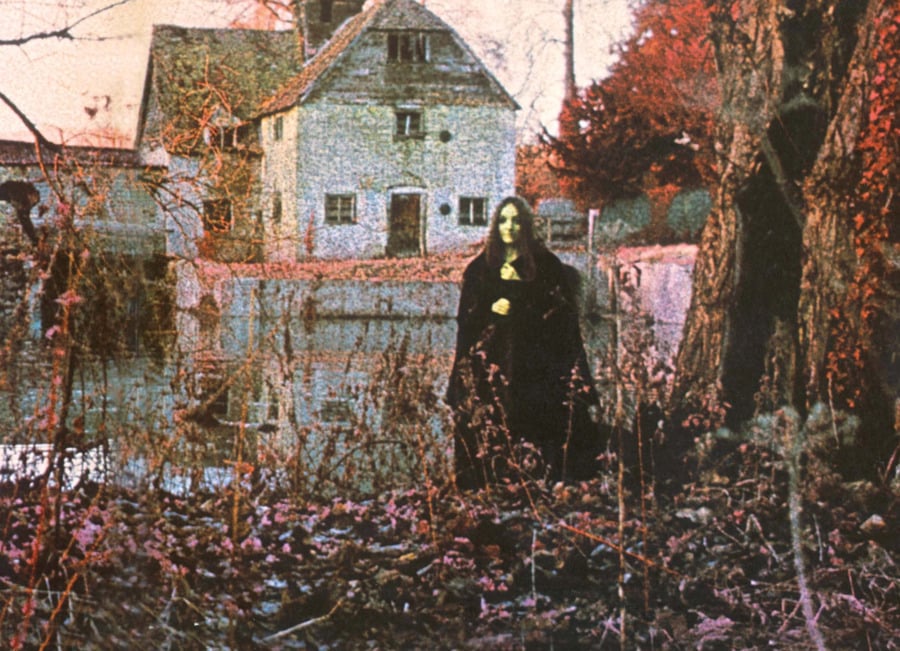
The identity of the woman on the cover of ‘Black Sabbath’ revealed

The world was caught off guard when Black Sabbath released their eponymous debut album in 1970. Whilst most people were still trying to come to terms with the fact that The Beatles were finally about to bow out or were transfixed with what their successors Led Zeppelin were doing, Black Sabbath were too busy perfecting the most oppressive sound that had ever been created at that point in time.
Off the back of cuts such as ‘Black Sabbath’, ‘The Wizard’ and their cover of Crow’s ‘Evil Woman’, overnight Sabbath confirmed themselves as the most refreshing and compelling band of the era. Authentic and powerful but without Zeppelin and Deep Purple’s overblown pomp, on Black Sabbath, they laid down many of the key foundations of what would become known as heavy metal, changing the world in the process. However, this was only the beginning, and the decade was to be theirs.
Whilst Black Sabbath is stellar from a musical standpoint, one of the most notable aspects of the record is the cover art, which perfectly captured the darkness that the music entailed. Featuring a mysterious, green-looking woman in a chilling woodland, the artwork helped fuel the speculation that the band were Satanists or someway linked to the occult, which played into their hands and raised their profile even more.
For years, fans wondered who this cloaked figure was, and then, in 2020, the year the record celebrated 50 laps around the sun, the identity of the person was finally revealed in a retrospective by Rolling Stone. Discussing the location, the 15th-century water mill at Mapledurham in Oxfordshire, the publication also disclosed that the woman on the cover is model Louisa Livingstone.
In the piece, the late photographer of the cover, Keith Macmillan, who passed away in 2012, is quoted as explaining that he chose Livingstone because she’s five feet tall, making the landscape around her look bigger and more imposing.
“She wasn’t wearing any clothes under that cloak because we were doing things that were slightly more risqué, but we decided none of that worked,” Macmillan says in the Rolling Stone piece. “Any kind of sexuality took away from the more foreboding mood. But she was a terrific model. She had amazing courage and understanding of what I was trying to do.”
“I remember it was freezing cold,” Livingstone, who was only in her teens at the time of the shoot, added. “I had to get up at about 4 o’clock in the morning. Keith was rushing around with dry ice, throwing it into the water. It didn’t seem to be working very well, so he ended up using a smoke machine. It was just, ‘Stand there and do that.’ I’m sure he said it was for Black Sabbath, but I don’t know if that meant anything much to me at the time.”
