


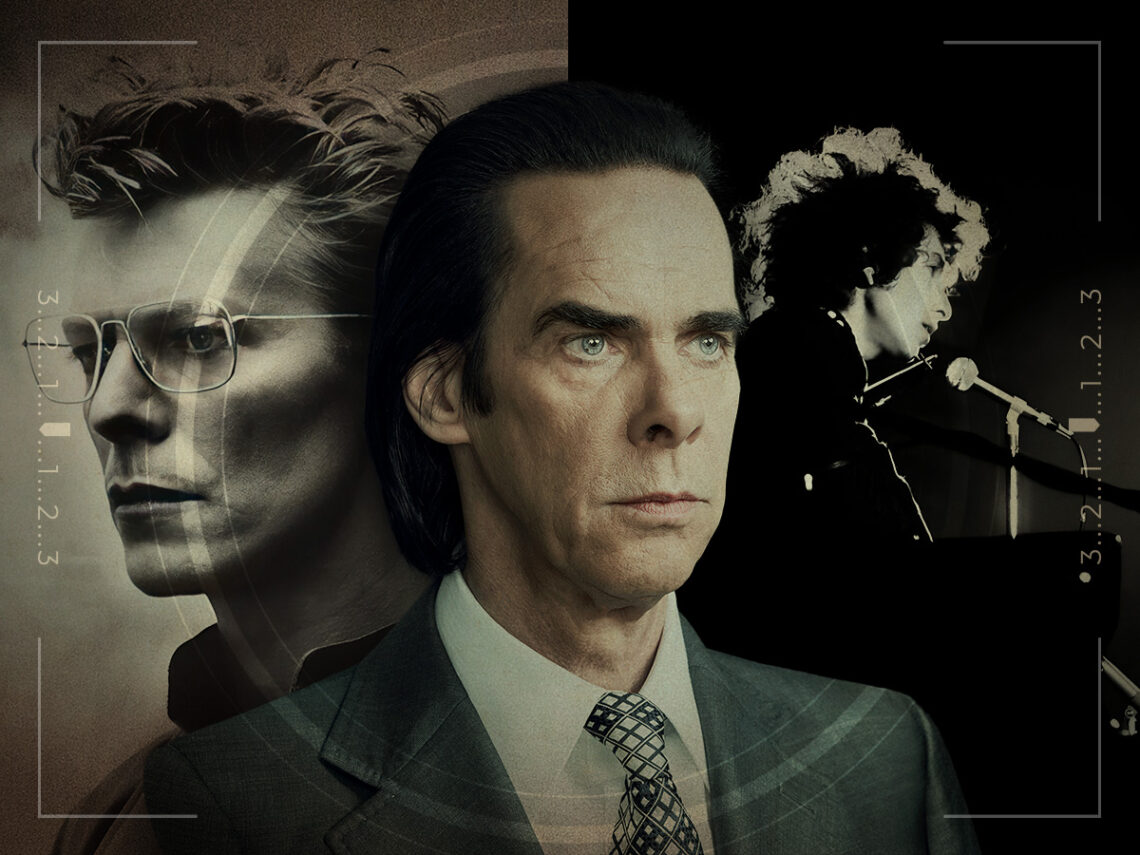
10 classic songs that should be made into movies

“Music and film are inseparable,” Martin Scorsese once said, “They always have been and always will be.”
Sometimes, within music, that boundary is blurred even further as certain songs unspool as cinematic stories in the playground of the listener’s imagination. The great swirling depth of sonic atmosphere and the words woven on top can stir the mind towards vignettes that put Vittorio Storaro’s lighting to shame and images that prove more vividly textured than a John Singer Sargent exhibition.
Whether it be the straightforward narrative of the life of a hard-luck hero in an old blues song or some mystic abstract tale from a Greenwich Village folk star who has stepped one toke over the line before putting pen to paper, songs that tell a story are unique gems that live on in the mind like cacti. In fact, there is sadly a chronic shortage of great narrative songs these days; the art seems to be dying.
A perfect way to revive the brilliance of story songs is to revisit filigreed fictional masterpieces of old and see how these five-minute anecdotes could be blown up to the silver screen with all the nuance of the music intact. These gems not only tell a tale, but they render it prose-like with superb accompanying atmospheres, so that all a studio would have to do is cast the characters because we’ve already picked the trusted directors who would fit the helm.
From Bob Dylan to Randy Newman and Loudon Wainwright – both of whom were, ironically, referred to as ‘the new Bob Dylan’ when they emerged – these are ten terrific songs that could easily collect a gong at the Oscars.
10 songs that would make great movies:
‘The Man Who Couldn’t Cry’ – Loudon Wainwright III (Coen brothers)

As arguably the most underrated songwriter of the 1970s, Loudon Wainwright III mastered the art of character studies. Always laden with charm and a sense of depth, his best tracks are often comic tales of tragic souls judged without cynicism.
A case in point is ‘The Man Who Couldn’t Cry’—the story of a poor soul whose life falls apart after his dog got run over, his wife left him, he got sacked, lost an arm in the war, his creative attempts were laughed at, and then he was innocently sent to jail. All the while, he couldn’t cry. Tragedy after tragedy befell this poor guy, but a tear never stained his cheek.
Then one day, he was shipped to a home for the insensitive and the insane. Therein, he cried for 40 days and 40 nights straight until he died of dehydration. If things sound dour, then the diegesis of heaven’s happy ending was always awaiting. From up in the firmament, he watches everything go his way. His creative works are posthumously lauded, and he is reunited with his dog and his arm.
It’s a tale that does what every Coen brothers movie has done to date—it braces the inevitable tragedy of life with the cushion of comedy, allowing us to exuberantly laugh in spite of it. Sure, the film would be flecked with absurdity, but even the average Monday throws up madness that movies often neglect, and the Coen brothers could make us cry laughing about a man who couldn’t cry for sadness’s sake until he was welcomed by the chuckle of heaven’s grace.
‘The Strange Case of Frank Cash and the Morning Papers’ – T Bone Burnett (Sam Raimi)

In a fitting segue, T Bone Burnett is the movie music maestro who has worked with the Coen brothers on a number of occasions, as well as being one of the most respected producers in music. However, his own tunes are lesser-known, but they are no less brilliant.
The wild rolling melody of ‘The Strange Case of Frank Cash and the Morning Papers’ tells the story of a man who fortuitously happens upon a newspaper that is somehow being printed a day in advance. Naturally, he races to the sports results and makes a killing at the bookmakers… only for it all to go awry. And when things swirl out of control for Frank Cash, he takes a postmodernist turn akin to Kurt Vonnegut’s Breakfast of Champions, and our protagonist calls out the narrator, “This guy named T Bone Burnett, he’s been making all of this up”.
This adventurous literary approach to storytelling seems to have drifted out of cinema since the days of Harold Ramis and Sam Raimi’s high-wire heydays. Thus, this fun and imaginative tale would surely soar on the big screen as Bill Murray (or a less nettlesome Murray adjacent) flits between surreal windfall and comic farce, with a measure of sci-fi existentialism thrown in.
‘Kid Charlemagne’ – Steely Dan (Safdie brothers)

In 1963, the patent for LSD expired. This single admin oversight essentially spun out the counterculture movement in all of its mind-bending phosphorescence, as acid tie-dyed the streets for three legal years. The opening verse of the Steely Dan epic ‘Kid Charlemagne’ draws attention to the psychedelic gold rush brewing in California, as Donald Fagen sings: “On the hill the stuff was laced with kerosene, but yours was kitchen clean.”
There was only one place in the San Francisco valley where you could get acid of that purity — enter the protagonist of the song, the famed LSD chemist Owsley Stanley: the premier acid man of the East Coast. Augustus Owsley Stanley III, to give him his full name, was an American audio engineer by day and a clandestine chemist also by day, night and sometimes morning. Despite being waylaid by heady trips, his audio experiments proved so vital to the sound of the Grateful Dead that he was essentially a member of the band—the architect of their famed wall of sound.
Once the CIA began to crack down on the mind-bent counterculture, the acid king simply shifted production to a lab in Denver, Colorado, and began brightening daydreams once more. His new headquarters were stationed across the street from Denver Zoo, and tales are bountiful in the region’s subterranean realms of old acidheads staring agog at a gibbon while evolutionary epiphanies whizzed into their addled minds. All the while, the funky gibbons stared back, wondering why the hippy who just shat his pantaloons had been staring at them for hours. Surely this farcical folly is a tale fit for the Safdie brothers and their typically humanised approach to less than wholesome subjects.
‘Scary Monsters (And Super Creeps)’ – David Bowie (David Cronenberg)

The song ‘Scary Monsters (And Super Creeps)’ tracks a heroine’s descent into some darkened psychological oblivion orchestrated by an obscure male protagonist. Perhaps it is a paranoid allegory for the relationship between an addict and the gripping manipulation of a given substance, or perhaps it is merely David Bowie delving into some dystopian wilderness of wicked fantasy. And strangely, at its heart is an old Kellogg’s Corn Flakes ad campaign jingle.
It was from the blandest cereal on the market that the title for the song and album was taken. The twist was that the cereal went with the slogan “Scary Monsters and Super Heroes”, but Bowie’s lurid whims had him thinking of a cunning way to subvert that notion. Rather than pit villains and heroes against each other, Bowie delved into the psychology of a perpetrator, explaining that the song is about “a criminal with a conscience who talks about how he corrupted a fine young mind.”
This combination of weird, kaleidoscopic imagery and the wry twist of a troubled yet ultimately unreliable narrator is the sort of murky psychological depth that the overly straightforward ‘lycra means good guy and dark clothes means bad’ dynamic of modern cinema lacks. And that is a terrain that David Cronenberg has long been the William Burroughs-esque king of for years.
‘In Germany Before the War’ – Randy Newman (Jennifer Kent)

In the all-encompassing depth of Randy Newman away from his modern Pixar mainstay, he has rarely ventured deeper than with the song ‘In Germany Before the War’. The track from his 1977 album Little Criminals chronicles the grisly tale of Peter Kürten. Kürten’s nickname, The Vampire of Düsseldorf, tells you everything you need to know about his blood-lusting modus operandi. He attempted this hideous nape-sucking act on over 40 people, claiming the lives of at least nine between 1913 and 1929. Just to ram the point home, that’s 16 years of unchecked neck chomping!
The master songsmith Randy Newman tells his tale as though it were a Peter Süskind novel, imbuing the darkness with poetry. Lyrics like “We lie beneath the autumn sky / My little golden girl and I / And she lies very still” colour his crimes with a narrative, distorted motive and disturbed psychology, while the stirring melody and production flourishes add an eerie atmosphere like finely tuned crime prose.
This bleak, cloudy aura, in Newman’s mix of psychological murk and monochrome history, is judicious and distant enough not to be overly gratuitous. This is a style that Jennifer Kent has established with her filmography, and she would give the madness of Kürten a gripping Babadook hook.
‘The Mercy Seat’ – Nick Cave and The Bad Seeds (Martin Scorsese)

A man on death row surveying the ways of crime and punishment, death and mercy, God, the hereafter or the nothing at all, is nothing new and never will be. However, never has this eternal mental battle been elucidated with such rabblerousing vindication than in the unfurling storm of words that race from the spleen of Nick Cave’s criminal character in ‘The Mercy Seat’.
Martin Scorsese is another artist with a religious bent, and he, too, has crafted his works with an unending biblical overture. Even Goodfellas is tinged with the subtext of hell, proving that he shares Cave’s mantra: “God is in everything whether I’m mentioning him or not.”
This kinship and the brooding atmosphere would surely prove to be a blistering adaptation of a song that isn’t a million miles away from a musical Shutter Island. On top of it all, you have the final twist of whether he really did tell the truth, but I’m afraid he told a lie.
‘The Lonesome Death of Hattie Carroll’ – Bob Dylan (Jane Campion)

There isn’t a great deal of narrative to ‘The Lonesome Death of Hattie Carroll’, but what it lacks in plot points it makes up for with Bob Dylan‘s sagacious societal wherewithal. Essentially, in his own poetic prose, Dylan tells the tale of how a rich man clubs a servant to death for no good reason. The final punchline to this twisted fable is when the judge slams down the hammer, he avows “To show that all’s equal and that the courts are on the level” and “even the nobles get properly handled” only to dish out a “six-month sentence”.
This true crime tale of the death of Hattie Carroll at the hands of William Zanzinger might not be quite as titillating as some of the wild tales above, but there is enough depth in the subtext for it to ripple with reverberations and reflect back a few important points about the present without ever letting entertainment take a backseat. There are plenty of societal injustices occurring at present, with the powerful increasingly extending fascistic control, right down to the mechanics of the justice system. This sadly makes the message Dylan speaks of more prescient than ever.
Jane Campion has a history of delving into the past to reflect the present, and with Dylan’s vigour and timeless nuance to work with, ‘The Lonesome Death of Hattie Carroll’ would surely be a timely box office hit.
‘The First Big Weekend’ – Arab Strap (Lynne Ramsay)

Pills have gone out of fashion in the age of anxiety as he potential of a panic attack proves too perturbing to bother. However, it would be a beautiful thing indeed for a film to take us back to the simpler times of mid-1990s Falkirk. With this classic 1996 track, which was limited to a release of 700 copies at the time, showcasing how its present popularity has far outstripped its humble expectations, Arab Strap simply talk us through Thursday afternoon to Monday morning in witty Scottish tones.
It’s filled with the inanities of spaced-out viewings of The Simpsons, idle office chats about the girl you drunkenly danced with the night before, and the mystic mirage of weekend oblivion. Rife with the potential for comedy and plenty of relatable imagery, this tale is reminiscent of Irvine Welsh before he got carried away with plot—and filled with the same oddly heartening laughs.
Perhaps those laughs prove so heartening because of the pathos of the hardship that they are pitted against. Somewhere amid Arab Strap’s big weekend, there’s a hint of 9 to 5 apathy and an air of financial constraint. In some ways, Ramsay’s hard-hitting 1999 film, Ratcatcher, is already like a prequel to this song, finding a 12-year-old searching for the same sense of escape through nature’s more natural highs.
‘Underground’ – Tom Waits (Spike Jonze)

Every Tom Waits song is an envelope of little vignettes. Often, they’re just fleeting scenes from the weary realm of the disenfranchised, but ‘Underground’ is a world fit for further exploration. While Waits doesn’t offer too much detail about the world he has found “beyond the gopher holes”, therein lies the mystery.
What is this subteranean world, why is it rumbling, and why is it the manic Waits, out of everyone in history, who has found it? Is it a real world, or is it just in the mind of our crooked protagonist? Why do the little characters in this soil-covered sphere seem to be gearing up to something? Nobody seems to know, but that only adds to the curiosity of it all.
This meeting of quirky carnage, raptures to realism, existentialism, and frivolous fiction has featured throughout Spike Jonze’s filmography, most notably in Being John Malkovich. He also made his name directing music videos to begin with, so the tricky task of converting Waits’ odd escape should find a good fit in the indie star.
‘Depreston’ – Courtney Barnett (Richard Ayoade)

When the latest A24 film is titled The Death of a Unicorn, it’s easy to conclude that our need for stimulation has maybe gone too far. The once humble world of art house cinema that strived to bring more resonant human stories to the few is now awash with gripping obscenity and crude allegories aimed to potentially engage the masses in what boardrooms all over Malibu are calling ‘cross-over success’.
However, amid these trying times, maybe allegories should be shunned for lighthearted reality—this is what Courtney Barnett specialises in. ‘Depreston’ is a modern masterpiece that looks at the trials and tribulations facing young people trying to get on the housing market and all the questions such a tragic pursuit raises.
Naturally, in a world where Relocation, Relocation exists, you wouldn’t want this house-hunting tale to be dolefully dragged out over a couple of hours. However, Richard Ayoade’s canny directorial knack for weaving humour and Kafkaesque observations about the mechanics of modern life would bring life and laughs to the dour process of pouring your life’s work into a worsening damp patch. Maybe the world needs that, or maybe it just needs anything but yet another wild romp about a dying unicorn with the cure for cancer, again.
A Bonus Short Film: ‘The Gardener’ – The Tallest Man On Earth (Jane Schoenbrun)
In reality, villains are never as one-dimensional as they are in most movies. They don’t all stroke bald cats and cackle. The problem with the world is that most of them don’t even think of themselves as villains. Worst still, there are some who can effortlessly justify their own cruelty as a poetic means to a magical end. That’s the delusion that The Tallest Man On Earth suffers from in ‘The Gardener’.
In the pursuit of love, the horticulturist in question kills anyone he sees as a rival for his fair maiden’s attention and buries them in the most beautiful backyard in Sweden. “So now he’ll fertilise the roses,” he sings like a cracked Charles Baudelaire, but as you listen, the concept is so captivating that you can’t help feeling like your better judgement is being swayed by a hopeless romantic that you’d never wish to cross.
This collision of pervisity and outward beauty makes the song cinematically rife. The Monet-like garden would be stunningly brought to life by the technicolour cinematography and sudden stylistic switches of Jane Schoenbrun as she continues to expand her scope towards the weird and the visceral, with a firm hold on the distortion of love.

Never Miss A Tale
The Far Out Bob Dylan Newsletter
All the latest stories about Bob Dylan from the independent voice of culture.
Straight to your inbox.