


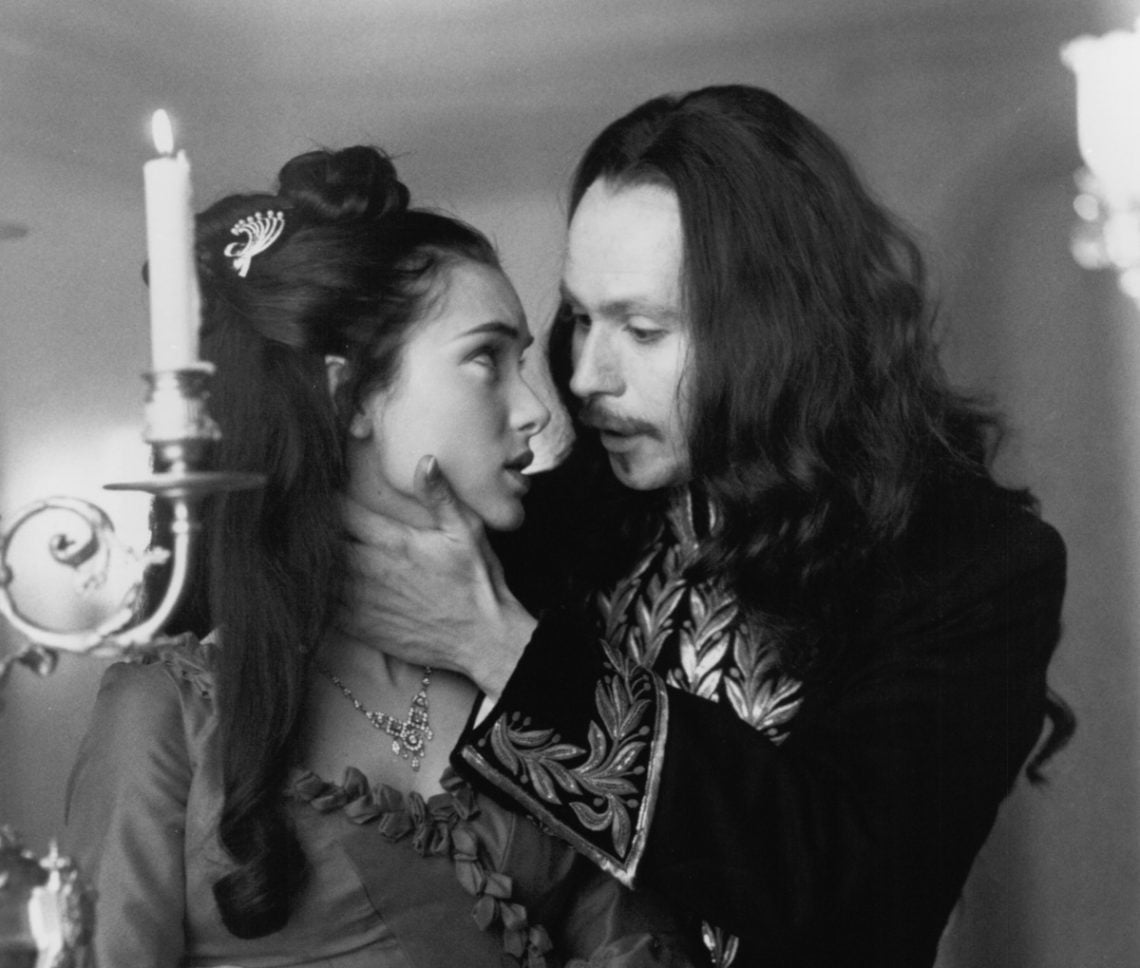
Celebrating 30 years of Francis Ford Coppola’s curious melodrama: ‘Bram Stoker’s Dracula’

Despite their blood-sucking, treachery and violent nature, vampires have always been romantic creatures in the world of cinema, with the ability to seduce and coerce any mere mortal. From the dawn of cinema, in F. W. Murnau’s 1922 film Nosferatu, vampires have always lent themselves to the silver screen, with their romance able to bridge the gap between genres, showing up in horror flicks and emotional dramas.
Having just come off the back of his celebrated crime trilogy The Godfather, filmmaker Francis Ford Coppola seemed like one of the most unlikely directors to take on such a tale back in the 1990s. Making a name for himself as the hard-hitting Hollywood maverick of such productions as Apocalypse Now and The Conversation, news that he would be taking on an adaptation of Bram Stoker’s Dracula came as something of a surprise.
Though at this point in the curtain call of the 20th century, tales of Dracula had long been created by Hollywood, and Coppola was intent on making something unique. Diligently planning each and every shot, the filmmaker drew up a storyboard of thousands of images seeking cinematic inspiration from Jean Cocteau’s Beauty and the Beast as well as paintings by Gustav Klimt.
Speaking after the film’s release, Coppola stated: “‘Weird’ became a code word for ‘Let’s not do formula…Give me something that either comes from the research or that comes from your own nightmares.’ I gave them paintings, and I gave them drawings, and I talked to them about how I thought the imagery could work”.
What results is an erotic and surreal piece of horror cinema, with the filmmaker working with some of the greatest contemporary names to create his gothic vision that harks back to the hammy aesthetic of early Universal monster movies. Enlisting the help of acting talents such as Gary OIdman, Keanu Reeves, Anthony Hopkins, Monica Bellucci and Winona Ryder, who each performed to varying degrees of critical success, Coppola created a movie that was well-poised between playful farce and gorgeous melodrama.
Playing out with the use of on-set practical effects that makes Coppola’s film looks more like a haunted house performance rather than a serious drama, Bram Stoker’s Dracula is a loyal piece of fiction that stays true to the author’s vision whilst dousing the text with eerie contemporary eroticism.
A product of the early 1990s, Coppola’s film spills over with energy and gothic glee, telling the story of a centuries-old vampire coming to England to seduce his barrister Jonathan Harker’s fiancée and wreak general havoc. Being the titular horror villain, the film is largely Oldman’s to toy around with, treating the film as if it were his plaything, disappearing and reappearing with the pace and inexplicability of the bad guy of Saturday morning cartoon.
As if an omniscient observer of the whole film, as well as its protagonist, Oldman controls proceedings with a masterful grip, becoming Coppola’s holiday-camp version of Marlon Brando. But, to expose the film’s playful melodrama isn’t to remove its merit, with Coppola’s Dracula being a strange, goofy version of the iconic character whilst remaining one of the most enjoyable in the villain’s canon.
