


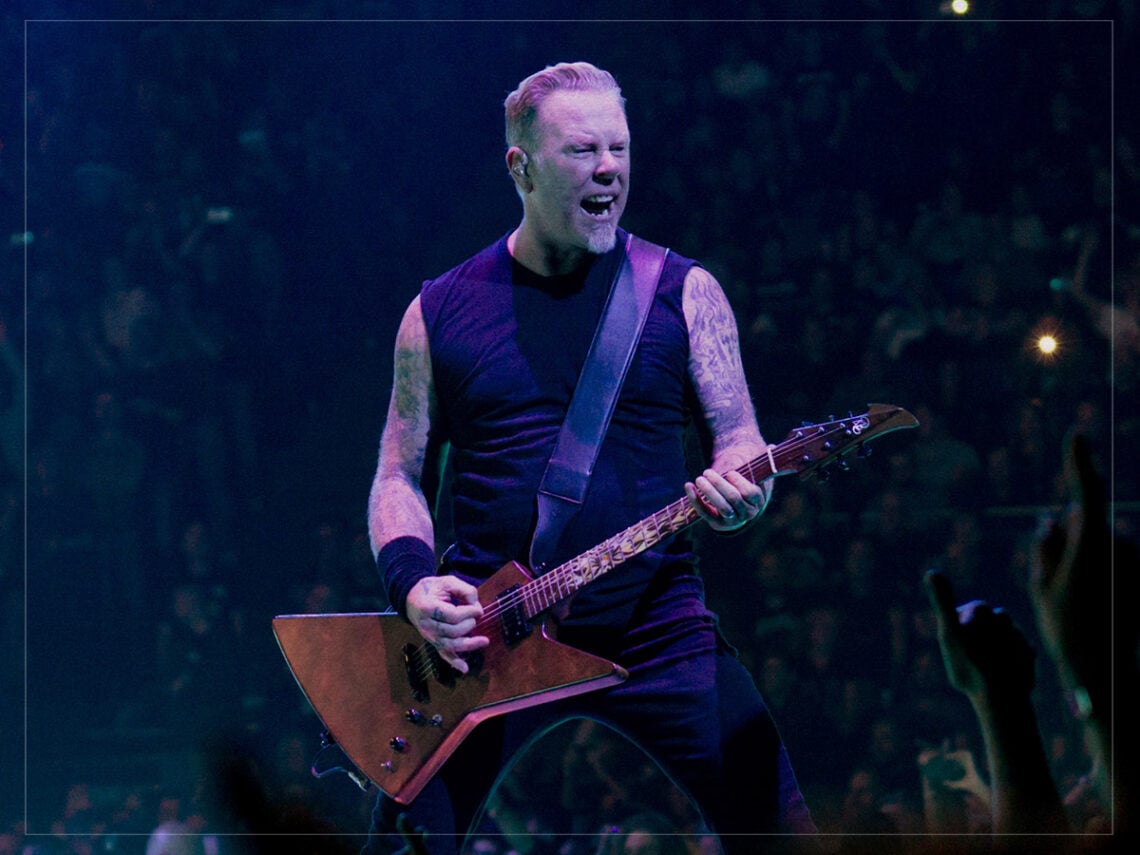
The 2016 song James Hetfield called out of his depth: “Challenge”

James Hetfield didn’t start his career thinking that he was going to be one of the greatest singers in the world.
The entire point behind Metallica was making the music front and centre, and Hetfield wasn’t going to look for those stratospheric notes that Rob Halford and Robert Plant were used to singing every time he sang. His singing was almost like another rhythm in many respects, but there were a few times when he could challenge himself whenever he walked into the studio.
But it took him a long time to be able to accept the fact that he was the singer of the band. Even up until making Master of Puppets, the band were always scouring to find a singer that would fit their music, but more often than not, Hetfield was the one with the trademark bark that they were looking for. It was hard for him to pull double duty by having to play and sing at the same time, but even if his vocal lines weren’t that complicated, he was ready to put himself through the wringer when necessary.
The Black Album needed a bit more vocal prowess to be delivered properly, and if he wanted ‘Nothing Else Matters’ to soar like it did, he needed to go to a vocal coach. He had already blown his voice out on a record before, so if he was going to preserve what he had left on every one of his albums, that vocal coach needed to get him to a spot where he could at least produce a note again.
He wasn’t going to be running the same kinds of scales Freddie Mercury did during every single show, but he did see the merit in trying to flesh out some new ideas. If you’re going anywhere near traditional metal singing, the thought of taking a chance on Ronnie James Dio’s range was going to be more than a little bit of a gamble.
Dio was a one-of-a-kind artist, and everything that he ever produced needed to have a bit more bite behind it. Everything from Rainbow to Black Sabbath to his solo years was all about trying to make the most extravagant music ever made, and when you hear Hetfield trying his hand at singing a lot of his material on the band’s ‘Ronnie Rising Medley’, he was about to put himself through his paces more than a few times.
Rainbow did mark the earlier period of Dio’s career, but Hetfield felt that he was out of his depth when he first started singing, saying, “We all have our mentors, and we need them, or at least I do. I need someone who I’m lookin’ up to, to either try and chase or learn from. We’re no strangers to doing covers. So the ‘Ronnie Rising Medley’ was kind of a combination of all the good stuff we loved from Dio. It’s great to challenge myself with singing stuff like that. It helps me grow. And it also helps me push limits that I think I’m stuck in.”


Aside from Hetfield’s voice, though, Kirk Hammett also had moments to stretch out further than he would have had he only been playing his signature licks. Ritchie Blackmore is a much more versatile guitarist, and when looking at the way that they blended every piece of the song together, you can tell that Hammett is trying to show off another side of his playing that didn’t cater to traditional metal playing.
There were a lot more facets to what Hetfield could do behind the microphone, but even if the purists were upset, they didn’t have the real Hetfield on vocals, he knew that there was a way for people to appreciate the majesty of what someone like Dio brought to the table in the glory days of metal.
