


The 2001 movie Mark Wahlberg never wants to see again: “I’ve paid my dues”

Every actor is going to make at least one terrible movie in their career, and even though Mark Wahlberg has taken that sentiment to heart and made a lot of them, there’s one, in particular, he’d be more than happy if he never had to revisit again.
Harsh, perhaps, but he wouldn’t be alone in that respect. When Wahlberg puts his mind to something and focuses on giving an actual performance, then a solid argument can be made that he’s actually an underrated performer.
The downside is that those occasions have been few and far between, with highlights like Boogie Nights, The Fighter, and The Departed being repeatedly counteracted by the never-ending stream of identikit action thrillers where he decides that adopting the expression of a man holding in what looks to be a painful fart is the best course of action.
It’s definitely not a coincidence that so many of his worst movies – including the video game adaptation Max Payne, lifeless sci-fi Infinite, his two Transformers flicks with Michael Bay, Peter Berg’s Mile 22, and crime caper The Truth About Charlie – have required him to dust off his stoic man of action chops.
They’re all mind-numbingly uninteresting in their own way, but none of them is the film Wahlberg would die a contented man if he were to never again lay eyes on it. It’s a frank self-criticism, but when somebody as knowledgeable in the ways of cinema as James Cameron thinks it’s a steaming sack of turds, then it’s hard to argue with either man’s assessment.
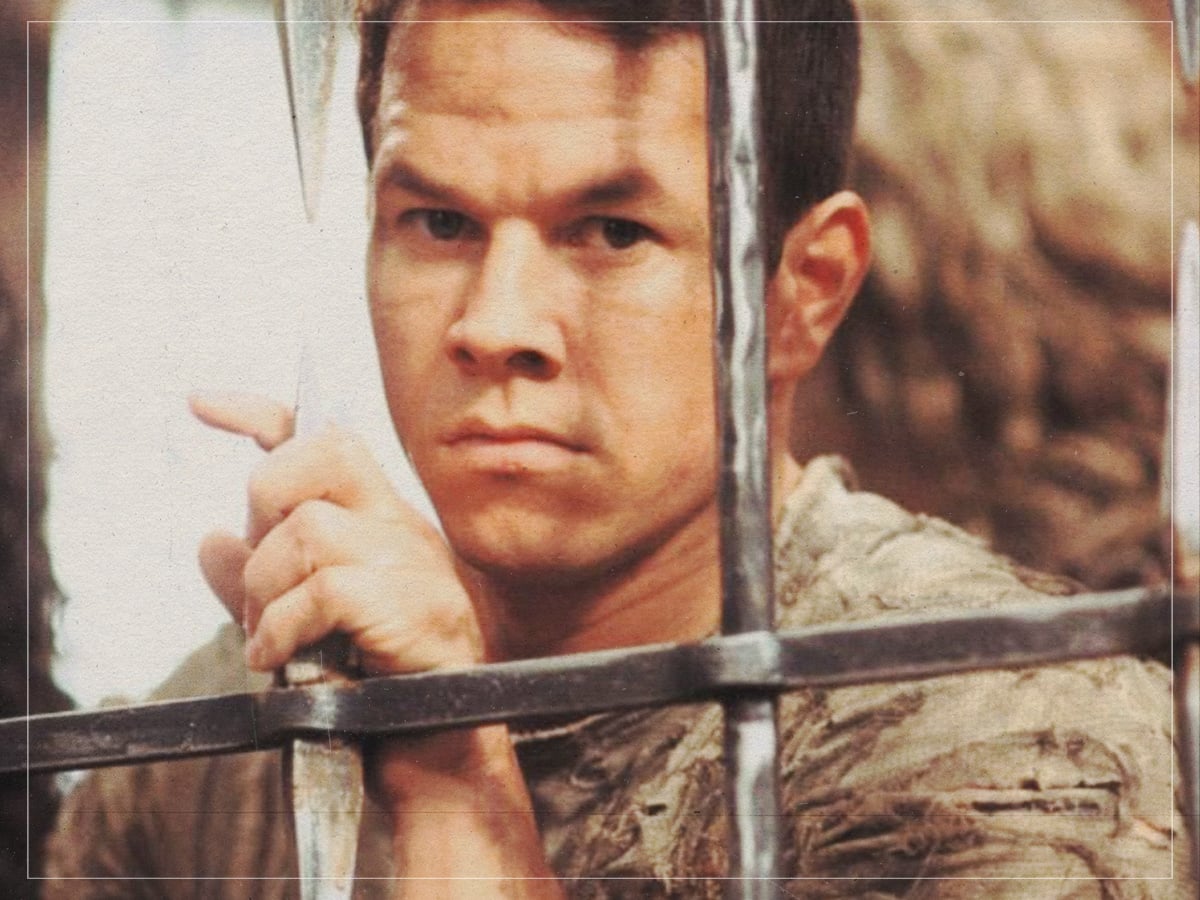
Wahlberg admitted to Pop Entertainment that he’d sought to pivot his career direction, aiming to reinvent himself as someone who would only “make a movie I want to go out to see as opposed to a lot I made before that I would not want to see unless I was seeing them in an aeroplane or a hotel room.” He didn’t do that, of course, but he had a bad enough experience that he at least wanted to try.
“I would not only not make Planet of the Apes again, I wouldn’t want to see it again. I don’t think Tim Burton would direct it again,” he explained. “I am at a point in my career that I just want to work with directors that I want to work with. I want to make movies that I want to see and play roles I want to play. I’ve paid my dues and done a lot for the experience and knowledge; now I want to make the movies I want to see.”
In many respects, Planet of the Apes represented the kind of project actors often believe should work on paper. It paired one of Hollywood’s most distinctive directors with an established studio property carrying decades of recognition, making it seem like a relatively safe career move.
The disappointment wasn’t simply that the film underperformed critically, but that it demonstrated how impressive names and familiar brands offer no guarantee of a satisfying creative experience.
It’s also revealing that Wahlberg’s biggest regret wasn’t necessarily his weakest performance but the production itself. Throughout his career, he’s often spoken about valuing the experience of making a film as much as the finished product, which helps explain why Planet of the Apes lingered in his memory more than other poorly received titles. For him, it became a lesson about choosing collaborators and material with greater care, even if his subsequent filmography didn’t always reflect that ambition.
Admirable, yes, but it hardly led to a total reinvention as a leading light of celluloid. Burton’s Planet of the Apes was a monumental misfire, without a doubt, but it’s not even close to being the worst movie Wahlberg has ever made, even if it was the one he felt worthy of being singled out.
