


20 years of ’28 Days Later’: Covid-19 has made Danny Boyle’s film utterly terrifying

Once upon a time, the concept of zombies felt like a fantastical creation as joyously camp as Dracula, Frankenstein’s Monster or the Wolfman, but after the events of the Covid-19 pandemic, they don’t seem quite as silly. Essentially shutting down the normal functioning of the modern world in 2020 and much of 2021, the pandemic saw the death of a staggering 6.5 million people from across the world whilst governments attempted to slow the pervading virus with lockdowns that largely restricted people from leaving their homes.
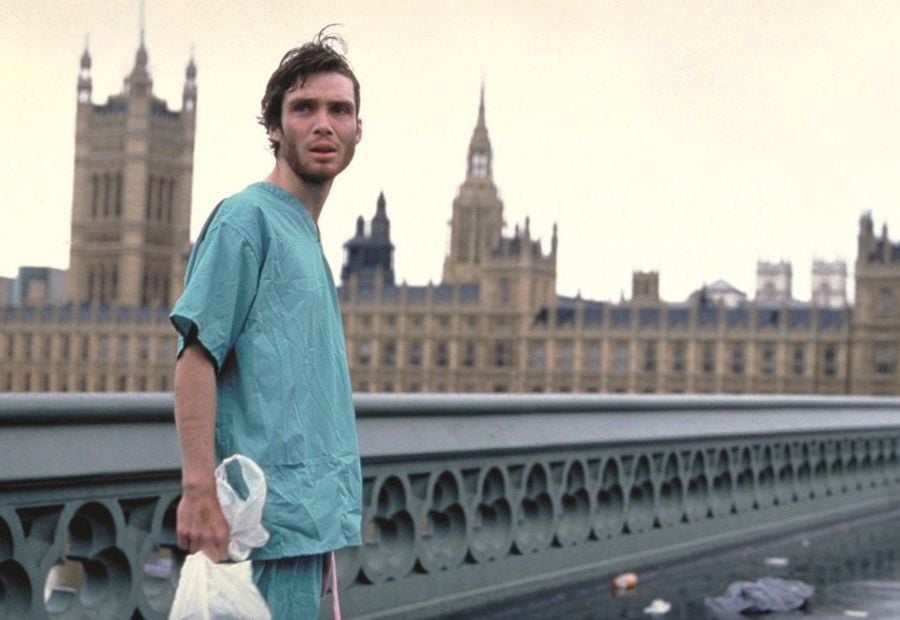
The catastrophe caused bustling city centres to lose their hubbub, with the centre of London mid-pandemic looking like the lonely streets of the introduction of Danny Boyle’s 28 Days Later, which celebrates its 20th anniversary in November. Changing the very perception of the zombie sub-genre, Boyle’s film, written by Alex Garland, turned the idiotic meat parcels of old into the most frightening contemporary foe.
Taking inspirations from George Romero’s Night of the Living Dead and John Wyndham’s 1951 novel The Day of the Triffids, Garland’s story is a piece of seminal science fiction which unravels an apocalyptic story with deft imagination whilst containing an excellent, isolated story of human desperation, fragility and violence. It all begins with one of the most influential moments in contemporary horror cinema too.
Waking up from a coma to the windswept tumbleweed of central London, Jim (Cillian Murphy) staggers through the city, searching for survivors and sanctuary. Shouting out for a morsel of companionship, Jim checks the payphones to no avail and walks through a sun-kissed central London, picking up bundles of strewn cash as if the paper notes mean anything in this nightmarish new reality.
The deadly virus, which occurred whilst he was unconscious in hospital, has ravaged the city, leaving only a few paranoid survivors who have stuffed themselves at the top of flat highrises and hordes of zombies who stalk the city like incessantly hungry Pitbulls who never feel the need for a nap. Whilst zombie-enthusiasts dispute the inclusion of Boyle’s ‘infected’, Garland has his own opinion on the matter, definitively telling Empire, “It’s a zombie movie,” without any room for debate.
It certainly feels that way too, with ‘infected’ movies usually referring to the poor incapacitated victims of Steven Soderbergh’s hyper-real Contagion, or Wolfgang Petersen’s Outbreak, whereas the rampaging beasts of Boyle’s film share a better resemblance to Romero’s ghouls, with just a little added speed and venom. Just like Romeo’s classic Trilogy of the Dead, 28 Days Later dabbles in much more than blood, guts and gore, too, with the sci-fi being a morality tale about the lack of humanity that exists in our innate need for survival.
Putting its modest $8 million budget to good use, Boyle bottled the eerie grit of British cinema in the early 2000s, using a handheld Canon XL1 digital video camera to create a film that feels like bootleg footage of an alternative reality that we were never meant to see. Slow, steady, upsetting and emotionally draining, Boyle’s 28 Days Later is a microcosm of the Covid-19 pandemic. Thank god the real thing wasn’t as vicious.
