


The 1997 Foo Fighters classic Dave Grohl thought everyone would hate: “This is never gonna fly”

Artists are not always supposed to love their own work. If every musician had the same level of admiration for their own music as Noel Gallagher does, chances are there would be a lot fewer earnest rock stars out in the world.
Dave Grohl is always honest when talking about Foo Fighters songs, and when the band were still trying to find out what they wanted to be, he admitted that the song ‘Monkey Wrench’ would have been a bit too polished for the group to make.
Then again, ‘Monkey Wrench’ sounds a lot more gritty and real than 90% of rock bands do today. Since the whole thing is turned up to 11 in the final mix, the song feels like it’s almost too fast for its own good, with Grohl seething with anger as he sings about being left high and dry by an old flame.
When Grohl first started writing the album, this kind of approach was the exact opposite of what he had done before. Compared to the other grunge vocalists who were writing about their feelings, the band’s debut record was pure nonsense, featuring Grohl on every instrument and putting together words that didn’t make sense to fit the melody.
By the time work began on The Colour and the Shape, however, Grohl’s songwriting had become far more personal. Rather than hiding behind abstract lyrics, he started drawing on real emotions and experiences, giving the band’s second album a greater sense of vulnerability without sacrificing its explosive energy.
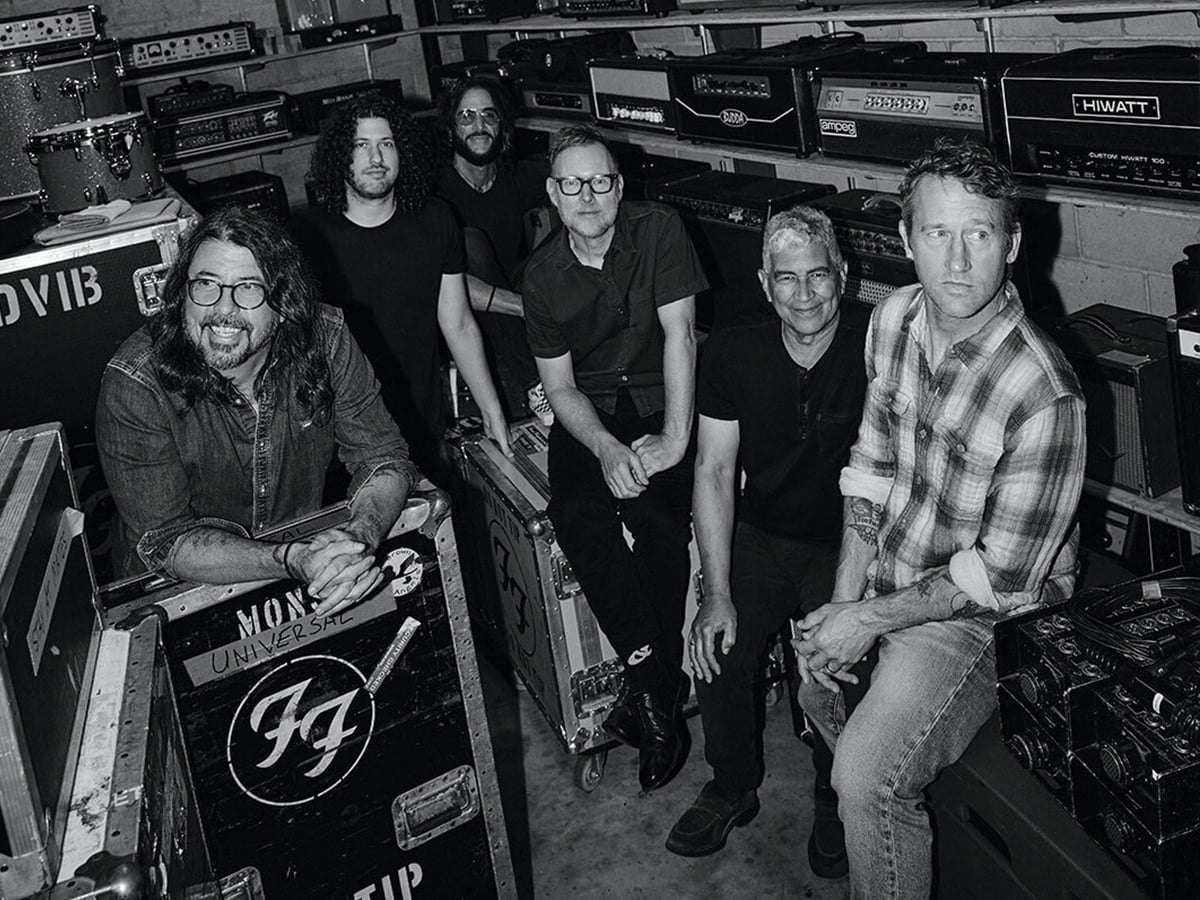
For a while, Grohl was still woodshedding to see if he could even write any more songs, but coming up with ‘My Hero’ during a soundcheck was motivation enough for anyone to keep going. Between all of the booming power chords, though, Grohl had one riff floating around in his head, and he was convinced that the rest of the band would not like it.
When presenting ‘Monkey Wrench’ to the band, Grohl wasn’t even that thrilled with the riff, telling Kerrang, “With ‘Monkey Wrench’, I remember I had the main riff, but I didn’t have the little jangly riff that goes over the top of it, and I thought it needed something. So I came up with the jangly riff and thought, ‘Oh my God, this is never gonna fly! Everyone’s gonna hate it’”.
If the jangly riff wasn’t there, though, there’s a good chance that the song would have never worked. There are certainly bits and pieces that fit well together in the verses, but opening up the song with just a bunch of power chords is not nearly as interesting as putting the riff over the top.
It’s not like putting something a bit more melodic was out of the question in the alternative sphere. Compared to the grunge acts that were looking to get heavier at every opportunity, this felt as if the heavy sound of Pixies was mixed with the jangle pop singles of REM.
That fusion became one of the defining traits of the Foo Fighters’ sound. Grohl had long admired bands that balanced melody with raw power, and ‘Monkey Wrench’ demonstrated that a song could be relentlessly aggressive while still being driven by an instantly memorable hook.
Looking at the song’s breakdown, though, it sounds like Grohl wanted to overcompensate for putting something so poppy in the song. As if to hammer the point home that they are indeed a hard rock band, Grohl’s massive bridge part, where he sings the entire verse in one breath, is one of the most impressive and heaviest things that the band had done up to that point, with the exception of the metallic ‘Weenie Beenie’.
Although the band welcomed the song with open arms, two of them didn’t bother sticking around for much longer, with William Goldsmith quitting after Grohl changed his rum parts and Pat Smear only staying on for six more months after getting sick of touring. Foo Fighters may have been on the verge of collapse at any given moment, but the thought of quitting a band that has hooks like this is almost inconceivable.
Although the sessions for The Colour and the Shape were marked by internal tensions, ‘Monkey Wrench’ proved that Grohl’s instincts as a songwriter were evolving rapidly. What began as a riff he feared might be too melodic ultimately became one of the Foo Fighters’ signature tracks, illustrating that some of the band’s biggest breakthroughs came from embracing ideas that initially seemed out of place.
