


“The best”: The 1989 album that made David Crosby fall back in love with music

For any older musician, the biggest challenge is maintaining the fire that you had in the beginning. For David Crosby, there were moments when the issue was reining that fire in.
However, while he might have lived a manic life, keeping up the motivation was still a major factor. It’s one thing to be able to still reproduce the hits every time you step up to the plate, but why bother making any new material if you feel like you don’t have anything to say anymore?
Sometimes, even the best artists need to know when to pack it in once in a while. After a harrowing few years, when Crosby was striving for stability and sobriety in the late 1980s, music had somewhat drifted to the back of his mind. But he knew that he still had gas left in the tank when listening to Bonnie Raitt’s 1989 album Nick of Time.
But then again, Crosby had come off some of the hardest years of his life before Raitt’s masterpiece had even come out. After most of Crosby, Stills, and Nash went their separate ways, the beginning of the 1980s showed Crosby going on a spree of drug-addled stupors that left many wondering if he would even live to see the end of the decade.
And even when Crosby managed to clean up his act in the late 1980s, the comeback album from CSNY, American Dream, was far from his best effort. It’s hard to judge his tracks based on his physical state at the time, but a track like ‘Compass’ was a case of a potential classic that didn’t get all the way there because of how much Crosby was out of step.
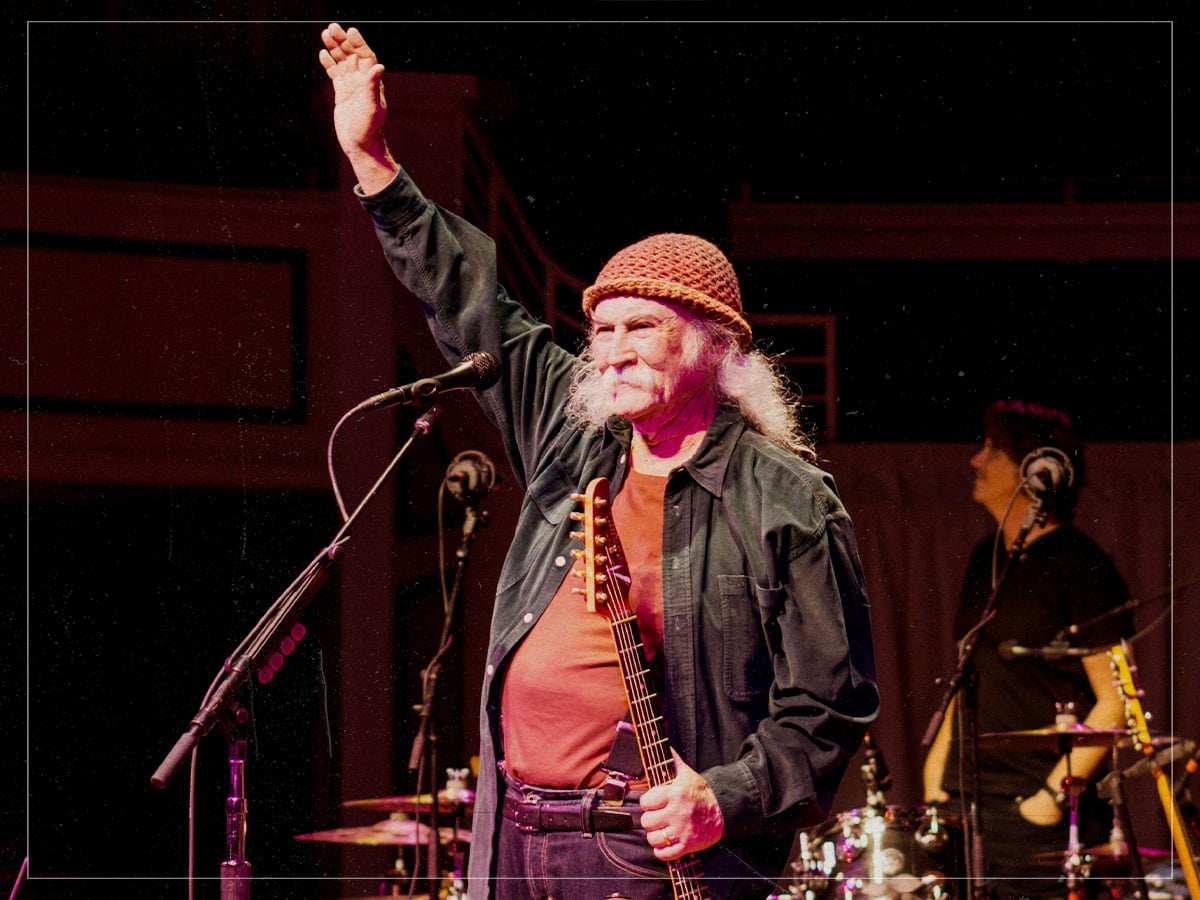
But Nick of Time was a different slice of classic rock just one year later. Raitt had been known for covering blues tunes for her entire career, but the minute that she got the right tunes in front of her, it launched one of the greatest resurgences that anyone had ever had, including the bulletproof hook on ‘I Can’t Make You Love Me’.
While the rest of the world went along for the ride with Raitt, Crosby saw hope for him in her performance, saying, “I have to give credit to Bonnie Raitt. I listened to Nick of Time, and I thought, God, this is one of the best albums I’ve heard in ten years. And I said, well, Bonnie didn’t write all that stuff, she just made it hers. I thought, I can do that. I can’t sing like Bonnie, but nobody else can either!”
Before his passing, Crosby also took to social media to indicate that his love for Raitt still remained. “Bonnie Raitt has been my most favourite singer for a long time ….does no tricks …no vocal pyrotechnics …but she tells the Tale, and her heart is in it, and she is just a beautiful singer,” he wrote.
And that’s exactly where Crosby went afterwards as well. Despite being one of the greatest writers of his generation, his performance on A Thousand Roads helped shake the cobwebs out of him as a performer, covering everyone from Jimmy Webb to newcomers like Marc Cohen while also finding time to work on tracks he wrote with fellow icons like Phil Collins and Joni Mitchell.
Even though he was covering old tunes didn’t mean that Crosby still had something to say. Across the last years of his life, he seemed to get more in tune with why he wanted to play music in the first place, loving the art of playing live and eventually turning in albums of new material in his later years, like on the album Croz.
The core identity behind Crosby, Stills, Nash and Young was their ability to write one great tune after another, but that’s just one facet of what an artist is supposed to be. It’s also about being able to inhabit a song, and through Nick of Time, Crosby remembered that being an artist is about feeling that story in your bones before having the guts to put it onto a record.
When Crosby passed, Raitt proved that the admiration was mutual, writing, “Beyond words, my sadness at saying goodbye to my dear friend. David’s brilliance and uniqueness as a singer, songwriter and guitarist will always set him apart and among the very best. There was no one like him, on or off stage.”
Concluding, “Thank you, David, for all you gave us. For all the years of our shared music, activism and friendship. Yours was a life truly well lived.” And that good living certainly involved a fair few spins of Nick of Time.
