



The vicious 1984 song David Gilmour wrote about Roger Waters: “You always have to disagree”

For many years, David Gilmour and Roger Waters needed each other to survive in a musical sense. Gilmour arrived in Pink Floyd during a tumultuous time as Syd Barrett’s health was declining and provided a necessary lift when they needed it most.
Once Barrett could no longer contribute to the creative process and exited the group, Gilmour became a more vital component of Pink Floyd. He played a crucial role in their ascend to world dominance, and they would never have reached such lofty heights on The Dark Side of the Moon or Wish You Were Here without Gilmour.
While Waters and Gilmour often approached music from different perspectives, their contrasting strengths proved remarkably effective when working towards the same goal. Many of Floyd’s greatest achievements were built on that creative tension.
However, Gilmour’s relationship with Waters was fraught even before the latter’s acrimonious exit from Pink Floyd in 1985. While they briefly reunited for Live 8 in 2005, they have largely not been in each other’s lives for 40 years, and their relationship seems unfixable.
What began as artistic disagreements gradually evolved into one of rock music’s most famous feuds. Decades later, the bitterness surrounding their split still appears to overshadow their shared accomplishments.

In 2023, Gilmour echoed comments by his wife, Polly Samson, who accused Waters of being “antisemitic” and a “lying, thieving, hypocritical, tax-avoiding, lip-synching, misogynistic, sick-with-envy, megalomaniac.” Furthermore, in 2024, Gilmour ruled out ever performing with Waters again, stating, “I tend to steer clear of people who actively support genocidal and autocratic dictators like Putin and Maduro [president of Venezuela].”
Gilmour’s negative stance on Waters is nothing new. He first aired his grievances on his former bandmate on the vicious track, ‘You Know I’m Right’, which appeared on his solo album, 1984’s About Face.
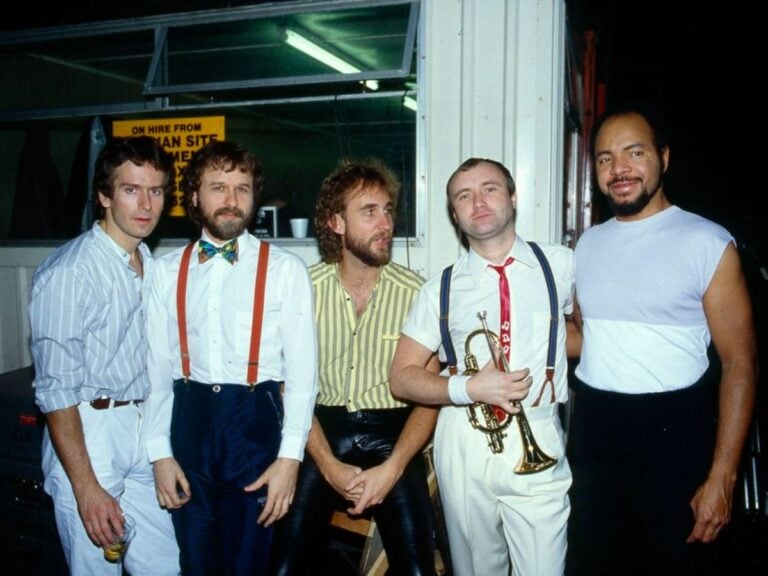


Waters had yet to leave Pink Floyd, which officially occurred in 1985, but his final contribution to the group came in 1983. He was in complete control of his last album with the band The Final Cut, which irked Gilmour, who had been a spare part of the project.
At this stage, it was clear they could not continue to collaborate, which sparked Waters’ decision to leave the group. However, rather than exit quietly, he attempted to lodge a legal case to stop Pink Floyd from continuing without him. After his departure, Waters issued a statement to EMI and CBS invoking his contract’s ‘Leaving Member’ clause. As the creative force behind the band, he felt they needed him to continue.
Sadly, they couldn’t settle the issue civilisedly, and in October 1986, Waters started High Court proceedings to formally dissolve Pink Floyd, labelling the group a “spent force creatively.” Understandably, drummer Nick Mason and Gilmour refuted Waters’ brazen claim that Pink Floyd couldn’t continue without him. Eventually, after careful legal considerations in 1987, Waters officially resigned. However, he only did so because of the potential financial repercussions, stating, “If I hadn’t, the financial repercussions would have wiped me out completely.”
Before this legal entanglement, Gilmour was already tired of the situation and revelled in making his solo album, About Face. The project allowed him to express himself freely without Waters breathing down his neck. ‘You Know I’m Right’ explained Gilmour’s perspective on the fall-out, but it wasn’t initially his intention for the composition. “This didn’t begin life as a song about Roger but ended up as one, prompted by the future of Floyd being in doubt,” Gilmour told Mojo 2015 about the song.
Detailing further, he continued: “You are tempted to allow yourself to let those grumbles surface in things. I think it’s generally a poor idea. And if I went back to it, I probably wouldn’t do that. It’s impossible not to grumble and moan about the inequalities and injustices of life.”
In the lyrics, Gilmour doesn’t refrain from saying what he honestly thought about the Waters situation. He scathingly sings, “We really seem to have a problem here, but is it you or me? Whatever I have going through my mind, You always have to disagree, It’s just a matter of opinions, It’s not a simple fact, Why don’t you try to see the other side? Don’t turn your back.”
The release of ‘You Know I’m Right’ likely only incensed Waters further, possibly contributing to his decision to pursue legal action. However, Gilmour needed to tell his version of events and show that there are always two sides to every story. Songwriting has always been Gilmour’s favoured form of expressionism, and it would have been a disservice to himself if he didn’t write ‘You Know I’m Right’.
Although the feud continues to define much of the discussion around their relationship, it should not overshadow what they accomplished together. The partnership may have ended bitterly, but it also helped produce some of the most influential music in rock history.
