


The 1982 Grateful Dead song that fans begged them not to play: “The idea is repellant”

Grateful Dead fans are something else. As fierce devotees to the world’s pre-eminent jam band, Deadheads continue to be some of the most loyal listeners in the entire world of music.
Their intensity and fervour towards the Dead helped push the band forward to greater heights, but they would occasionally become obsessive and protective over what they saw as being the ideal way to handle the Grateful Dead.
This kind of intense fan devotion is relatively rare, even within rock music. While many bands cultivate loyal followings, the Grateful Dead inspired something closer to a subculture. They gave the world an entire way of life that extended far beyond the music itself. For some fans, the band wasn’t just something to listen to; it became a framework for living, shaping their values, routines and sense of identity.
That level of immersion, however, inevitably comes with complications. When a fanbase begins to feel a sense of ownership over an artist’s output, the line between appreciation and expectation can blur. The Dead’s open, freewheeling ethos encouraged participation, but it also created an environment where certain fans felt entitled to dictate what the band should represent.
As the years went on, this dynamic became increasingly difficult to manage. What had once been a symbiotic relationship, fuelled by mutual respect and shared ideals, started to strain under the weight of scale and intensity. In that context, even a subtle shift in tone or message could be interpreted as a betrayal, highlighting just how delicate the balance between artist and audience had become.
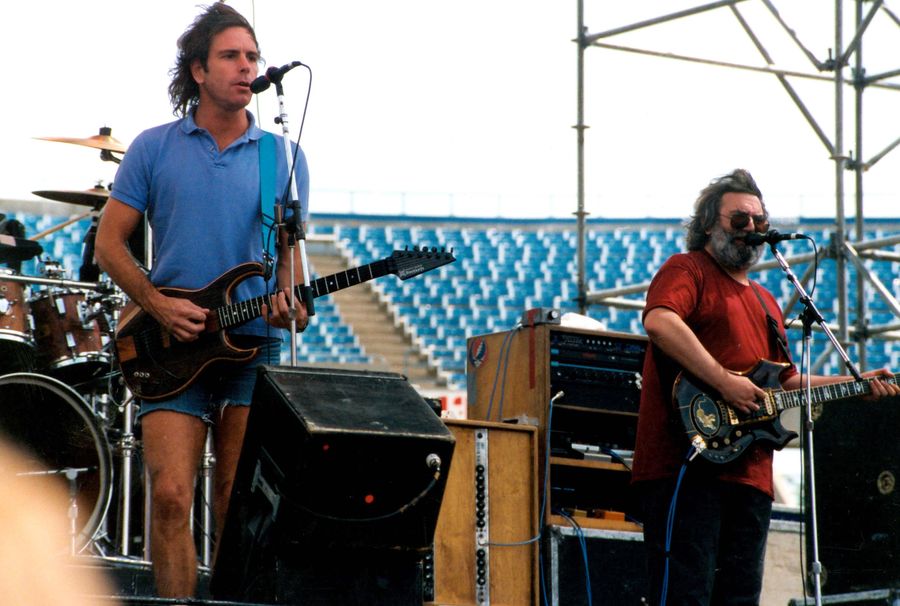
Deadheads come from all walks of life, but there’s a specific kind of fan that usually gets stereotyped as a Deadhead. Someone who follows the band around to all of their concerts and lives in the alternative universe of the Grateful Dead full-time is a hardcore Deadhead, or “Dead Freak”. They’ll sell just about anything on Shakedown Street and continue to follow the group down the road as long as they don’t have to live a normal, 9-to-5 life.
The Dead often encouraged this kind of behaviour, but not always. Starting in the late 1980s, shows began to get overrun by dedicated and casual fans alike. Even though the band played in massive stadiums, thousands of people were still outside every show, participating in parties, tailgates, and various illicit activities. The circus that followed the Dead would eventually force them to try and restrict vending and camping, to little effect. Deadheads were dedicated, whether the band was conforming to their ideals or not.

Lyricist Robert Hunter had a unique relationship with Deadheads. Although he professed appreciation and gratitude for their embrace of his songs, he also struggled to keep himself anonymous and out of the spotlight. Hunter had almost fully abandoned some of his more hippie-dippie ideals by the 1980s. Although he was happy to block attempts to use the Dead’s music for commercial purposes, he wasn’t pleased with the contingent of fans who had dropped out of society and situated themselves solely within the universe of the Dead.
Hunter wrote ‘Keep Your Day Job’ out of this frustration. Far more basic and straightforward than his traditional writing style, ‘Keep Your Day Job’ had an unmistakable message at its core: “Ring that bell for whatever it’s worth / When Monday comes don’t forget about work.” Hunter seemed especially irked by the Deadheads, who were simply living one long party. “If you ask me, which I know you don’t / I’d tell you to do what I know you won’t.”
The song seemed like an unmistakably pointed critique of less-than-ambitious Deadheads. Hunter’s lyrics had previously illuminated millions of fans and inspired mottos they would take with them throughout their lives. But that same crowd turned on Hunter and the Dead when they felt like they were being attacked. It didn’t help the song’s chances that Garcia composed a limp and plodding rock arrangement behind the inflammatory rhetoric.
Not everybody in the Dead camp was behind Hunter’s message in ‘Day Job’. “I mean, the whole point with the Grateful Dead was that we didn’t tell anyone to do nothing,” fellow in-house lyricist John Perry Barlow explained in the documentary Long Strange Trip. Even Garcia wasn’t fully taken with the message. “Just the idea is repellant,” Garcia explained about trying to control the actions of Deadheads. “The idea that we’re gonna now start telling people how to behave. I mean, we’re not the government, you know? We’re just musicians.”
‘Keep Your Day Job’ was played just over 50 times by the Grateful Dead between 1982 and 1986. In his lyric book collection A Box of Rain, Robert Hunter shared a succinct explanation as to why the Dead no longer played ‘Day Job’. “This song was dropped from the Grateful Dead repertoire at the request of fans. Seriously.”
‘Day Job’ never appeared on a Grateful Dead studio album or a contemporary Dead live album. The first time ‘Day Job’ was included on an official Grateful Dead release was after Garcia’s death on the live compilation Dick’s Picks, Volume 6. To this day, only three official live albums contain the track, a remarkably low number for a band with as much beloved material as the Dead. While Deadheads will defend just about any song played by the band, ‘Keep Your Day Job’ has remarkably few defenders.
Check out ‘Keep Your Day Job’ down below.
