


The 1979 movie that led to an uncomfortable feud between Meryl Streep and Dustin Hoffman

The film might have been called Kramer vs Kramer, but should they ever make a behind-the-scenes documentary, then they may well want to call it Hoffman vs Streep.
Although the movie went on to win a whopping five Academy Awards, including ‘Best Picture’ and ‘Best Actor’ and ‘Best Actress’ in a leading role for Dustin Hoffman and Meryl Streep respectively, the success of the 1980s flick did not come easily. The production was underpinned by an uncomfortable tension that soon became problematic.
Streep has since won three Oscars, but the first was very much the most costly. The synopsis for 1979’s Kramer vs Kramer reads: “After his wife leaves him, a work-obsessed Manhattan advertising executive is forced to learn long-neglected parenting skills, but a heated custody battle over the couple’s young son deepens the wounds left by the separation.”
It’s a story filled with pain and unaddressed issues that suddenly arise. Clearly, some of that tension spilt over onto the set.
The problems first came to the fore when Streep got a late amendment made to the script approved by writer-director Robert Benton in order to give it a more progressive approach. She wanted her character to be given more of a chance to explain why she had abandoned her family. She even later wrote Joanna Kramer’s pivotal courtroom monologue herself, giving the character a voice that had been largely absent from the original screenplay.
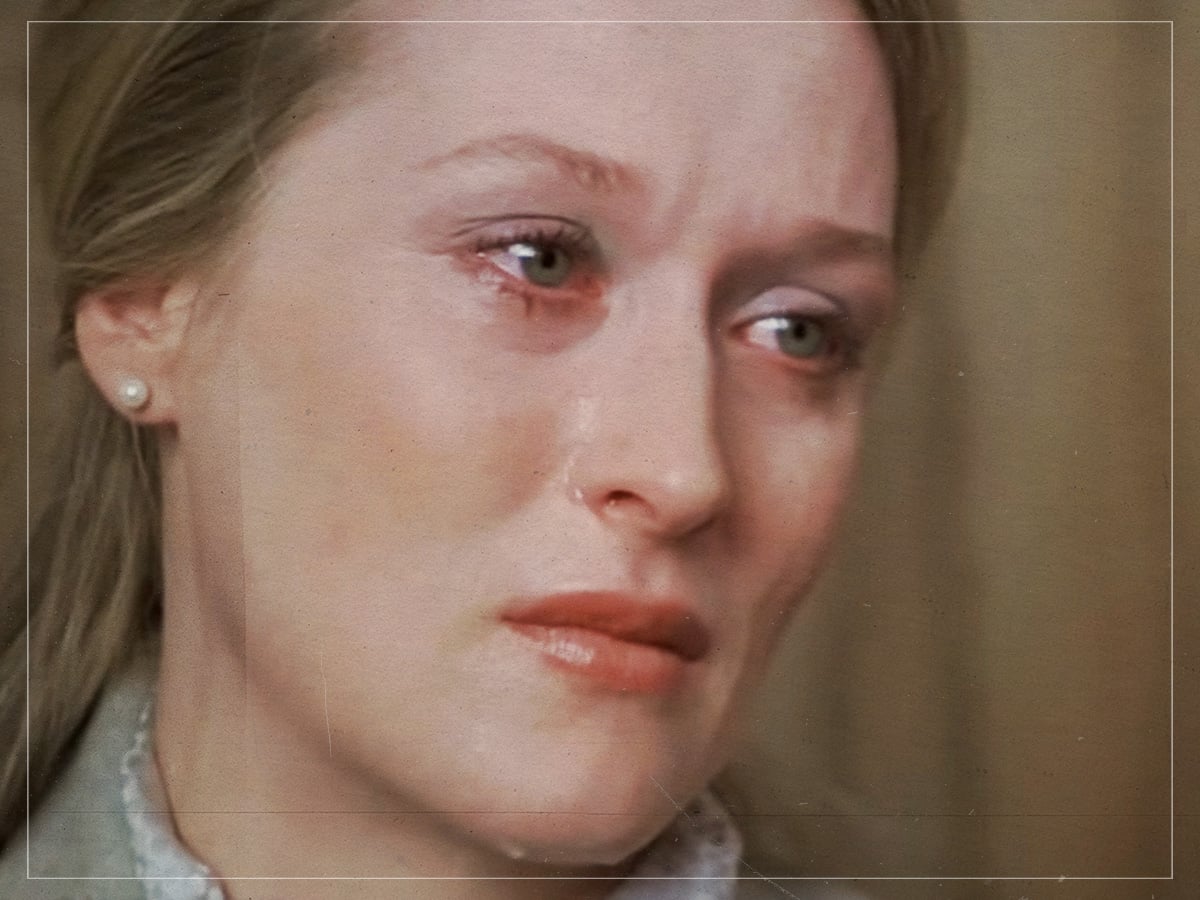
Apparently, these alterations angered Hoffman, who had already prepared for the scene in its original context and, growing weary with the delays and tweaks, he reportedly yelled: “Meryl, why don’t you stop carrying the flag for feminism and just act the scene.”
However, Hoffman famously clashed with Streep in a literal sense soon after, as Streep told The New York Times, “This was my first movie, and it was my first take in my first movie, and he just slapped me.” This famously made its way into the final cut into the movie documenting spousal abuse.
The incident itself was patently condemnable, but Streep also questioned its inclusion. “And you see it in the movie,” she said. “It was overstepping.”
This troubling story is indicative of Hollywood’s problem of stars ‘staying in character’, as Robert Pattinson recently identified: “I always say people who do method acting, you only ever see people do the method when they’re playing assholes,” the recent The Batman star opined.
Adding: “You never see someone being lovely to everyone while they’re really deep in character.” As anyone who has ever worked in the film industry will tell you, there is an unerring ring of truth to that. Sometimes method acting might simply seem pretentious and mildly amusing, but there is a darker side to it, too.
At the time, when Kramer vs Kramer was being filmed, Hoffman was getting a divorce in real life. This blurred the line of fiction when he came to work to act as an angry man in the midst of a troubling split. “I’m sure I was acting out on her [Streep] throughout the movie,” he told the Huffington Post. “Stuff that I was feeling toward the wife that I was divorcing in real life.”
As a young upstart, beyond the infamous slap, Streep reportedly bore the brunt of his surly attitude on set and the pari frequently clashed. Hoffman later apologised for any misconduct during this period and stated, “I have the utmost respect for women and feel terrible that anything I might have done could have put her in an uncomfortable situation.”
He added, “I am sorry. It is not reflective of who I am.” While most actors since this troubling period have reflected positively on their time working with Hoffman, the slap and frosty tension that the incident led to have proven hard to forget for Streep.
Fortunately, increasingly, actions are being taken to mitigate such incidents on set. As Streep said of her recent experiences and the progressive trend: “But I think those things are being corrected in this moment. And they’re not politically corrected; they’re fixed.”
She continued, “They will be fixed, because people won’t accept it anymore. So that’s a good thing.” However, having spoken to others in the industry personally, measures need to be accelerated further still to make filmmaking safer for all.
