


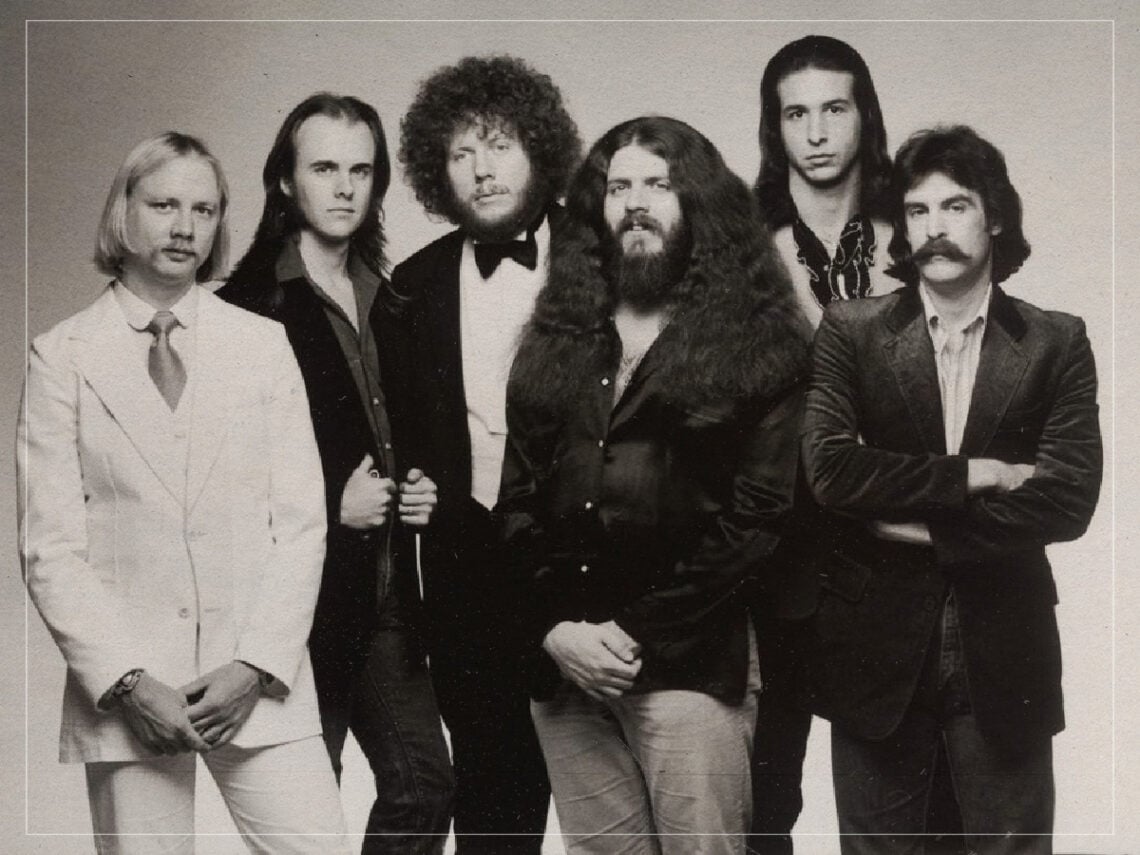
The 1976 Kansas hit that harnessed the power of God: “Striving to know it or him”

God gets a bad rap in the world of rock and roll.
A decade after John Lennon claimed his band were bigger than his son (Jesus), the great Beatle went on a four-minute tirade listing all the things he doesn’t believe in as much as god himself. Sure, Elvis, yoga and magic were all included, but it was god who once again took the brunt of it, having the entire song titled in his name.
Ultimately, the big man has been used as a symbol to rebel against. Conservatism, particularly in America, is so steeped in Christianity that the famed creator was an easy target for any musician looking to push back against his influence.
That’s not to say there weren’t plenty of songs praising god in a more traditional sense. You could argue that Lennon’s former bandmate George Harrison was on his standout solo hit ‘My Sweet Lord’, which, despite its rather arbitrary focus, does lend itself to a more traditional sense of worship. Then there is ‘God Only Knows’ by The Beach Boys and ‘After Forever’, which saw Black Sabbath use heavy metal to make a positive statement about faith.
But none of these artists had god to thank for their music, per se. They had great tracks hidden elsewhere in their back catalogue that sparked a wildly successful career anyway. The band Kansas, on the other hand, rarely experienced that sort of acclaim and only really had one song that made a cultural dent – one, which wouldn’t have existed without their pursuit of God.
Their 1976 song ‘Carry On My Wayward Son’ wasn’t specific in a traditional Christian perspective, but makes a clear thematic point of searching for divine intervention. “I felt a profound urge to ‘Carry On’ and continue the search. I saw myself as the ‘Wayward Son’, alienated from the ultimate reality, and yet striving to know it or him,” Kansas guitarist Kerry Livgren said.
“The positive note at the end (‘surely heaven waits for you’) seemed strange and premature, but I felt impelled to include it in the lyrics. It proved to be prophetic.”
Kerry Livgren
Livgren was actually tasked with penning the lyrics after lead singer Steve Walsh suffered from writer’s block, so there was a collective longing for guidance within the group. But it was Livgren who found it while sitting in front of an organ at his family home.
There seemed to be a palpable feeling of pressure surrounding the band, not least because of Walsh’s creative block, but because of the demand for something substantially successful from their label. The band’s previous record, Masque, was a commercial failure, with little to no radio play coming from it. With their future on the line, Don Kirshner gave Kansas an ultimatum to produce a hit record or be dropped by the label.
So in those religiously tinged lyrics, you can hear Livgren submitting Kansas to the purpose of that wider plan in the hope that one more hit awaits, along with their entry into rock and roll immortality.
