


The 1973 song born on Jeff Lynne’s couch that John Lennon called a masterpiece

When a young working-class Jeff Lynne was growing up in Birmingham, it would’ve been beyond his wildest dreams that he would go on to work with Fab Four, form a supergroup with Bob Dylan, George Harrison, Tom Petty and Roy Orbison, write 33 charting hits of his own with ELO, and be dubbed by John Lennon as the artist carrying on “from where The Beatles left off”.
As he happily told Mojo when he was facing up the end of the road in 2024, “I’m happy with what I’ve done, and the crowd reactions to the shows and the music have been amazing.” Happy is an understatement for a man who defied the odds to become a hero firmly cemented in the history books.
That’s all very heady stuff, but part of the charm that has made his art endure is that Lynne has remained humble throughout. He’s a star who knows hthatis roots very well. Not to take anything away from his creditable humility, but perhaps part of the reason for that is because those very roots gifted him with one of his greatest hits.
Lynne was only 15 when The Beatles first emerged in 1962. He was so moved by their music that within a year, he’d started his own career in the industry. His earliest bands, The Andicaps and The Chads, were plain and simple rock ‘n’ roll groups. With his skills not quite fully honed, by his own admission, he was just trying to copy the British Invasion groups that he adored. However, this meant that as he became more musically confident, he was keen to bring something fresh to the genre. He was no longer content with imitation, so, moved by the stirring progressiveness of Pet Sounds, he set out to Lynne-ify pop.
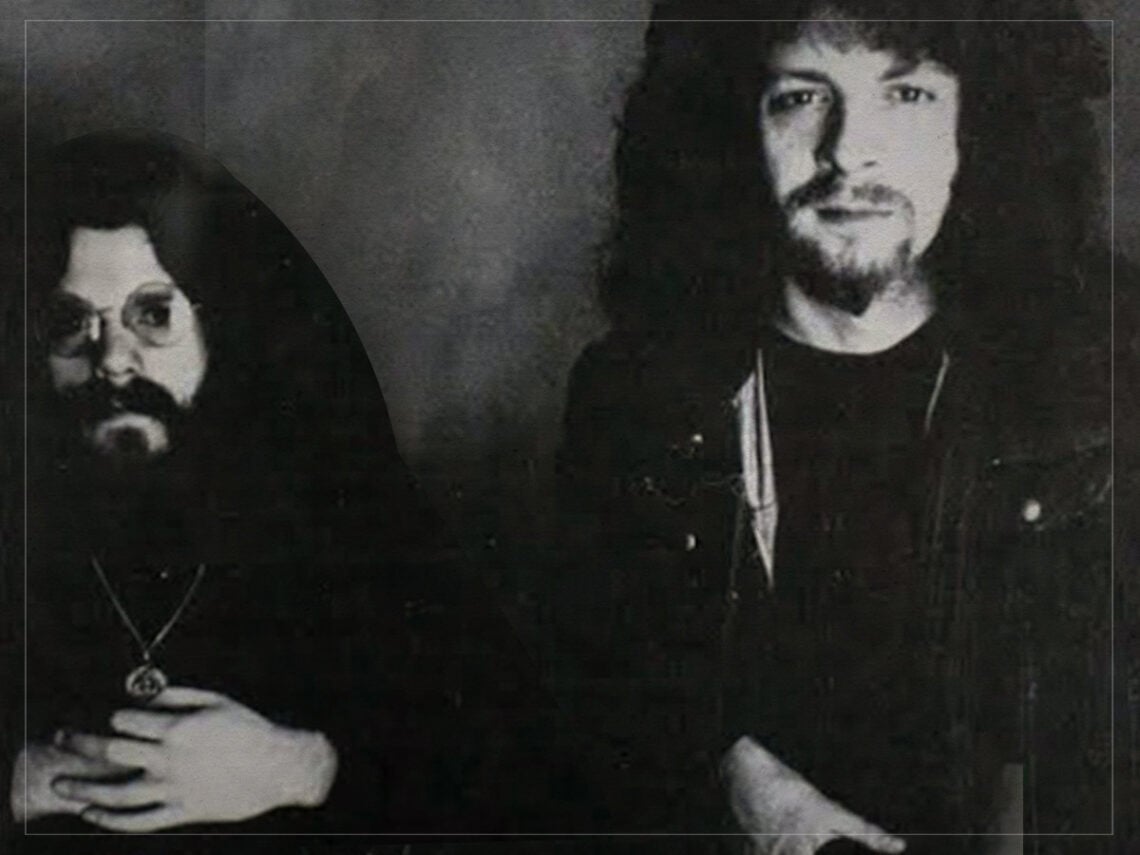
It was around this time that he met Roy Wood of The Move in the clubs of Birmingham. They became friends and visited each other’s houses for listening parties of their favourite LPs. A novel idea struck them: what about rock ‘n’ roll with classical music? “Back then, most groups didn’t have anything other than drums and guitar, organ and maybe saxophones and trumpets. I wanted to do something different,” he said, reflecting on the staple sound of the late 1960s.

The other, more florid alternative emerging was the presence of lengthy guitar solos and prog, but Lynne steered his muse away from this realm, admitting, with trademark honesty about his soloing skills, “I wasn’t that good at that anyway.” However, his own invention would take intense perseverance of its own.
“The big problem with strings in those days is there was no pickups for them. It was a real pain in the ass trying to do shows,” Lynne told Rolling Stone. Yet, this challenge once again forced him to broaden his understanding and with each turn, he became a more accomplished musician.
However, that wasn’t necessarily registering with a hungry audience. While he might have picked up some impressive studio jobs, he was largely being left behind. Wood had moved on, as was his wont, with The Move, and the notion of Lynne securing a top ten hit seemed to be a distant dream. But he kept going, and one day, in the humble setting of his parents’ front room, he wrote ‘Showdown’.
It might have taken until 1973, but this would be the anthem that drew Lennon’s almighty praise, with the bespectacled Beatle proclaiming, “‘Showdown’ I thought was a great record and I was expecting it to be number one.”
It might have only peaked at 12 in the UK and 53 in the US, but anyone in the music world who heard it stood to attention. Even the modest Lynne knew he was onto something. “I made the riff up and I was thrilled with it. I knew it was going to be a hit even after I had just done a few notes of it. When we cut it the engineer said, ‘This is a classic’. I was thrilled to bits,” he recalled.
It might have been crafted into a quaint front room, but its ambition was lofty. As the lyrics proclaim, “Every dream in her heart was gone, Headin’ for a showdown”. While ostensibly about romance, that sense of chasing down a dream with a now-or-never attitude felt palpable in a professional sense for Lynne. In the end, it arrived almost without him trying. The years of hard work had brought a seamlessness to his songwriting.
“It’s one of my favourites, though the lyrics don’t mean anything, really. It’s just a story, a made-up scenario. A lot of people ask me what my songs mean, and I have no idea. It means something different to me every time I sing it,” he added. The track would go on to launch his lauded career, and forever tether his mentality to one of craft, endeavour and a dreamy sense of resilience – how else could someone from Birmingham have the grit to write ‘Mr Blue Sky’.
