


The 1970 prog-rock classic Greg Lake wrote when he was 12

In the world of music, there is often one question that new creators pose to themselves: How hard is it to write a song?
Many would try to argue that it takes hours of perseverance and determination, with the acceptance that sometimes things might not work out as planned or need to be thrown in the bin before starting all over again.
The painstaking process of getting everything just as it should be is enough to drive some budding or experienced songwriters insane, but through commitment, it is possible to get your work over the finishing line. For Emerson, Lake and Palmer’s Greg Lake, however, writing a song was child’s play – quite literally.
For Greg Lake, though, the process didn’t always follow that tortured path. Rather than labouring endlessly over every note, some of his most enduring ideas came from instinct, tapping into a simplicity that many seasoned writers spend years trying to recapture once their craft becomes more deliberate.
That instinctive approach would prove invaluable during Emerson, Lake & Palmer’s early days, when the pressure to deliver material quickly forced them to look inward rather than outward. In that moment, Lake revisited something far more personal than any calculated composition, drawing from a piece of music he had written long before fame, expectation or technical perfection ever entered the equation.

Lake, alongside keyboard player Keith Emerson and drummer Carl Palmer, is often regarded as one of the kingpins of progressive rock, and were widely acclaimed for albums of theirs in the early 1970s such as Tarkus and Pictures at an Exhibition. Having all originally come to prominence in other prog groups in the latter stages of the previous decade, having been members of King Crimson, The Nice and Atomic Rooster, respectively, ELP were one of the genre’s first examples of a supergroup and their ambitious work was certainly befitting of the ‘super’ status.
However, while writing their first album, the self-titled Emerson, Lake & Palmer, in 1970, the band encountered a case of writer’s block and found themselves scrambling for more material to include on the record. When the trio were searching for a moment of inspiration, Lake piped up with a suggestion that had supposedly originated from when he was much younger. How young? Not as a teenager, but at 12 years old.
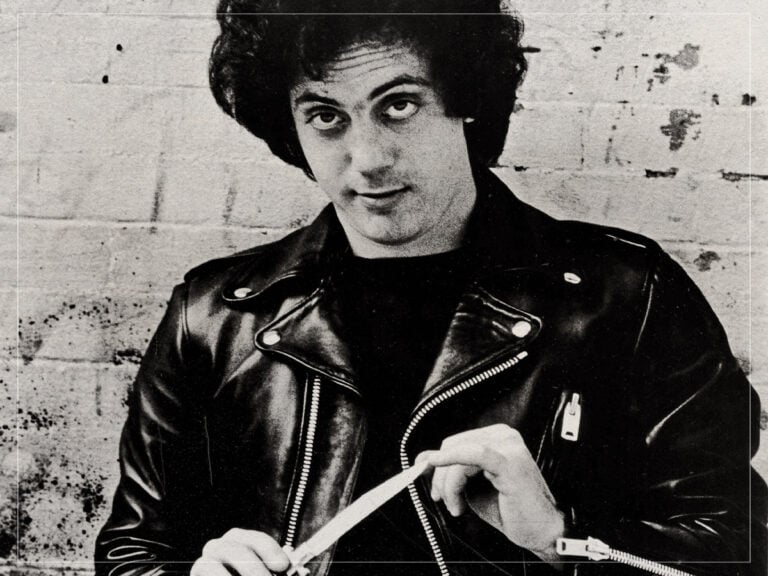


During his Songs of a Lifetime tour in 2013, Lake revealed that his first experience of writing a song was on a one-stringed guitar that he had picked up at his friend’s house. Picking up the instrument and instantly finding he had an affinity for the beaten-up axe, he came up with a simple tune in a short space of time. He would return home and plead with his mother to get a guitar for Christmas, and after much grovelling, his wish would arrive that year.
After teaching himself the four chords of D, A minor, E minor, and G, Lake felt as though he had the basics figured out, and wrote what he referred to as a “medieval fantasy” song. He didn’t write it down, but did manage to recall the words that he wrote to go along with it. Unbeknown to him, it would resurface when ELP encountered their need for an additional song to fill up the extra space on their debut album, and from that moment, ‘Lucky Man’ was born.
The record label had contracted the band to produce 21 minutes for each side of vinyl, and while ‘Lucky Man’ doesn’t quite tip Side B over the threshold, it was all the band had to work with. After playing the song to his two bandmates, Lake recalls Emerson hating the song, and after reminding him of their obligation to have enough material to hand to Atlantic Records, Emerson declared to the group, “Well, you record it on your own, and I’m going to go down the pub.”
Lake and Palmer were left behind to work on the juvenile composition with drums and acoustic guitar forming the track’s backbone, but the duo were unhappy with their initial efforts. After layering the track with other elements such as bass, electric guitars and some harmonies, it was finally of a high enough standard to call the album complete.
While Emerson may have initially dismissed the track as being weak, it would end up receiving airplay and even charting in the US, and in the years since has become one of the trio’s best known and most popular tracks.
To think it was written by a 12-year-old in his first attempt at songwriting is quite frankly nothing but staggering, no matter how simple it might be when broken down.
