


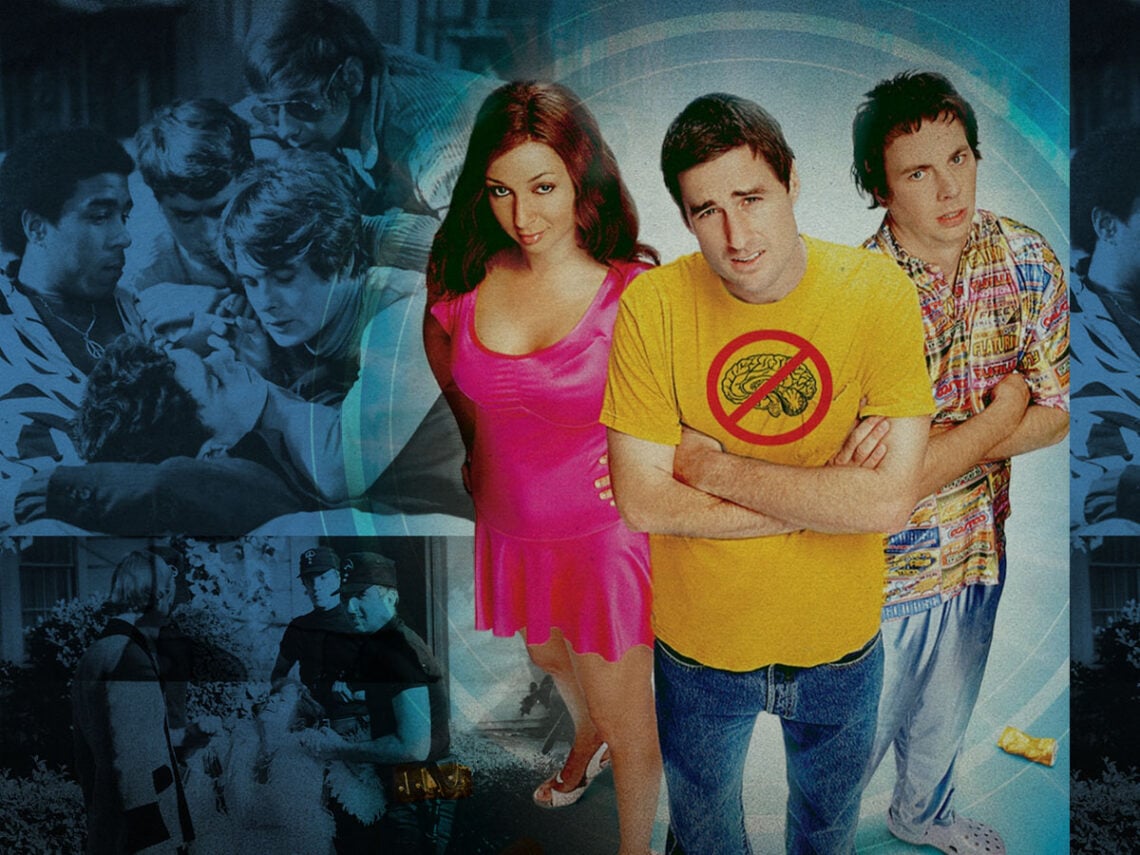
Forget ‘Idiocracy’: the 1968 exploitation movie that actually predicted America in 2026

Much has been made lately about the many parallels between the brainlessness of the current US government and the dystopian government in the 2006 comedy Idiocracy. Both are uneducated, corrupt, nepotistic, greedy, and uninterested in the people they are supposed to protect. Both indicate a decline (possibly irreversible) of the country. And both feed on disingenuous flattery and shallow, gaudy spectacle.
But among all these parallels, there are many reasons why Idiocracy is not just an inaccurate comparison, but a genuinely problematic one. There are plenty of dystopian films that are eerily similar to the Orwellian present, but one of the most uncanny is also one of the most overlooked. Featuring a petulant psychopath with bad hair who turns his mediocre celebrity into a grievance-fuelled bid for president, it has all the elements of Trump’s rise to political dominance. The catch is that the protagonist is a 22-year-old, and his diehard supporters are a slavering throng of drugged teens.
Released in 1968, Wild in the Streets is a cinematic crime of opportunism, an exploitation flick that capitalised on the exploding countercultural movement by taking aim at both the younger generation that drove it and the older generation that trembled in its wake. Christopher Jones stars as Max Frost, a pop star who grows up in a middle-class family with parents who don’t want him and shows early signs of sadism. Shortly before leaving home, he trashes the house and torches his dad’s car.
After showing early promise as a drug manufacturer, Max becomes a wildly popular musician, boasting an entourage of sycophants and a Trumpian business empire that includes “14 interlocking companies” and suspiciously few specifics. He lives in a hideous mansion with a desperate opulence to rival Mar-a-Lago and has, like Trump, fathered multiple children with several women, none of whom he appears to like.
His fame makes him uniquely well-positioned to promote the campaign of a young-ish senatorial hopeful (Hal Holbrook), who is hoping to mobilise the youth vote by promising to lower the voting age from 21 to 18. During a televised endorsement concert for the candidate, Max goes off-script (sound familiar?) and proposes that the age should actually be lowered to 14. Now a national celebrity, Max is emboldened to throw his weight around. He begins touring the country, holding rallies with hordes of fawning supporters and sending shockwaves through the political establishment. Some politicians refuse to curry favour with him and are quickly outed and vilified. Others decide to do a deal with the devil and embrace him.
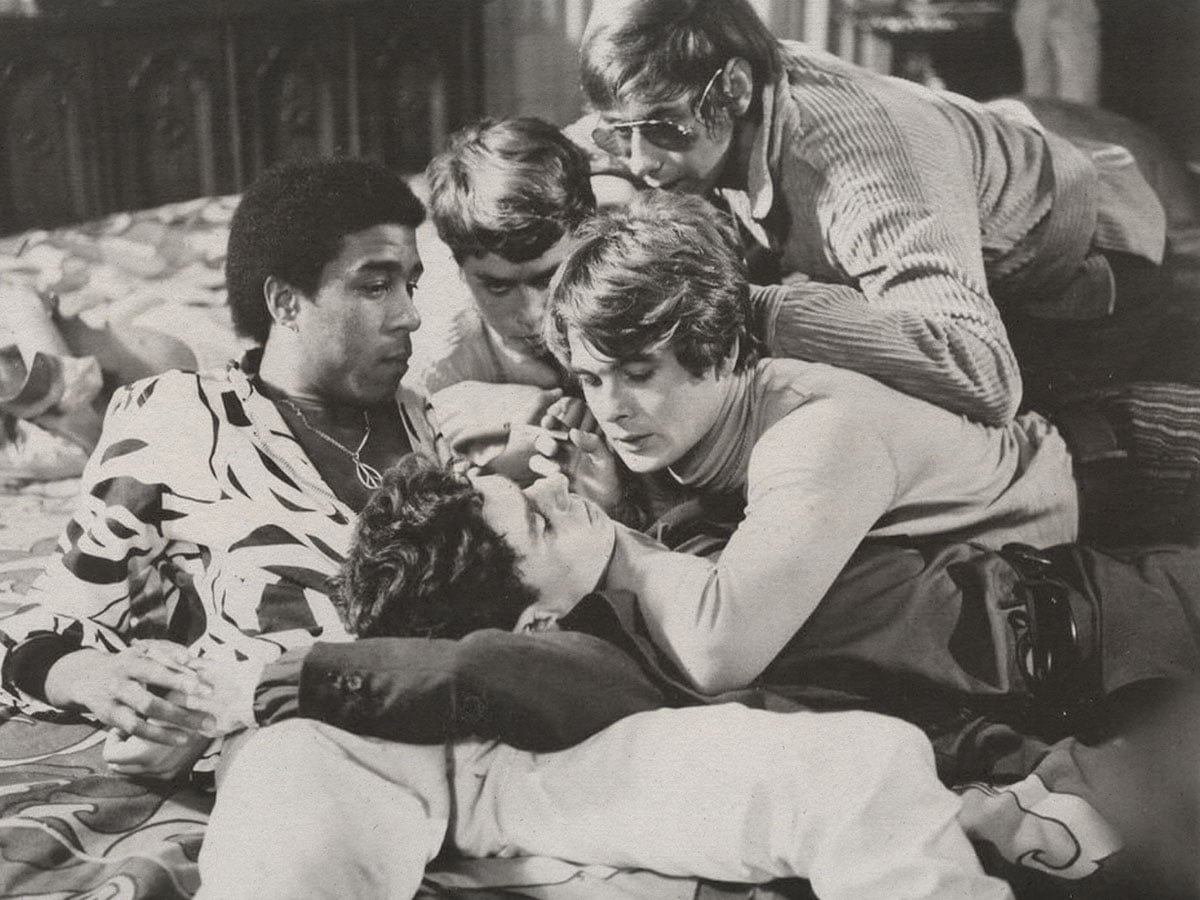
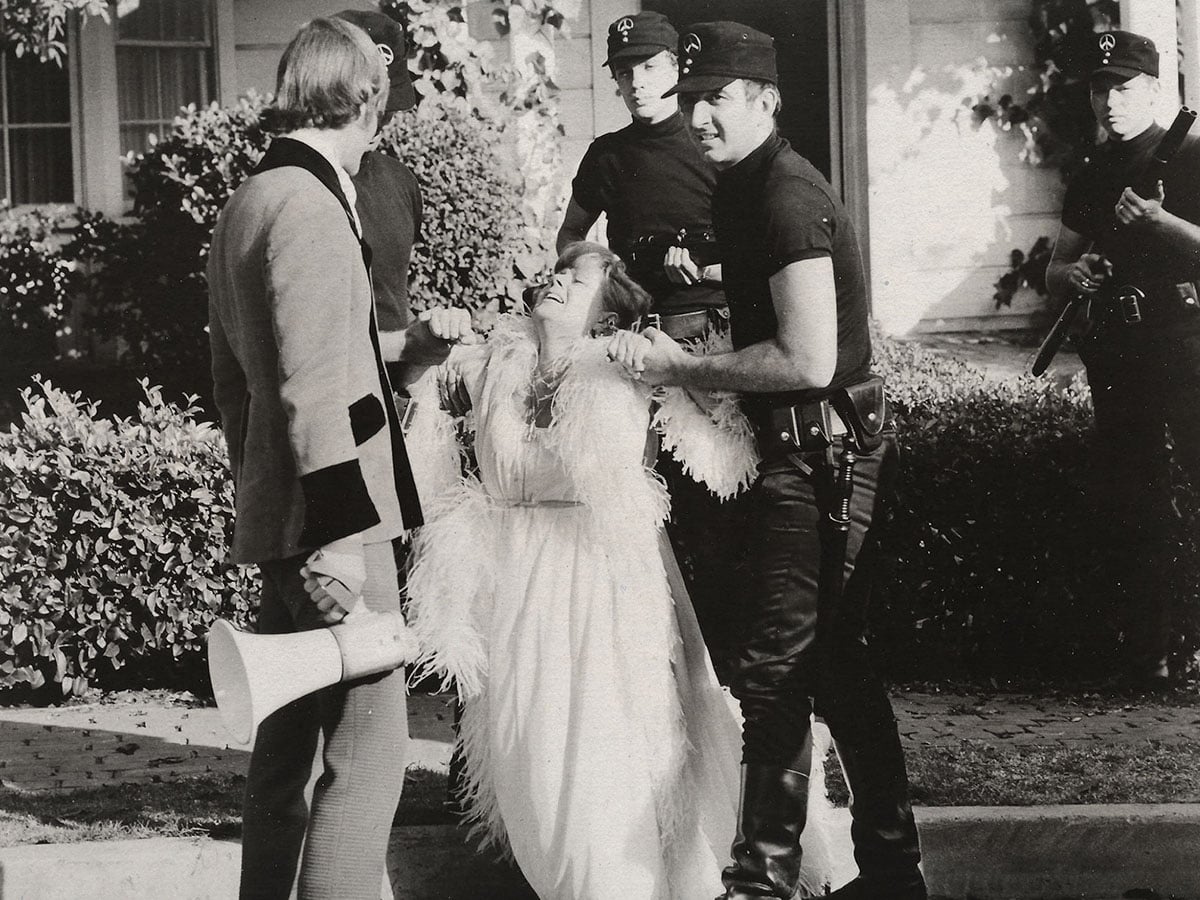
When Holbrook’s character takes the latter route, he insists, “I can handle him.” Of course, he can’t. “Max Frost has simply to mention locations for possible demonstrations, and emergency sessions of state legislatures are convened and are acquiescent,” a news reporter intones. Through threats, bullying, and the mobilisation of his fans, Max storms the Capitol (literally, in one scene, though it’s so tame compared to the bloody violence of the January 6th riot that it hardly qualifies as a parallel). “He has paralysed the country,” one of his detractors wails, only for his interlocutor to compare Max to Jesus.
Too young to run for office, Max makes it his business to dismantle laws until he gets his way. Out on the campaign trail, he shouts, “Down with experience!” His first pivotal move is to ensure that his girlfriend, Sally (Diane Varsi), is elected to Congress. Wearing a low-cut PVC dress and gold-trimmed tricorn pirate’s hat, she makes an LSD-fuelled speech on the House floor, insisting that anyone as young as 14 should be allowed to run for political office. She doesn’t have the Mar-a-Lago face of a Trump appointee, but everything about her glassy-eyed recitation of her boss’s talking points suggests that she is the model upon which Kristi Noem created herself.
Once installed as president, Max zeros in on his true purpose: a life of luxury and leisure. The country “withdraw[s] from its international commitments” so that the new president and his cronies can create “the most purely hedonistic society the world has ever known.” What this means, of course, is a hedonistic society for Max and his inner circle. As he rolls around in the grass with his latest sexual exploit, everyone over the age of 35 is rounded up and placed in detention facilities. In other words, they are viewed, like immigrants in Trump’s America, as less than human and a drain on the rest of the population.
As president, Max is both bored by the daily tasks of running a country (he conducts his ‘War Council’ while lounging by a pool) and obsessed with his own unilateral authority. In an eerie precursor to Trump’s “I alone can fix it” God complex rant at the Republican convention in 2016, Max’s State of the Union address includes the line, “You give me the tools. You give me the laws. Give. Me. The power!!!!”
Plot machinations aside, the most remarkable thing about Wild in the Streets is how ideologically hollow it is. Like any self-respecting exploitation movie, its purpose was to take real concerns of the day and profit off of them through sensationalism and shock value. It’s more How to Stuff a Wild Bikini than All the President’s Men. In 1968, the concerns were too numerous to count. The Civil Rights Movement was in full swing, foundation-shaking political assassinations were at an all-time high, and the Baby Boomer generation was coming of age just in time to be sent off to die in the Vietnam War.
Wild in the Streets preyed on the fears of the older generation by presenting a satirical, wildly exaggerated version of the youth-driven countercultural movement. Max and his cronies are clearly the villains, but the film was also trying to appeal to younger audiences. At multiple points, the narrative grinds to an awkward halt for a full-fledged music video wherein Max and his band perform glossy renditions of their derivative rock songs.
Perhaps we’re stretching the metaphor a bit, but this lack of ideology is the clearest parallel to Trump and his ascension to the presidency. Both Max as a character and the film as a product have no interest in the topics they exploit. Max just wants limitless power and adoration, and the film was just an opportunistic bid for box office returns. The main deviation is that the movie is ultimately harmless. Uneven, asinine, and disjointed – absolutely, but also mindlessly entertaining and gloriously of its time. The same cannot be said of the real-world US government.
Ironically, the thing that becomes Max’s downfall may also be the much-needed downfall of Trump. At the end of the movie, Max is shown frolicking around a garden for reasons unknown, only to be disturbed by a group of children. After taunting them and killing their pet crawdad (a random plot point, to be sure), the now 24-year-old Max is taken out of the picture (literally) when one of the kids stares straight at the camera and hisses, “We’re gonna put everyone over ten outta business.” Build your power on grievance, oppression, and fear, and you’ve created a roadmap for your own downfall as soon as your foundation starts to crack.
