


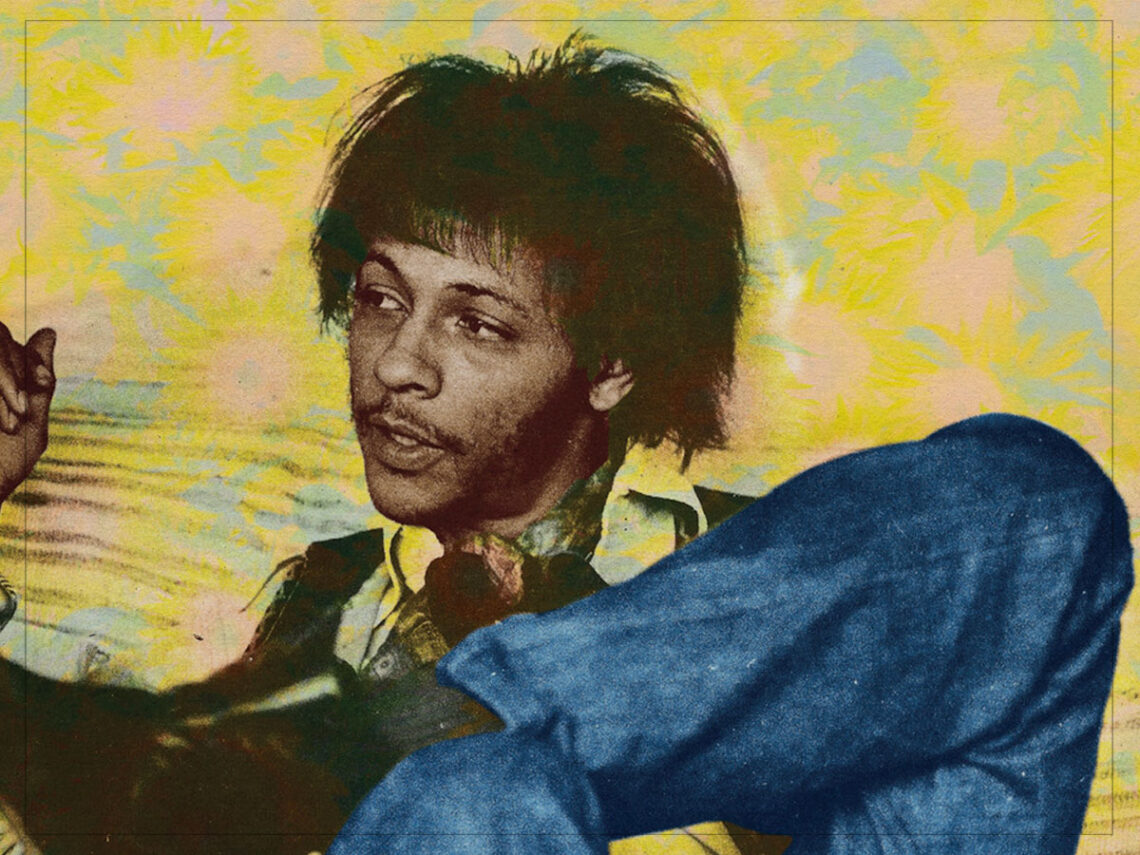
The 1967 masterpiece Arthur Lee wrote “for future generations”

Songwriters come in all shapes and sizes, and while some are content to churn out nostalgia-driven material or tracks that reflect the here and now, some of the greatest songwriters have focused their sonic sights on the future, which goes some way to explaining the discography of Love’s Arthur Lee.
First emerging in 1965, Love could very easily have been yet another run-of-the-mill garage-come-psychedelic outfit from America’s counterculture age. Pretty quickly, though, Lee established himself as a constantly evolving artist, often to the chagrin of his bandmates and, indeed, the music-buying public, which is why Love were never the most commercially successful band of that era, but their material has far outlasted many of their contemporaries.
Not only did Lee consistently change up the inherent sound of Love, incorporating everything from the newly emerging world of folk-rock to far-out psychedelia and experimental jazz, but the line-up of his band rarely stayed constant for very long, and in fact, 1967’s Forever Changes was the final Love record to feature the original line-up, before Lee gutted the band and started completely afresh.
Ironically, given that a prevailing theme throughout the album was the songwriter’s increasing disillusionment and resentment of the blossoming hippie counterculture scene in America, that record is routinely and rightly hailed as one of the greatest albums of that period. By and large, though, that reputation was born in hindsight; upon its original release, very few people seemed to take any notice of Forever Changes, including the band members themselves.
Recalling the process of creating the album during an interview with Michael Limnios, percussionist Michael Stuart-Ware revealed, “When Forever Changes came along, I realised we were going to an even more sophisticated sound…almost orchestral in nature.” Adding, “Arthur was moving it, all right…acid/folk rock, to jazz rock, to symphonic rock…bing, bang, boom.”
Sophisticated records rarely court the attention of mass audiences, though. “At the time I kind of thought it might be hard for the average fan to digest such quick transitions,” the drummer admitted. “And it probably was, but in retrospect, I guess it served us well.” He concluded, “I always thought Arthur either consciously or subconsciously wrote music for future generations.”
In essence, that’s where the appeal of Forever Changes lies, even in the modern age. Lee, unlike virtually every other band of that era, was not attempting to speak to the hippie on the street, or capture the society of that point in time, he was searching for something far more timeless and profound – and he seemed to find it, too.
Then, instead of languishing around in that same avenue of inspiration, he swiftly moved on, completely reinventing Love and coming out with an album, Four Sail, which sounds entirely different.
By the standard rules of the music industry, Arthur Lee did the opposite of everything that he was supposed to do, yet he is still lauded among the greatest songwriters of the 20th century, and rightly so. After all, there aren’t many people who can write for an audience that hasn’t even been born yet.
