


The track Counting Crows’ Adam Duritz hailed as objectively “the greatest pop song ever written”

Counting Crows announced themselves to the world in 1993. For me, they’ve never escaped that year ever since.
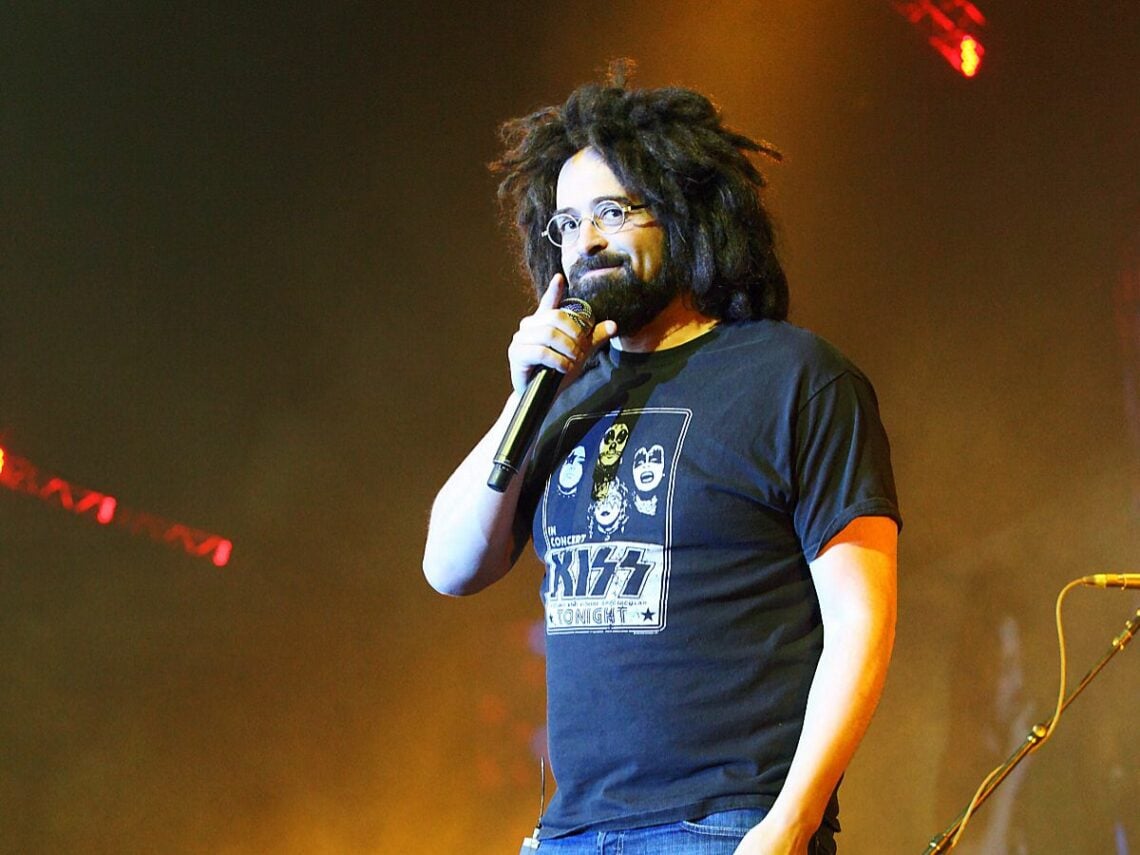
The name itself conjures thoughts of 1993. Frontman Adam Duritz’s face even somehow looks like 1993. They sound like 1993, they have the spirit of 1993, and if you ever got close enough, they’d probably smell of 1993 (most likely a blend of the fragrance Jump by Joop, Camel Lights, and Blockbuster’s popcorn-crusted carpet).
In short, Duritz and his ‘groovy’ group embody that era. But what embodies guitar pop in a more general sense? Well, when looking through the annals of the genre and its history, the gravel-voiced singer thought one song stands out above the rest to such an extent that he believes its greatness is an objective fact rather than mere opinion.
That song is the 1965 Beatles classic, ‘Ticket to Ride’. With a casual air, he told Uncut, “I mean, objectively, ‘Ticket To Ride’ is the greatest pop song ever written” as though the whole thing is a given. But is it a given, is it really “objectively” the greatest pop song of all time?
Well, let’s make the case in five clear points…
Why ‘Ticket To Ride’ might be pop’s greatest achievement
First off, it was miles ahead of its time. While most of the tracks in the charts in ‘65 were doling out brisk backbeats and standard chords, the heaviness of ‘Ticket To Ride’ came from exquisitely subtle sophistication. Ringo Starr provides a loping, syncopated drum beat that just hangs behind the groove, the use of a 12-string creates a shimmer, modal inflections create a world of texture matching the amoral ambiguity. It might centre on E major, but its blurred key creates a fractured world to get lost in.
Secondly, despite this sophistication, the track remains endlessly accessible. We kind of all know the feeling of having a ticket to ride. Even if the actual song is far less clear, the title alone pulls you into something resonant. Then there’s the classic recognisable features of a pop song that ground the innovation. You’ve never heard anything like it before, but you also know where you’re at – that’s craft.
Thirdly, if Counting Crows are encrusted into the fabric of 1993, and that facet imbues their sound with a sweet sense of nostalgia, then ‘Ticket To Ride’ is embellished by the drama of what it represents: the major turning point for The Beatles. On paper, this might not have anything to do with the objective quality of the song, but that’s not how pop works. We experience pop through the prism of the stories that it tells us.
Fourthly, there’s the influence that it has had played forward. Once more, this might seem like a retrospective imbument, but there’s something captivating about hearing all the things that reflect it – from The Byrds to REM and even Counting Crows themselves – when you listen over half a century later. It has survived the test of time because the test has largely been conducted on the terms that it invented.
Finally, (though five reasons is obviously arbitrary, but I haven’t got all day to justify something bloody Adam Duritz has said), the song remains a wondrous mystery. Like many of the greatest pop songs, it leaves room for interpretation. Is the narrator heartbroken, resigned or liberated? The lyrics never spell everything out, giving the song emotional depth without sacrificing its immediate hook and ocean of questions to bask in.
But all in all, can it really tie the bootlaces of ‘Mr Jones’?

Never Miss A Beat
The Far Out Beatles Newsletter
All the latest stories about The Beatles from the independent voice of culture.
Straight to your inbox.