


The 1964 song so annoying David Lynch compared it to “having a disease”

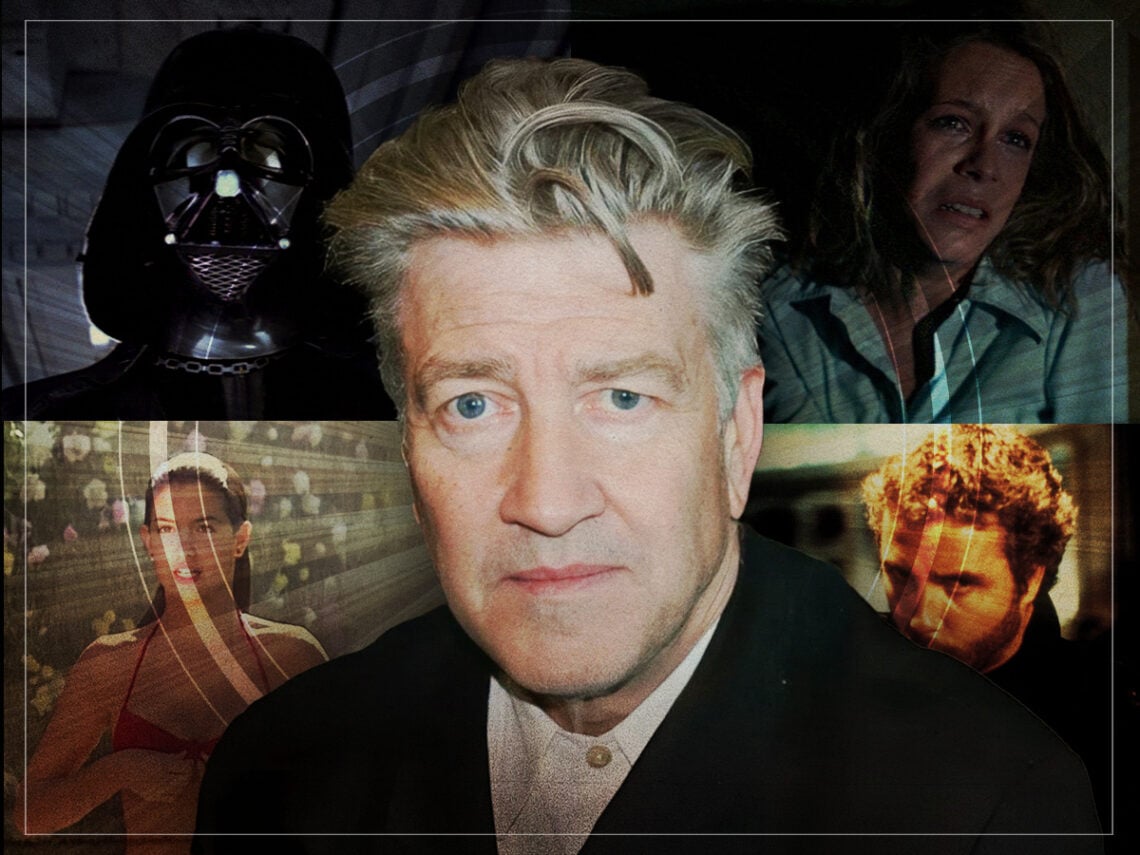
We all have that one song we hate beyond reason. The track that makes us wish for a time machine just to kill it at birth. A wretched anthem for everything wrong with the world: the root of all musical misery. The kind of song that feels like it could, with enough exposure, tip us into full-blown madness. For filmmaker David Lynch, that song happened to be a Disney classic.
The late, great director wasn’t all that fond of the prepackaged ways of Disney, in general. He loathed the notion of a world where even the rollercoasters are all climax and no dread. For Lynch, the American Dream was a murky whisper; for Disney, it blares out static-free from a merch canon. But that’s not the only reason the bequiffed filmmaker was sent to the brink of insanity by the corporations’ most carnal aural assault.
‘It’s a Small World’ is the maddening theme song by the Sherman Brothers for the dizzying ride of the same name. The record was first hazardously sold to the public in 1964, after Walt Disney’s request for something cheery. And David Lynch didn’t like it. In fact, he comically attacked it.
“I went to Disneyland. I think I took my daughter there. This was a long time ago, and when I heard it, it was a very traumatic experience,” the Blue Velvet director recalled, interestingly uncertain about whether he took his child or simply strode around the theme park alone and disillusioned.
While standing in the festering queues, with an aura of stickiness in the air, a certain earworm drove him steadily insane. “It got stuck in my head, and it was like having a disease,” he said. This went on and on like the tedious act of queuing itself.
Ultimately, he even grew to perversely respect it as the impressive obverse of artistically acceptable. “It’s actually a masterpiece in some ways,” he explained, “because it’s so simple, yet even kind of more than catchy. Like I said, it’s like the swine flu or something.” Perhaps contagious, therefore, would’ve been more apt than ‘catchy’.
Children might be immune to the malevolence of the antiquated ditty released in ‘64, but Lynch conspiratorially claimed, “Through music, you get the swine flu.” The main symptom, it would seem, was rage and hysteria. However, through transcendental meditation, the surrealist director learned to move beyond what ailed him wherever possible. So, he happily told AV Club, “Appreciation for life, all of it, can grow.“
“It’s actually a masterpiece in some ways”
David Lynch
David Lynch’s gravest musical battle
Lynch believed that one day, he could learn to love the song – the same song he couldn’t even bring himself to name for a time, and with that, the glorious utopia of fun and laughter that the creators intended for their tiny world could be his to share in. “There could come a day, in supreme enlightenment, when [the song he couldn’t physically pronounce, so he calls it ‘Flappy’ instead] would be absolutely fine,” he believes.
“It could be so beautiful,” he earnestly added.
In stark contrast to Lynch’s corroboration, Walt Disney intended for the song to be a fitting soundtrack to a ride that would be “the happiest cruise that ever sailed”, by which he meant the looping theme to a mid-paced rollercoaster in a Floridian warehouse. Strangely, when he tasked the Sherman Brothers with creating a matching soundtrack, they decided to take inspiration from the Cuban Missile Crisis.
It was the 1960s, and like Bob Dylan before them, they set about taking the unshakable horror and dystopian despair of Doom’s Day’s darkest hour and transfiguring it into a song of hope, whose message about the world being small after all would’ve ironically worsened the crisis by increasing the proximity of the nuclear missiles to the US.
While this isn’t detectable in their happy-clappy finished product, perhaps somewhere in its jolly welter, Lynch picked up on this cursed impetus and began to rue it so much that he grew unsure whether it even came at the expense of a holiday with his daughter, or he was simply standing in the queue, enduring this misery alone, and for no discernible reason.
Although Lynch is not alone in his hatred, even on the song’s promotional cover image (featured in the gaudy thumbnail below), Goofy is clutching his head in a manner that implies he is about to attempt suicide via the neck-snapping method popularised by action movies. It truly is a small and horrible disease-ridden world, after all, and this song is only a tiny part of the problem.
