


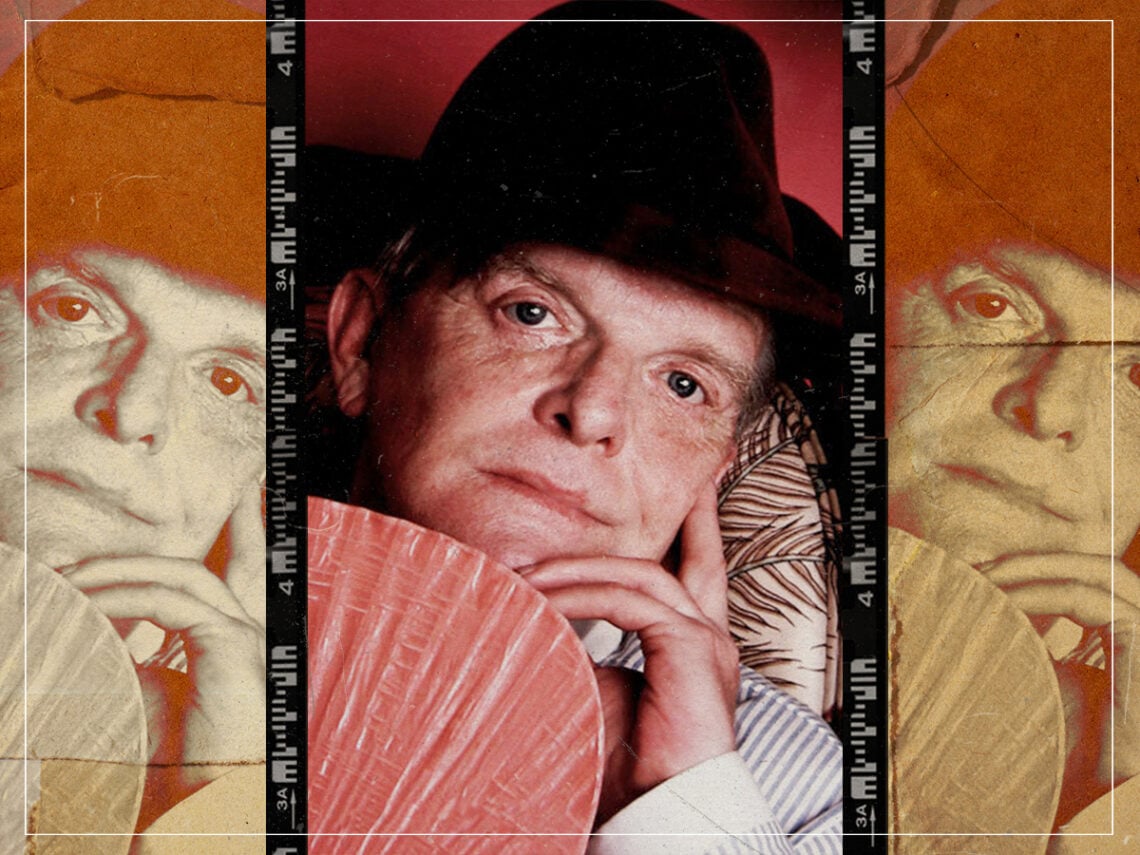
“It’s extraordinary”: the surprising 1960s music loved by Truman Capote

To be a great writer is to be an excellent observer, and Truman Capote was certainly that. An astute social commentator who tried his hand at an array of genres, forms and themes, he did this by possessing a chameleonic character and a natural ability to hold his own in pretty much every situation while closely watching it play out.
As recently popularised in Gus Van Sant’s instalment of Feud, Capote vs. The Swans, the author’s accounts of America’s social makeup were second to none. They were informed by his naturally enquiring character and complex personal background and brought to life by his discerning, eloquent prose.
While In Cold Blood is widely deemed his masterwork – a must-read for any writer – his unfinished novel Answered Prayers gives another potent dose of his astuteness. Although he died before he could complete the work, between 1975 and 1976, Esquire published four chapters. These excerpts shed light on the dysfunctional upper echelons of American society and the group of prominent ‘Swans’, whom Capote had been a close friend and confidant of since the 1960s.
The second instalment, La Côte Basque 1965, was particularly revealing about the personal lives of the author’s close friends, including CBS head William S. Paley and his terminally ill wife Babe, whom he was particularly close to, which caused much controversy amid a faltering career and personal life for the writer. Yet, despite the tumult it would prompt for Capote and the high society it so damningly peeled back the curtain on, the instalments and the rest of the unfinished book, first published in 1986, showed that he understood that the times were changing. He conveyed that the era of those such as the Paleys and their untouchable ilk was dying, and a different epoch was emerging.
Capote had his finger on the pulse of social development. He was at his peak in the 1960s when the complexion of American culture was changing across the board with advancements in gender and racial politics, music, literature, fashion, and many other areas. The rigid world he was born into was slowly dying out, and as a gay man from the South who had encountered many barriers, he mostly welcomed this transformation.
In light of his intimacy with America’s rich and powerful, you might expect Capote to have been a fan of famous crooners such as Perry Como and the like. Still, when speaking to Playboy in 1968, he revealed himself to be a fan of the day’s countercultural movement and its heady music. When asked whether he shared the disenchantment of the under-25 generation, he said he didn’t per se but was a keen admirer of their “extraordinary” creativity, particularly the music. He dubbed The Doors and Jefferson Airplane exemplary.
The diminutive author said: “No, but I like today’s younger generation. I think they have great verve and creativity, and I particularly like their music, as exemplified by groups such as The Doors and the Jefferson Airplane. It’s extraordinary and far better than most of the so-called serious music being produced either here or in Europe. Just the other day, I was passing one of those little stores where you buy pop posters, and I saw this poster of me together with all The Beatles and a lot of other youngsters. I was delighted; I’ve never been more flattered.”
Not finished there, Capote even revealed that he believed the LSD proponent Dr Timothy Leary was “thoroughly delightful”, although he didn’t buy into his theory of gaining a greater understanding of the self through psychedelics. After all, he’d dabbled and thought: “My own imagination is psychedelic enough.”
