


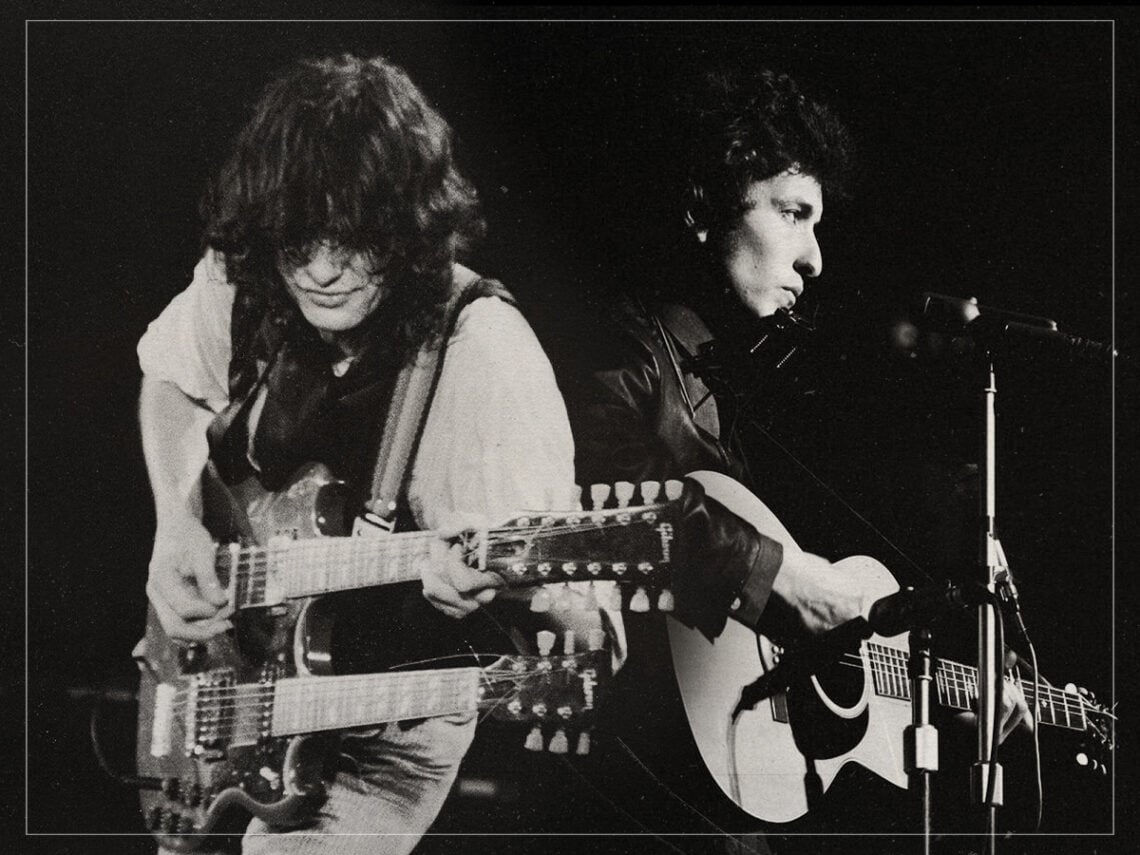
The 1958 song Bob Dylan and Jimmy Page called the greatest for guitar: “A masterpiece”

There’s no one questioning Bob Dylan whenever it comes to writing great songs.
Some of the best anthems of the 20th-century were penned by him, and even if he wasn’t the most novice instrumentalist in the world, he could always surround himself with people who could make anything sound great, like Mike Bloomfield. But things were definitely turning a corner when acts like Led Zeppelin started breaking into the mainstream.
Dylan didn’t claim for a second that he had the same kind of range that Robert Plant did, nor did he really want to. He loved his fair share of the blues just as much as anyone, but Jimmy Page was making that sound in a much more effective way. He wanted to create the kind of music that hits you in the gut before anything else, and when you heard the pounding of John Bonham’s kick drum during ‘Good Times Bad Times’, every kid that was into heavy music practically fell in love right there.
The times were definitely a-changin’, but Dylan was more focused on making his own approach to rock and roll. He was a student of less being more whenever it came to some of his arrangements, and even if he could be incredibly verbose every single time he made one of his tunes, he figured that every piece of the mix could help colour the words rather than throwing in some random solo for no reason.
But the instruments aren’t to be ignored in any of Dylan’s songs. He knew that Mike Bloomfield was one of the best guitarists that he had ever heard when he worked with him, and even before he knew how to make the guitar scream on tunes like ‘Like A Rolling Stone’, Link Wray was teaching everyone what a rock guitar could sound like whenever someone played with attitude on a tune like ‘Rumble’.
There are no lyrics in the track at all, and that doesn’t matter in the slightest whenever Wray plugged in. You could feel a sense of danger whenever those first few chords came on, and while many people were almost too scared of hearing what the song sounded like, Dylan was transfixed by it, later calling it “the finest instrumental” ever. So if that could get the attention of Dylan, it did a number on Page when he heard it.
He hadn’t even had the idea of working with The Yardbirds when he first heard the song, but the primal attitude that it had was enough for Page to fall in love with it, saying, “It was just phenomenal. It’s the essence of cool. It’s just a masterpiece that melted its way into the fibres of my body and my consciousness as far as the drama that you can set up with six strings. It’s the sort of stuff that can’t be taught. It’s the sort of stuff that you feel, and you can take on board if you’re lucky.”
While Page is absolutely right when he says that kind of attitude can’t be taught, it can be instilled in someone if they have the right idea. The biggest names in rock and roll have taken a lot of their cues from a song like ‘Rumble’, and Page himself has managed to make songs that give the tune a run for its money, whether it’s the opening lines of ‘Whole Lotta Love’ or the brutal stomp in ‘Kashmir’.
So while Dylan and Page don’t necessarily need to share a stage to appreciate each other’s work, both of them knew that power that went behind a song like ‘Rumble’. Because as much as people like to talk about the mechanics behind great rock songs, the best kinds of musicians don’t dwell on the little things. It’s all about the presentation, and Wray was proof that the person playing the song mattered just as much as the chords or the rhythm.

Never Miss A Tale
The Far Out Bob Dylan Newsletter
All the latest stories about Bob Dylan from the independent voice of culture.
Straight to your inbox.