


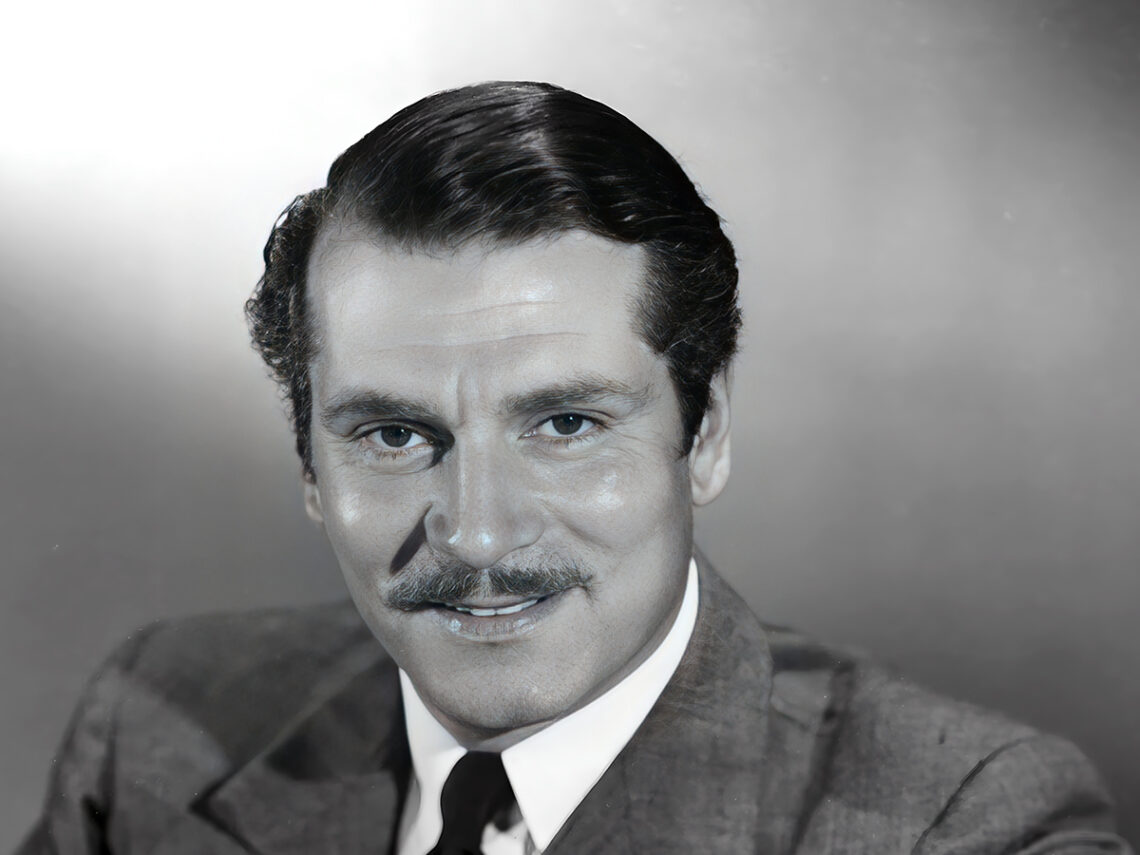
“I was miserable”: the 1933 movie that almost sent Laurence Olivier into permanent Hollywood exile

To get an idea of the kind of esteem the Hollywood establishment held Laurence Olivier in, you only have to watch footage of his acceptance speech while collecting his Honorary Oscar from Cary Grant in 1979.
Although the speech itself is maybe, ironically, slightly over-dramatic, the effect of having the mighty Olivier deliver a message of thanks, one that included a Shakespearean quotation, was clearly overwhelming for the acting elite, and as he finishes, the camera pans to a clearly awestruck Jon Voight, who struggles to process what just happened.
And his reaction was probably understandable; after all, Olivier was quite possibly the greatest actor that stage and screen ever saw, the man who dominated British theatre for some forty years and someone who acted in major movies even longer than that, picking up 14 Academy Award nominations.
But his reciprocal relationship with Hollywood was in no way as straightforward. He had been spotted on London’s West End in his early 20s after a series of performances that had critics raving, and signed up to a $1k a week contract in 1931 to make films with RKO Pictures, one of the big five studios during the Golden Age of Hollywood.
Unfortunately for both parties, the agreement did not give Olivier the breakthrough in the US that everyone had expected. His films, like 1932’s romantic drama Westward Passage, were not commercial hits and he began to get disillusioned with life across the pond very quickly, missing the home comforts of England and the thrill of live acting on the stage.
But he was still impressive enough in that film to catch the eye of some of Hollywood’s most important actors, as Olivier recalled in his book On Acting, saying: “Greta Garbo liked my performance. She asked me to be her leading man in (1933 drama) Queen Christina, and naturally, I accepted. What a breakthrough! But after two weeks on the set, she’d found me out. The director wanted to shoot a love scene first, which was Hollywood logic, I suppose, to see if the lovers jelled before too much money was spent; but it unsettled me.”
Slightly starstruck and feeling like a fish out of water, Olivier attempted to inject some life into the situation, but it backfired. He added, “I took Garbo in my arms to ‘awaken her passion.’ There was no famous flicker of an eyelid or of the corner of her mouth, however faint; only shyness and cold eyes. I was miserable and overacted.”

The lack of chemistry between the pair led to Queen Christina’s producer having to tell Olivier the bad news: he was out. Although he offered the dejected actor the chance to screen test for another film, Olivier had enough and boarded a boat back to the UK.
For five years, he took up residency at the Old Vic theatre in London, usually staging productions of Shakespeare, and acted in several British films. But then, lured by a salary that was, in today’s money, north of $1m, Olivier accepted the role of Heathcliffe in a Hollywood production of Wuthering Heights, and although he again did not enjoy the experience of being on set, it proved to be the making of his career overseas, and he won his first nomination for an Oscar.
He would go on to make almost 20 more films over the years in Hollywood, finishing off in 1981, perhaps fittingly, playing Zeus, the King of the Gods, in 1981’s fantasy adventure Clash of the Titans.
