


‘Metropolis’: The 1927 sci-fi epic that inspired Ridley Scott’s ‘Blade Runner’

He might resemble more of a cantankerous grandpa these days, but it’s important to remember just how important Ridley Scott is to the history of cinema.
With his seminal sci-fi horror Alien, he set in motion a raft of changes to both genres that can still be seen to this very day. Gladiator gave the world Russell Crowe as a Hollywood main eventer, Thelma & Louise is still held up as a feminist classic, and then there’s his most important contribution to popular culture: Blade Runner.
Starring Harrison Ford, Rutger Hauer, and Sean Young, this dystopian adventure about human-resembling ‘replicants’ and their quest to achieve humanity single-handedly changed the way people made science fiction movies. The design of futuristic Los Angeles, set in the far-flung year of 2019, inspired countless imitators with its drab, soulless visage and layers of people all living callously atop one another. The movie still looks gorgeous over four decades on, and its influence can be felt in everything from The Fifth Element to Westworld, Ghost in the Shell to Christopher Nolan’s interpretation of Gotham City in his ‘Dark Knight’ trilogy.
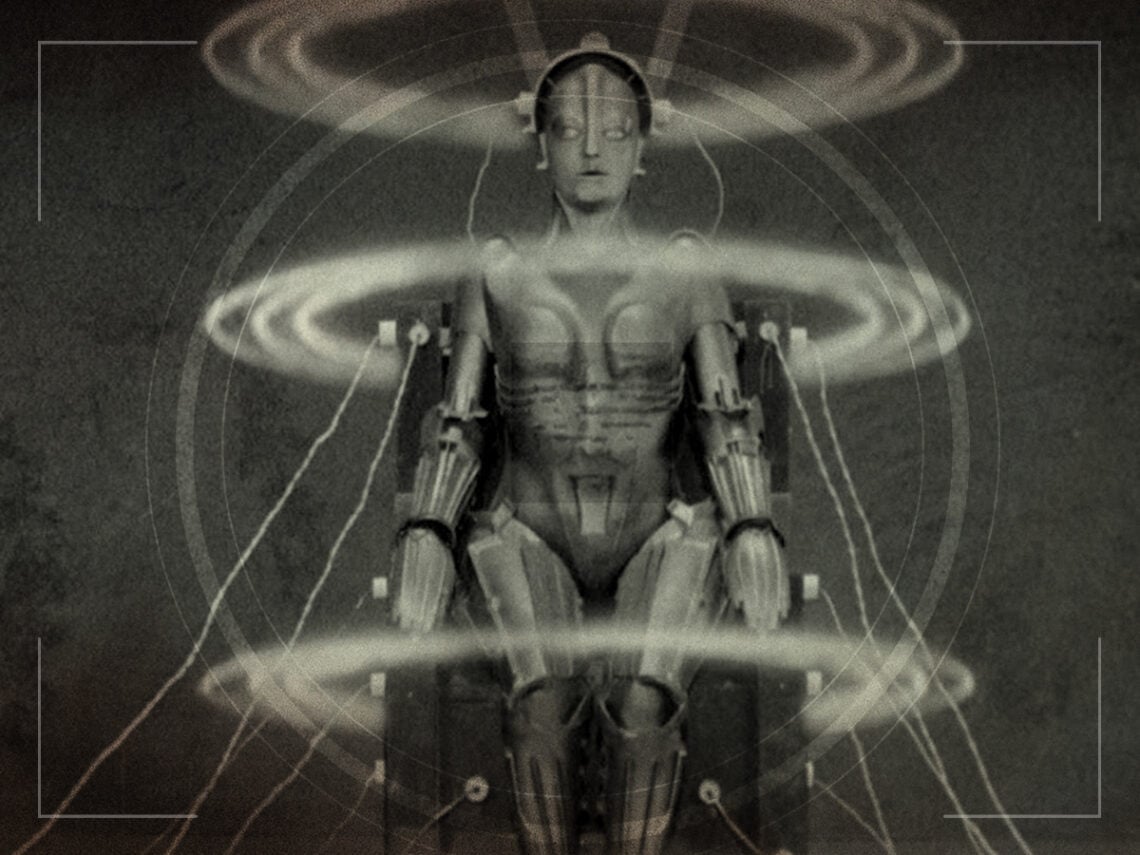
Even groundbreaking new ideas have to be inspired by something. The movie that had the biggest impression on Scott while he was making Blade Runner is itself a classic; a movie so far ahead of its time, that it was still inspiring filmmakers almost 60 years after it first hit theatres. It’s Fritz Lang’s seminal 1927 picture, Metropolis.
Made at the height of the German expressionist movement, Metropolis is an adaptation of Thea von Harbou’s novel of the same name. In a glittering city where people are segregated by wealth, Freder (Gustav Fröhlich), whose father oversaw the construction of this so-called utopia, receives a vision that a ‘chosen one’ is coming to unite the disparate halves of the population. The movie was unlike anything ever attempted before, setting the stage for the likes of Blade Runner to come along in the second half of the 20th century.
How Metropolis inspired Blade Runner
So many of the hallmarks of Blade Runner – flying cars, oppressive video billboards, overcrowded market streets – can be seen in Lang’s original. The way the German shot his piece from a perspective that made miniature sets look foreboding and large also inspired Scott and his crew to do the same. This gives both films a sense of tangibility, of a world that is actually being inhabited by real people. So much of this feeling is lost in more modern, CGI-centric epics.
It’s not just the way Metropolis looks that can be felt in the DNA of Blade Runner. “The vast overdeveloped urban sprawl of Metropolis, and its themes about labour, machinery and humanity, echo through Blade Runner into contemporary science fiction,” Fox continues. In the earlier film, the use of an inventor using a robot to resurrect his dead wife is a major plot point, while the newer one centres on the question of whether or not replicants should be treated as humans. As Edwin Jasper writes in his piece on Medium, “Both films deal with the thematic concept of ethics of robotics.”
By blending Metropolis’ ground-breaking visuals with a style of action more suitable for a post-Star Wars audience, Scott was able to craft a movie that both honoured the merits of sci-fi’s past while also pushing the genre forward.
